Certified Artist 2026
Edvin Tedebring
Conceptual Abstraction in Dialogue with Realism

Interview
How did you first get into tattooing, and what led you toward abstract and semi-realistic expression?
I was studying digital media production at university when I started getting tattooed regularly by an artist named Brent McKenzie in my hometown. I was already curious about tattooing as a profession and interested in pursuing an apprenticeship. During our sessions, I constantly asked questions, and he guided me through drawing, design, and visual thinking while working on the pieces he was tattooing on me.
When I graduated in 2017, he offered me an apprenticeship. At the same time, I had applied for a master’s degree in human–computer interaction, but I chose to step away from academia and fully commit to tattooing.
In the beginning, I was heavily drawn to gothic and horror-inspired motifs. Over time, that started to feel repetitive and visually limiting. Through my mentor, I gained a solid understanding of realism, but I didn’t want to pursue realism in a traditional sense. I felt a strong need to explore something less literal — something that allowed more room for interpretation and personal expression. That curiosity gradually pulled me toward abstraction and the space between realism and concept.
Over your eight years of experience, which moments or stages have most influenced your artistic evolution?
Travel has probably been the biggest influence on me as a person and, by extension, on my work. When your environment, perspective, and life experiences change, the way you approach art inevitably evolves as well.
Another major shift was how I chose to gather inspiration. Early on, I looked primarily at other tattoos, which eventually made me feel like I was becoming a copy of a copy. I realized I wasn’t challenging my own thinking. Today, I draw inspiration from architecture, graphic design, fine art, nature, and spatial design. That shift helped me move beyond trends and develop a more personal, grounded visual language. It’s where my creative voice truly began to feel like my own.
How would you describe your artistic identity today, especially the balance between abstraction and realism?
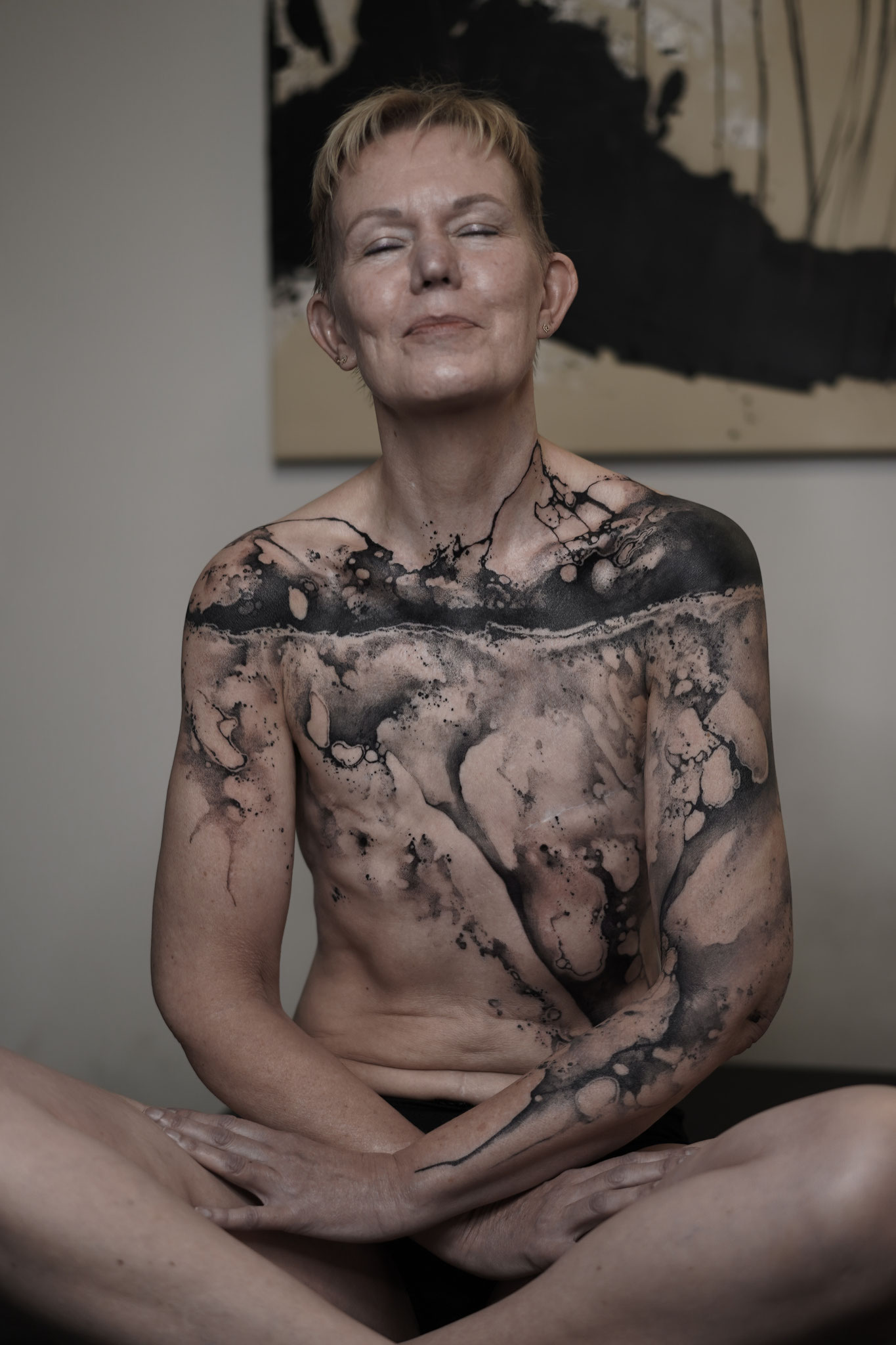
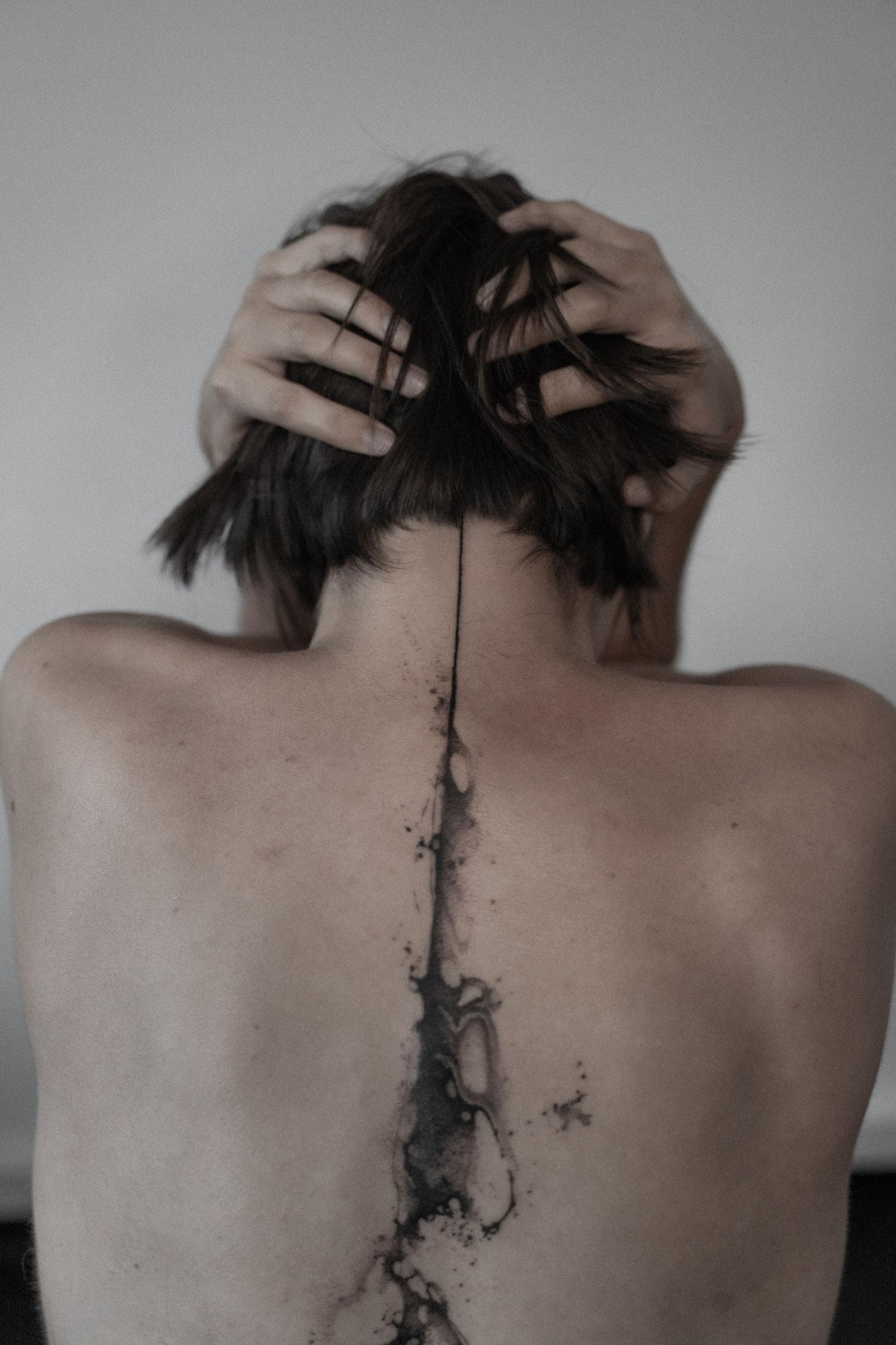
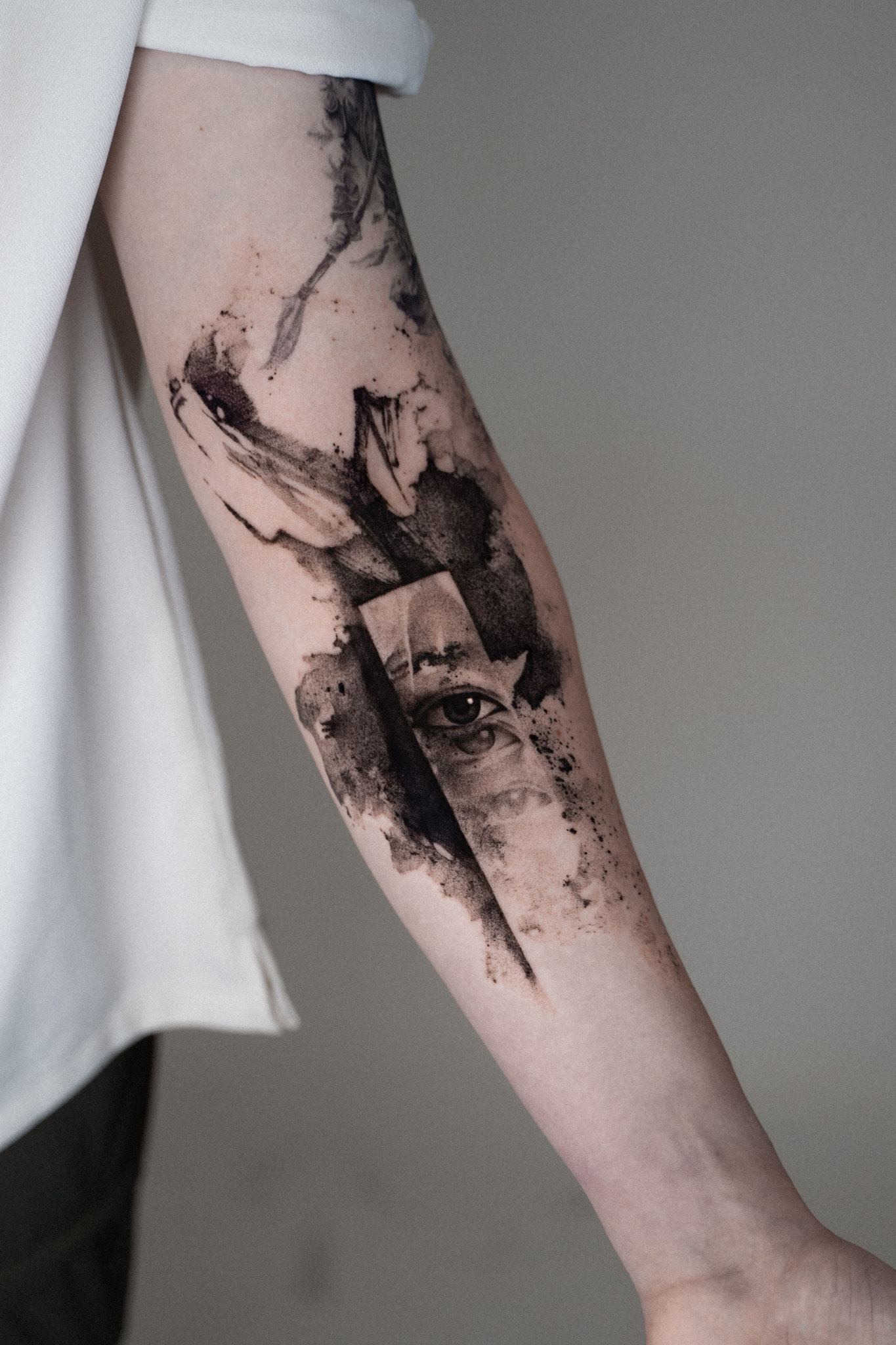
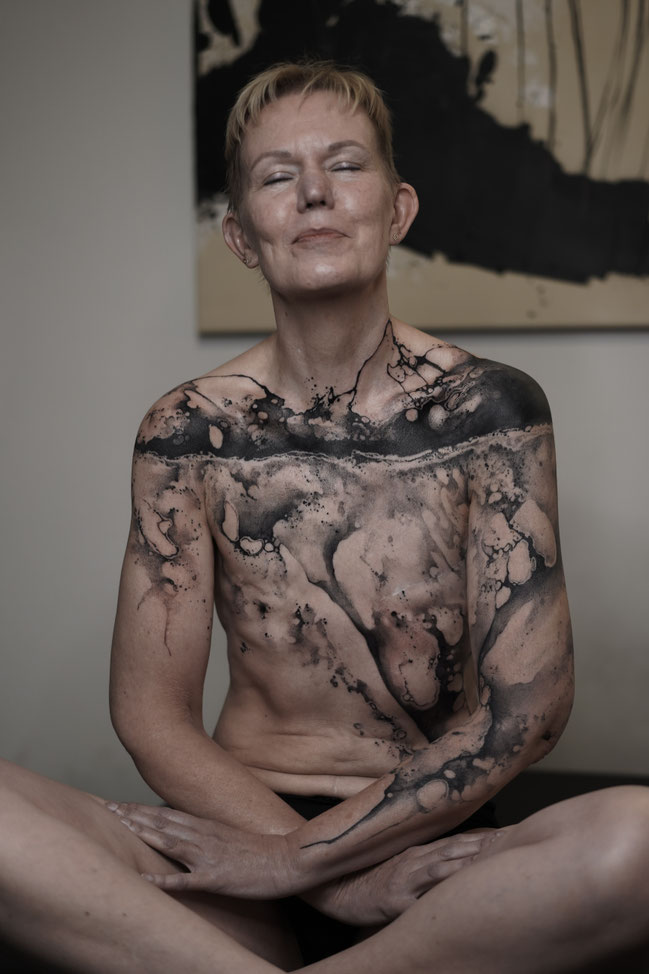
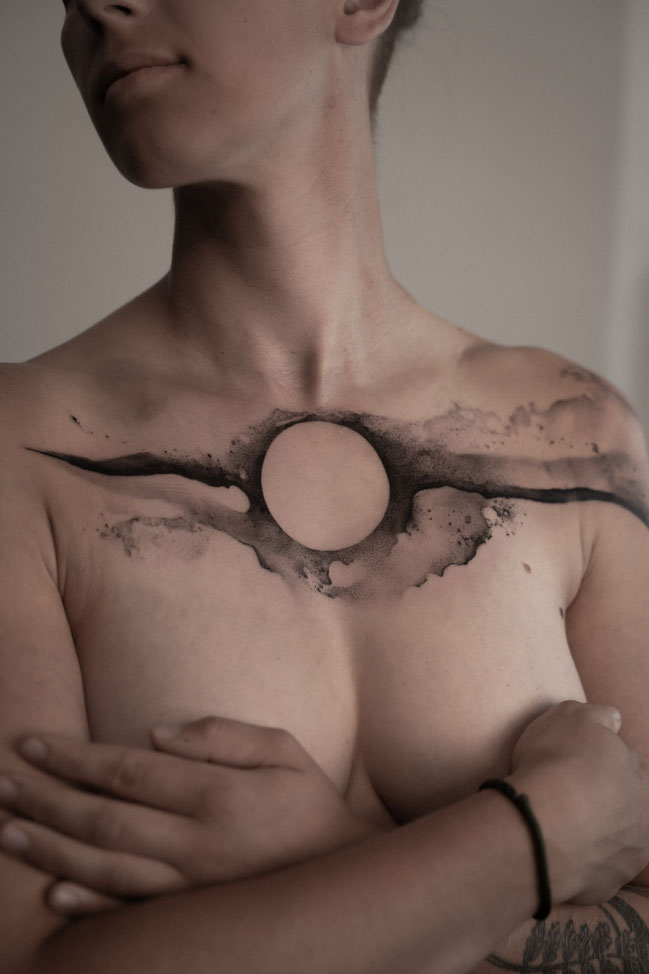
My work leans clearly toward abstraction. I’m drawn to its ability to communicate emotion and atmosphere without being literal. It’s not meant to appeal to everyone, and I see that as a strength rather than a limitation.
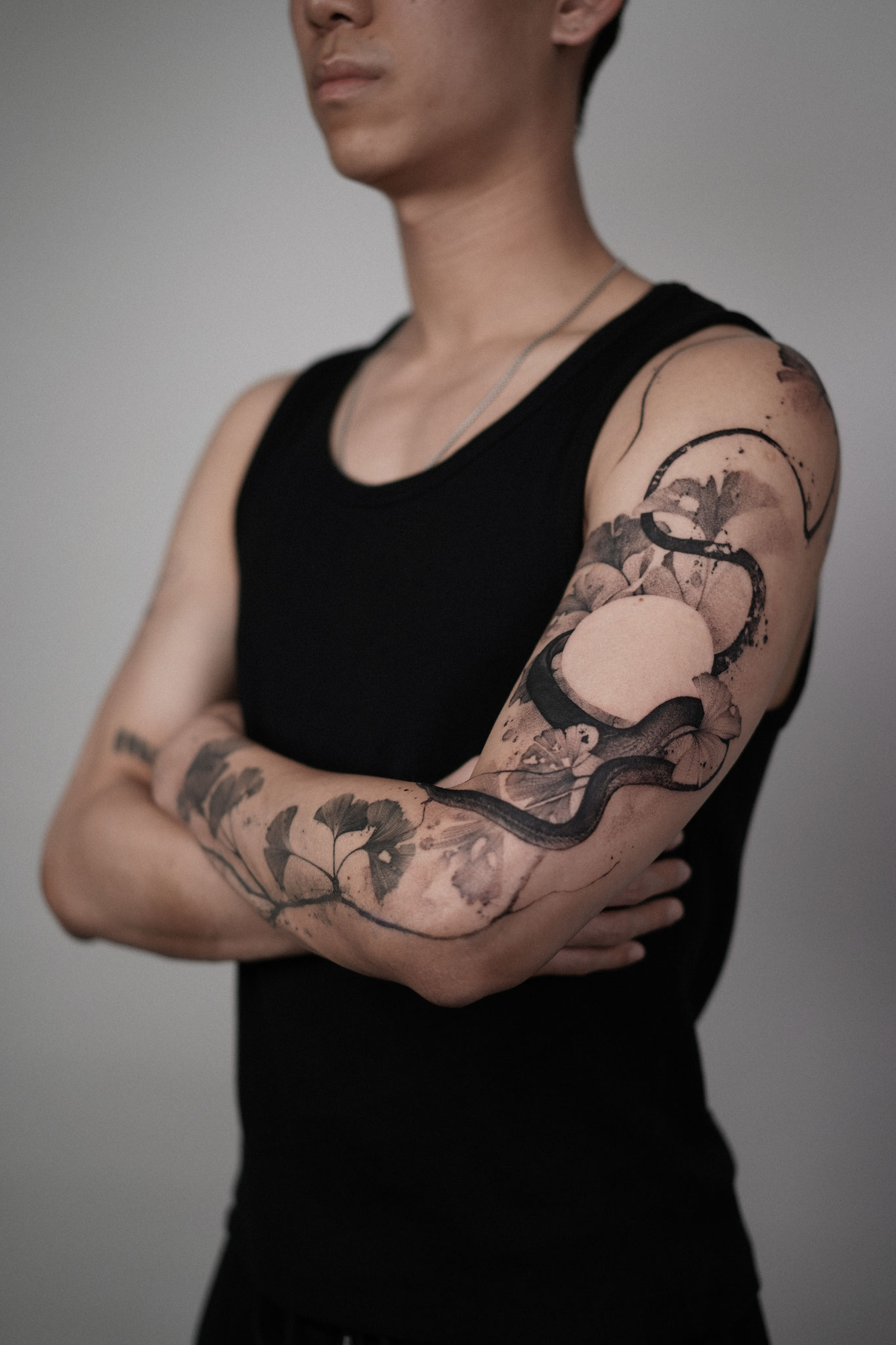
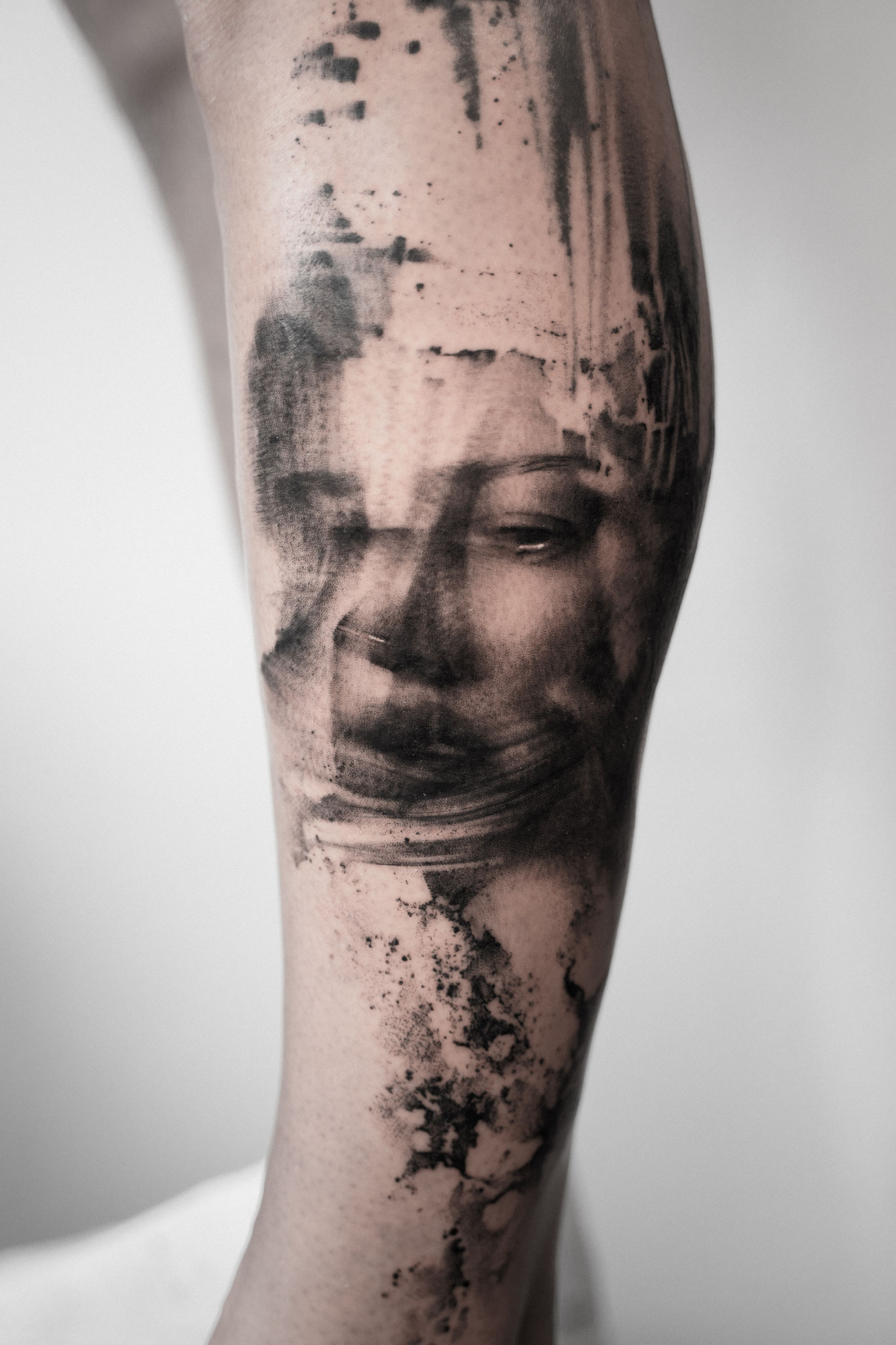
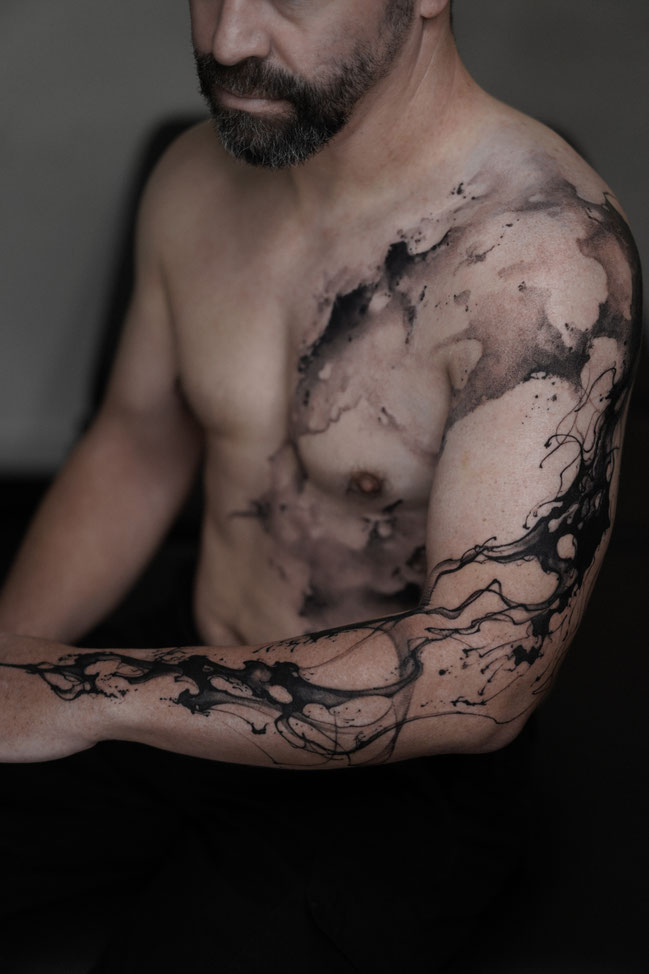
When I work with realism, it’s always in dialogue with abstract elements. I’m not interested in clean, isolated realism or imagery that feels familiar. Abstraction and texture are there to elevate the realistic components — adding tension, narrative, and emotional depth. For me, abstraction isn’t decoration; it’s the structure that gives the work its meaning.
What inspires your abstract language, and how do you translate emotion or concept into tattoo form?
Today, my primary source of inspiration is my collectors and their stories. Their initial idea or intention usually triggers my creative process. I don’t create “wanna-do” designs — it doesn’t resonate with how I work. Whenever I try, the result feels disconnected and forced.
With custom work, I look at the person as a whole — not just their story or the reason behind the tattoo, but also how they communicate, move, and carry themselves. I absorb that information intuitively and translate it into a visual language that feels specific to them. The goal is always to create something that feels inseparable from the person wearing it.
Can you describe your creative process when designing a custom piece, from concept to final tattoo?
There isn’t a fixed process — it changes from project to project. Sometimes the tattoo is drawn entirely freehand on the body. Other times, I’ll spend hours refining a detailed design, knowing it may still change significantly on the day of the session. In some cases, I gather loose references and build the composition directly on the skin through freehand work.
What remains consistent is the intention behind the process. There is always a clear design logic and purpose, even if the path to the final result looks different every time.
How do you adapt abstract or semi-realistic compositions to the body’s natural flow?
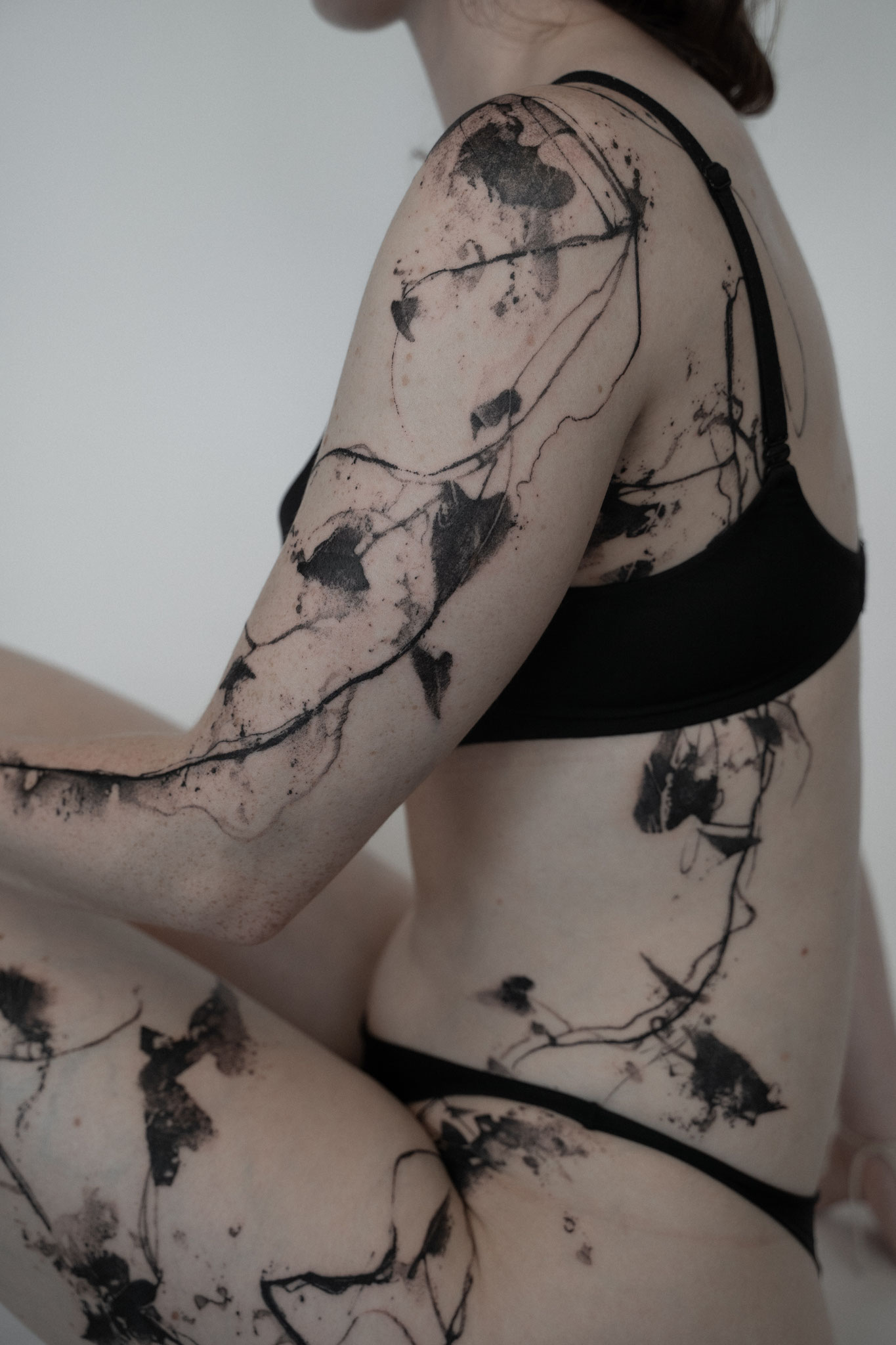
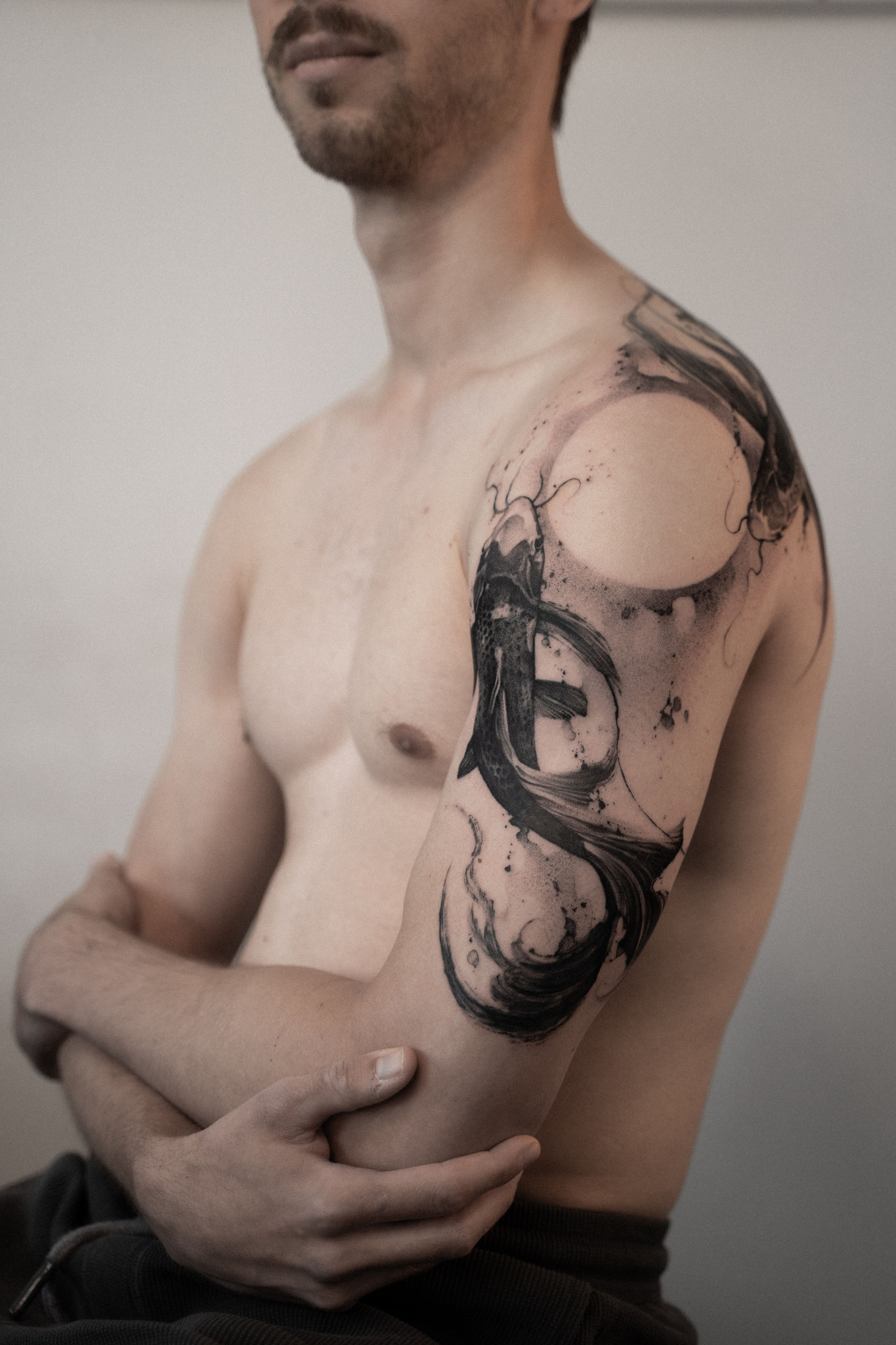
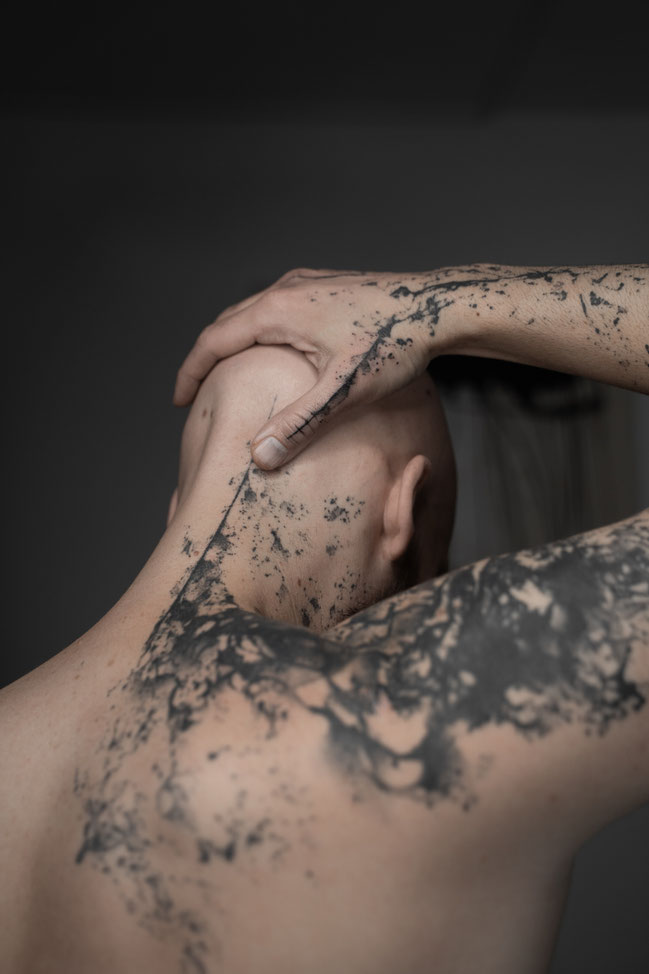
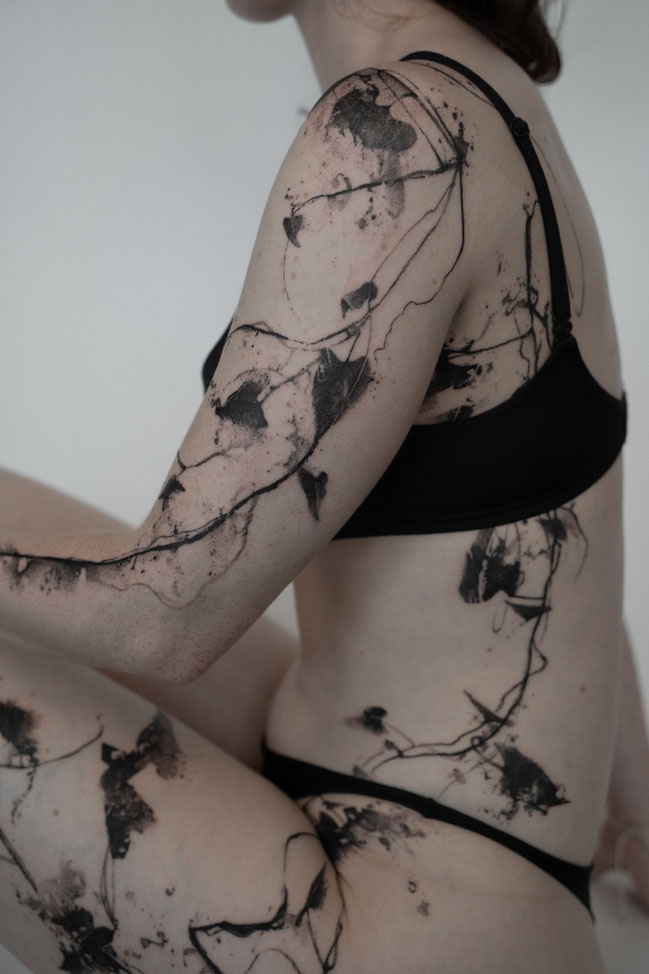
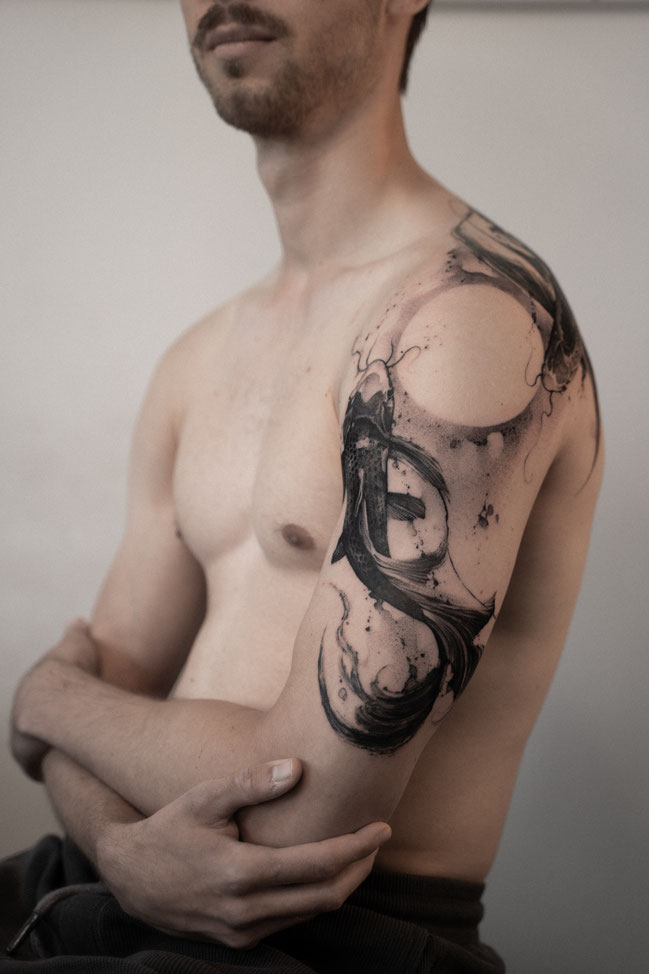
Fit and flow are fundamental to my work. I study the anatomy of the body part, but also how it relates to the body as a whole. I pay close attention to lines, connections, negative space, and how the tattoo behaves in motion.
A tattoo shouldn’t only look good in one relaxed position. If it doesn’t maintain its integrity while the body moves through daily life, then the design hasn’t been fully considered.
What technical aspects are most important to you to ensure clarity, depth, and longevity in your work?
Contrast and texture are essential. The interaction between different densities, surfaces, and tonal values creates depth and ensures the tattoo holds up over time.
How does working between different cities and cultures (Europe & the U.S.) influence your artistic vision?
Over the years, I’ve become more intentional about where I spend my time. Zürich is now my home base — a city that offers calm, structure, and a strong design culture. It gives me the mental space to reflect, refine, and evolve my work in a balanced way.
New York, on the other hand, is pure contrast. It’s probably my favorite city in the world and a place I return to for a few months each year. The energy, the people, and the pace push me creatively in a completely different direction. What I absorb in New York, I take back to Switzerland, where I can slow it down, analyze it, and integrate it into my long-term artistic vision.
How do you see abstract and conceptual tattooing evolving within the current tattoo scene?
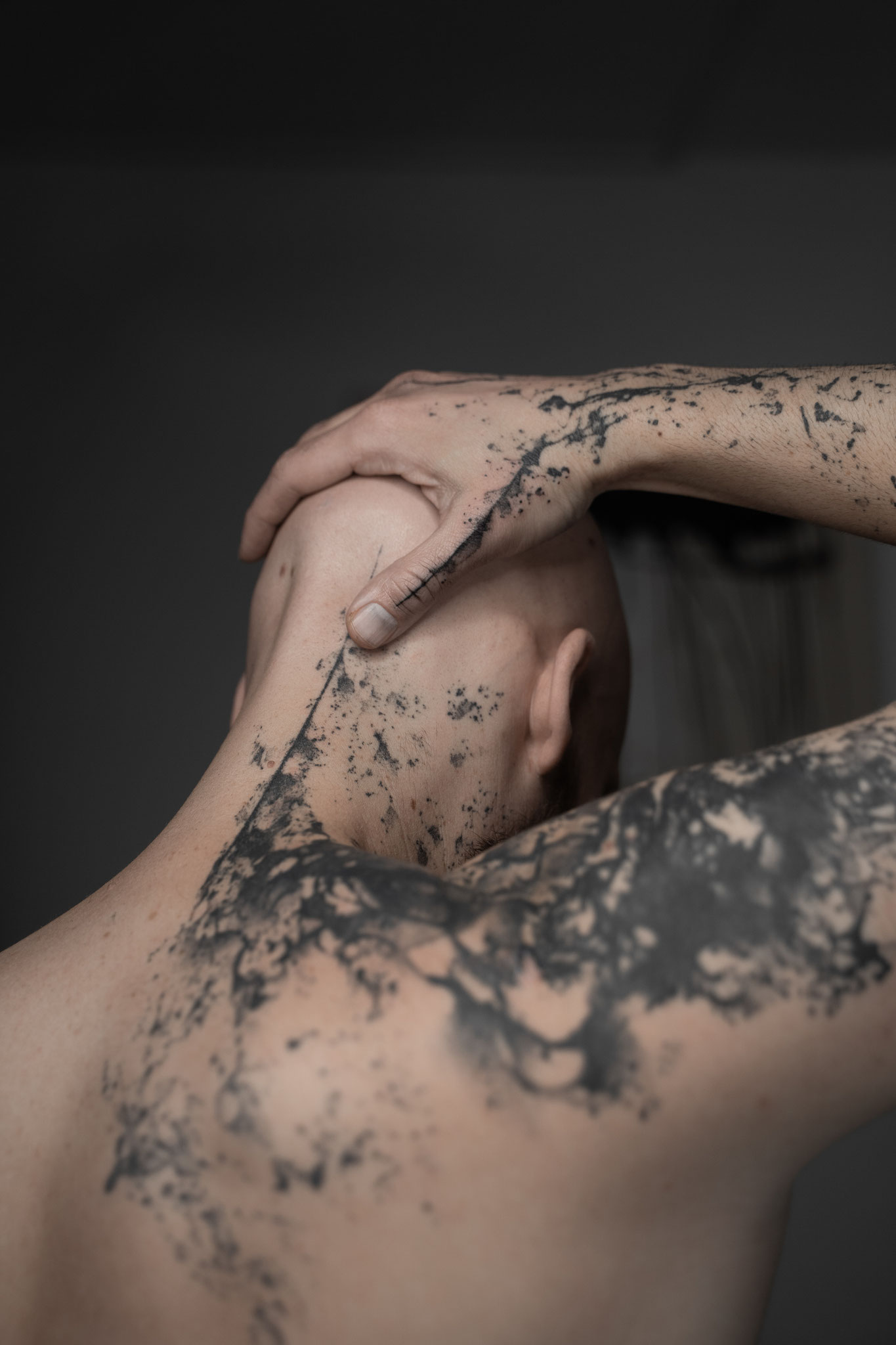
It’s clearly gaining momentum, and many interesting interpretations are emerging. At the same time, I see abstraction being used somewhat superficially in certain cases. Just because something looks effortless doesn’t mean it is.
Abstract elements have a function — they influence balance, flow, tension, and narrative. Without understanding that, abstraction becomes visual noise. Used intentionally, however, it has the power to elevate tattooing into a more conceptual and emotionally driven space.
What artistic goals or projects would you like to explore in the coming years?
I have several ideas and directions I’m curious about, but I prefer to keep them to myself until they are fully formed. Clarity comes before communication.
-
Why We Recommend:
We recommend this artist for his structured yet intuitive approach to abstraction, merging conceptual depth with controlled realism.
His work is defined by intentional contrast, anatomical flow, and a refined balance between texture and negative space.
An evolving contemporary artist building emotionally intelligent compositions beyond trends and visual repetition.
Information
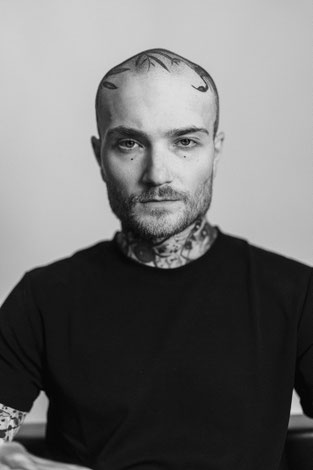
Name / Artistic Name: Edvin Tedebring / E Tedebring
Tattoo styles you work with: Abstract / semi-realism
Years of experience tattooing: 8
City & Country: Zürich, Switzerland + New York City, United States
Instagram: @e.tedebring
Website: etedebring.com
Full studio address: Zürich; ZKY Labs (Bäckerstrasse 40, 8004 Zürich). New York; Monolith Studio (77 Washington Ave, Brooklyn NY, 11205)