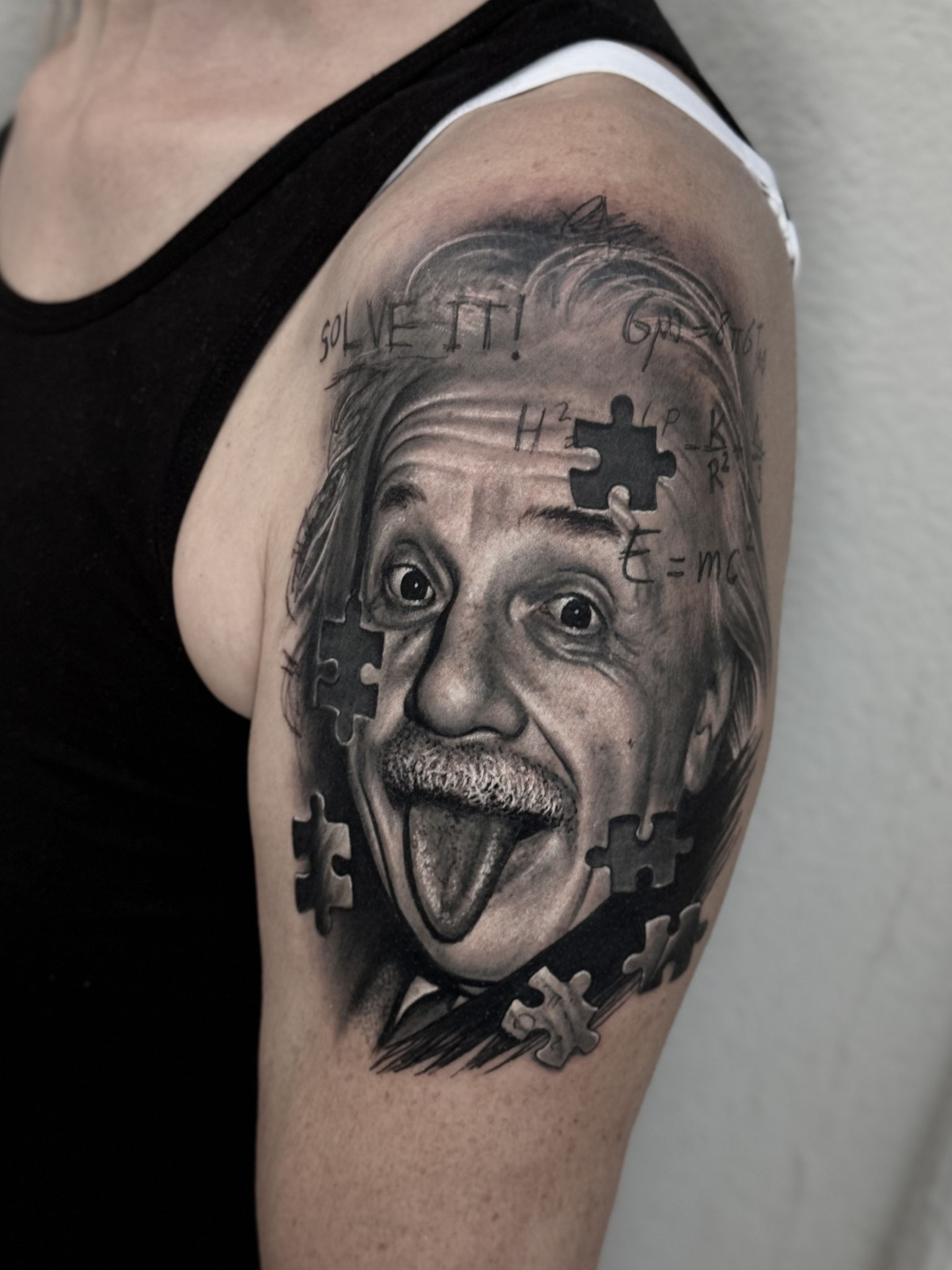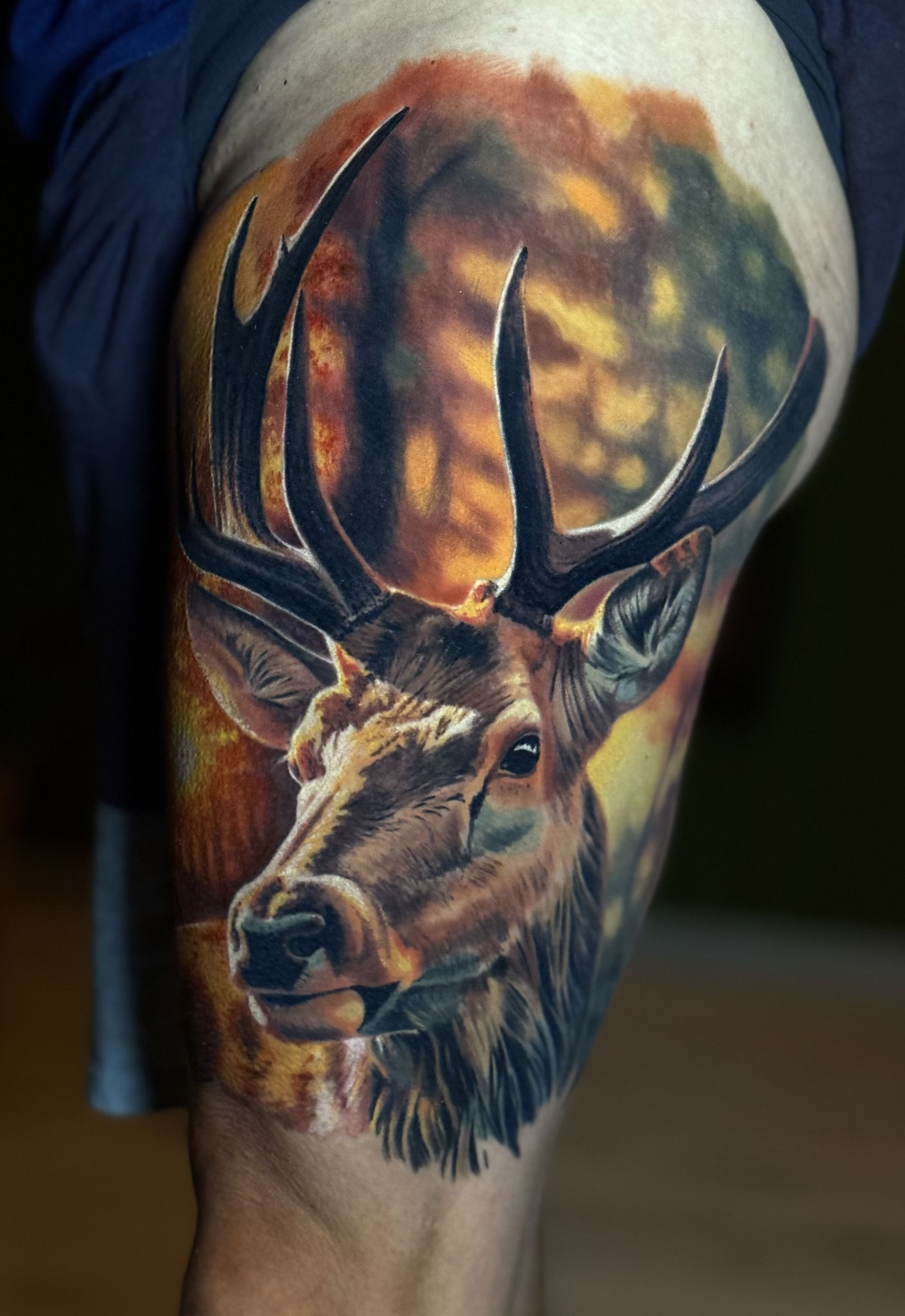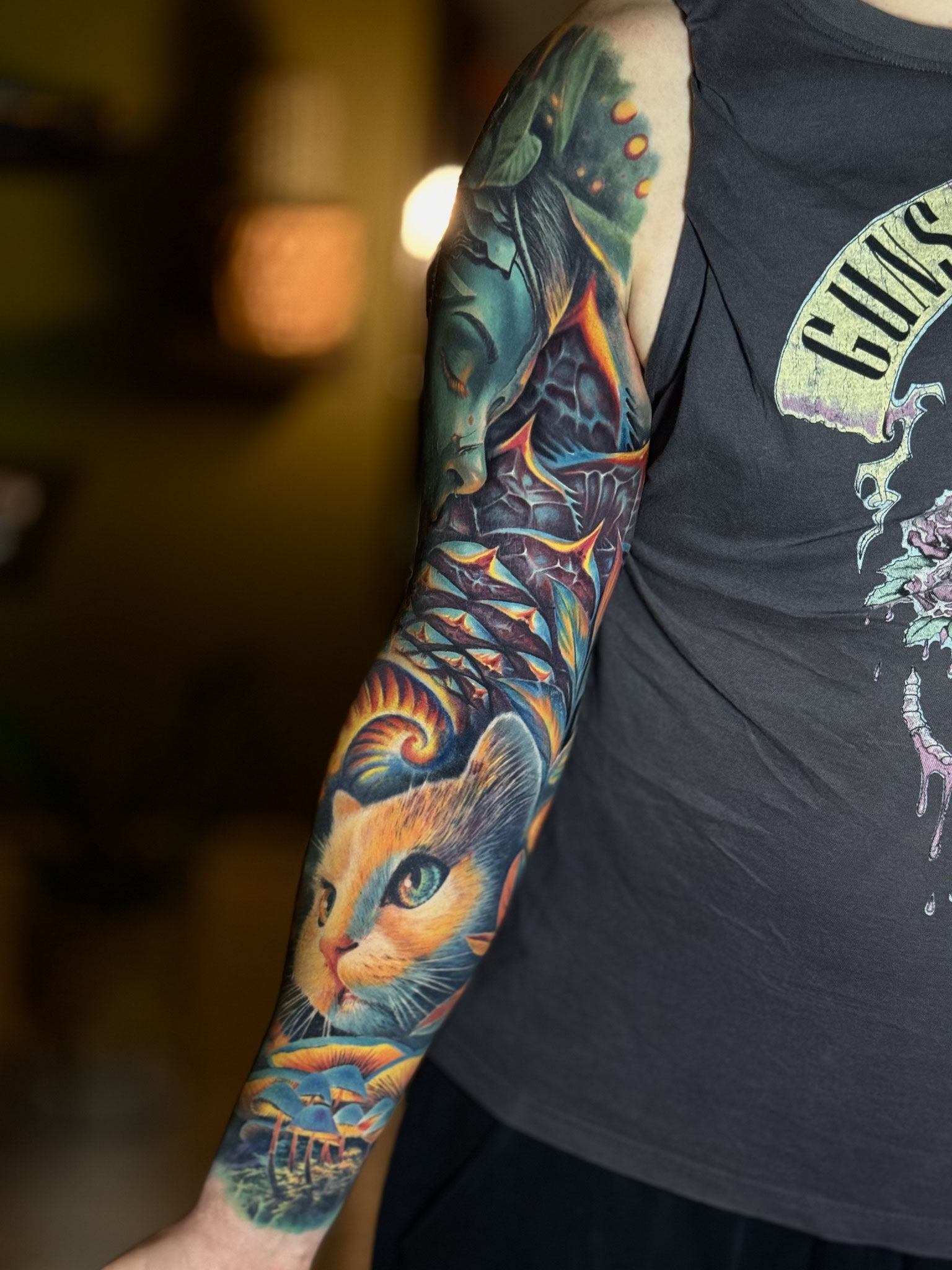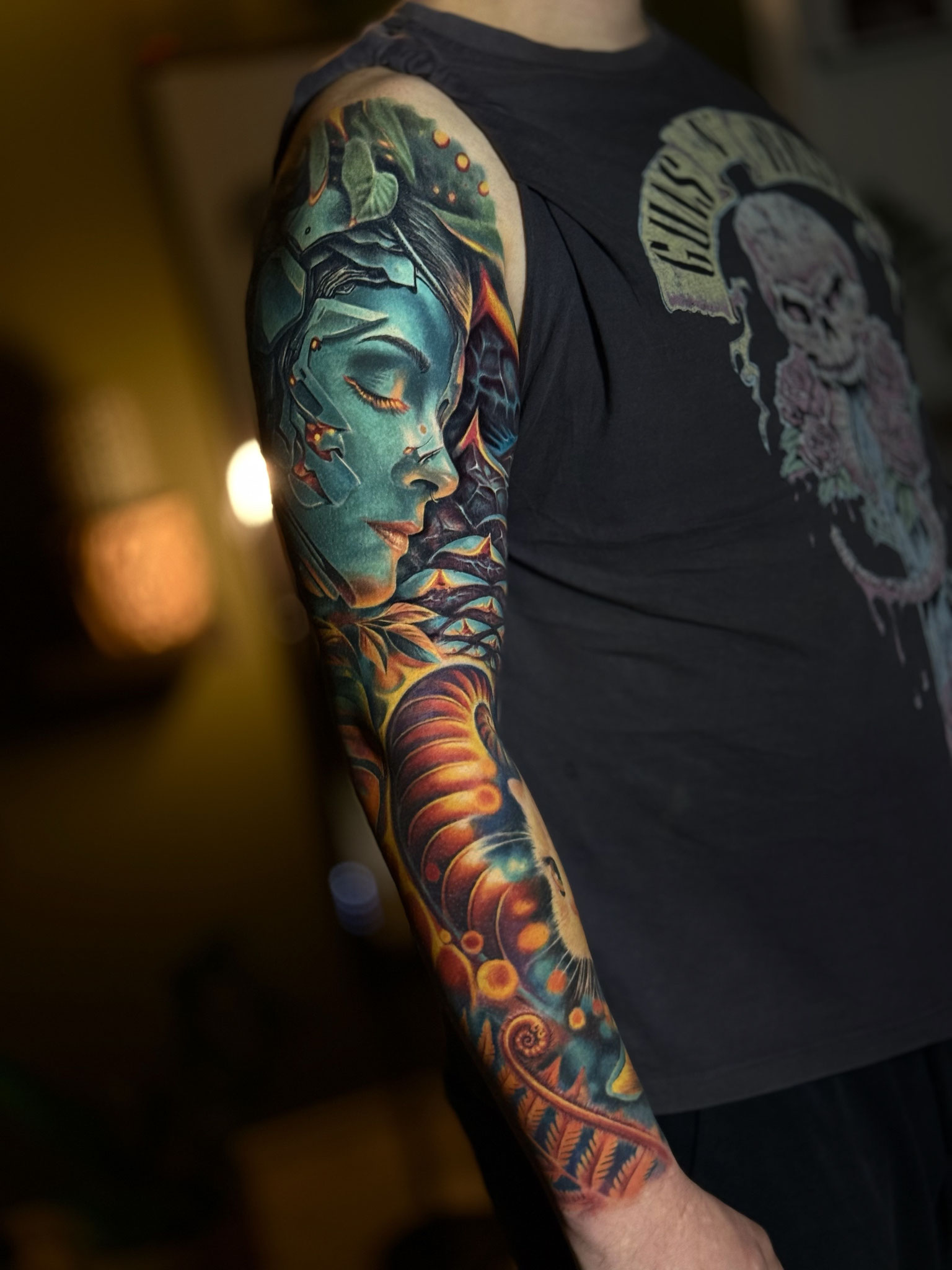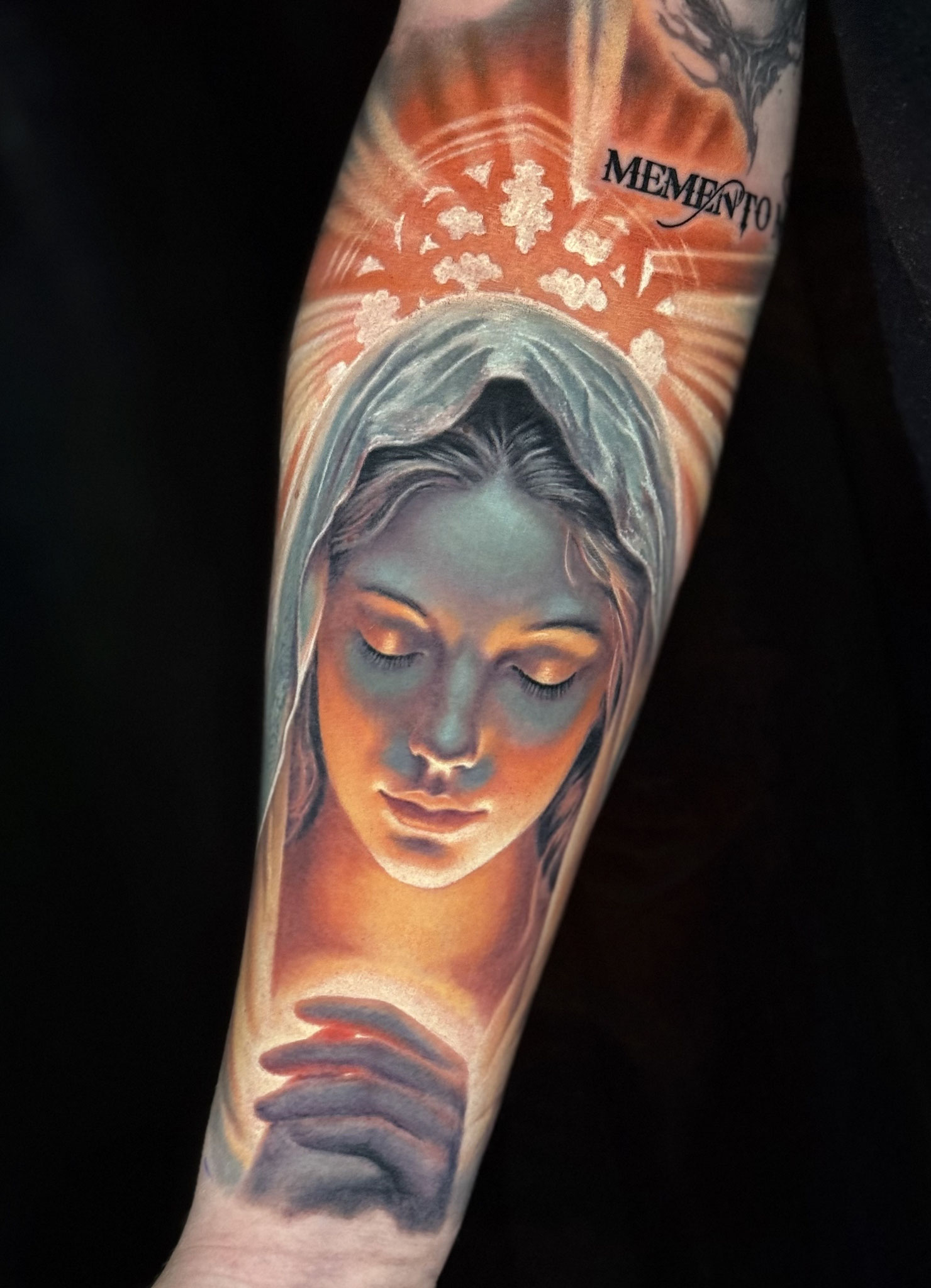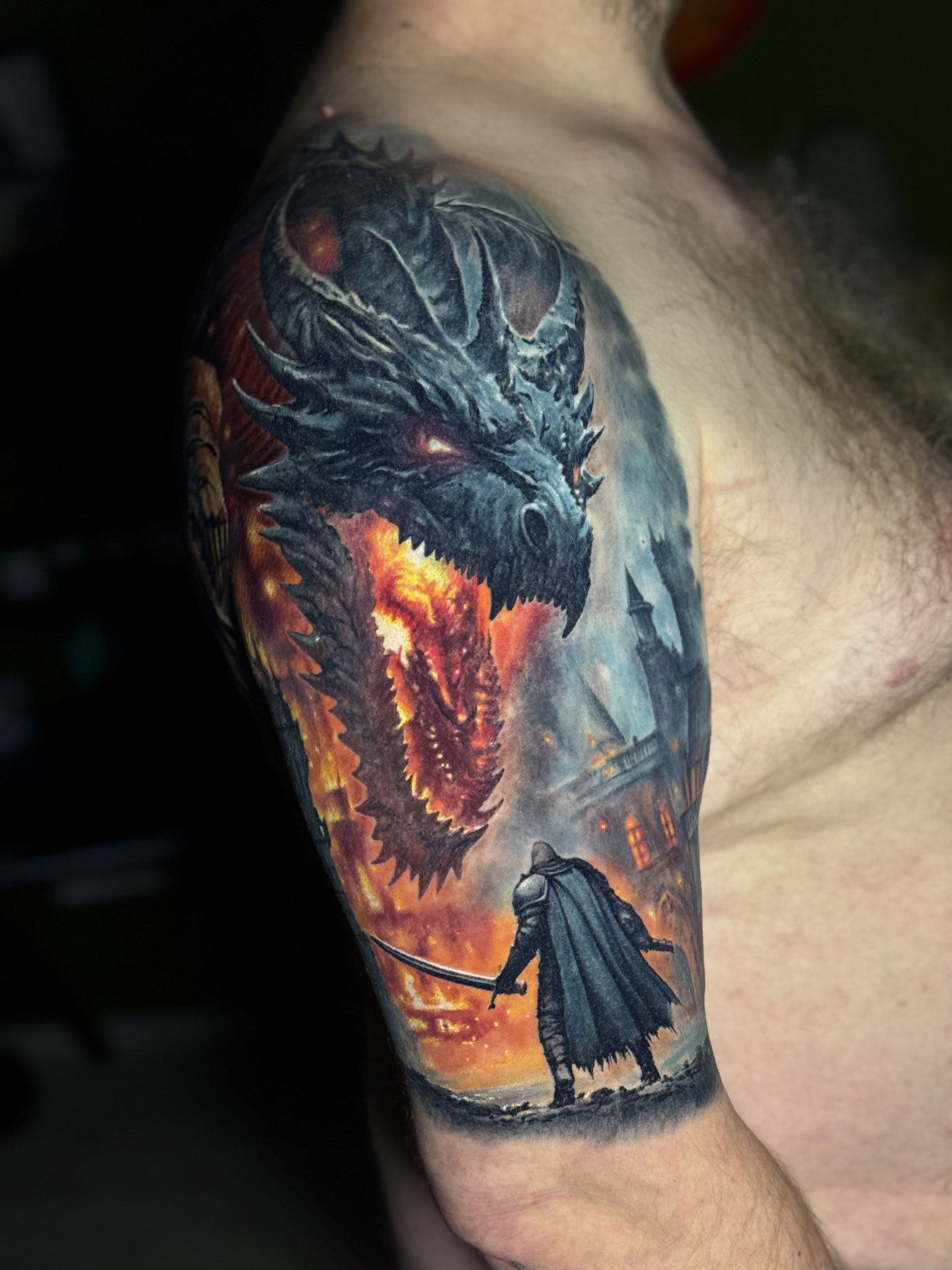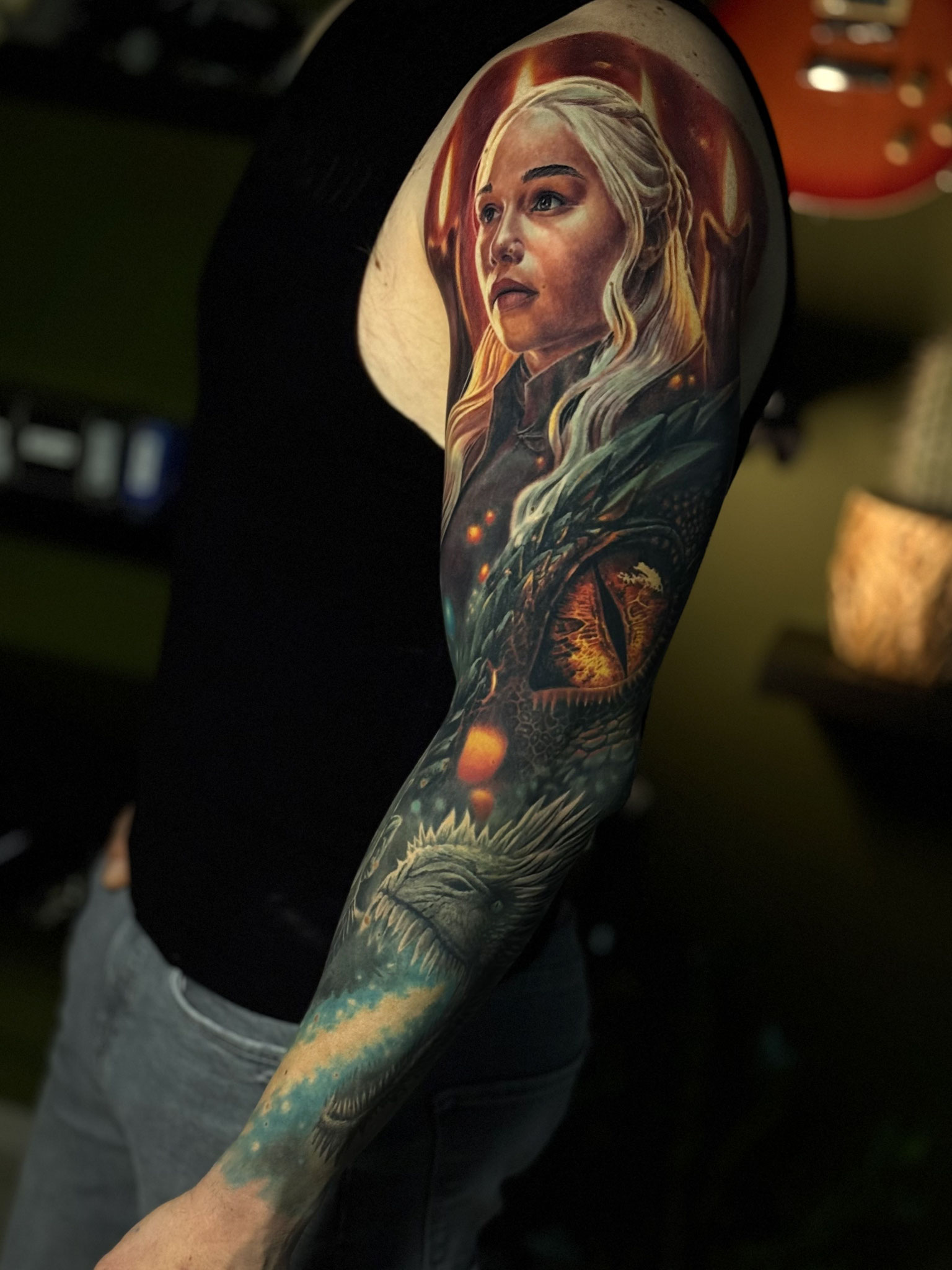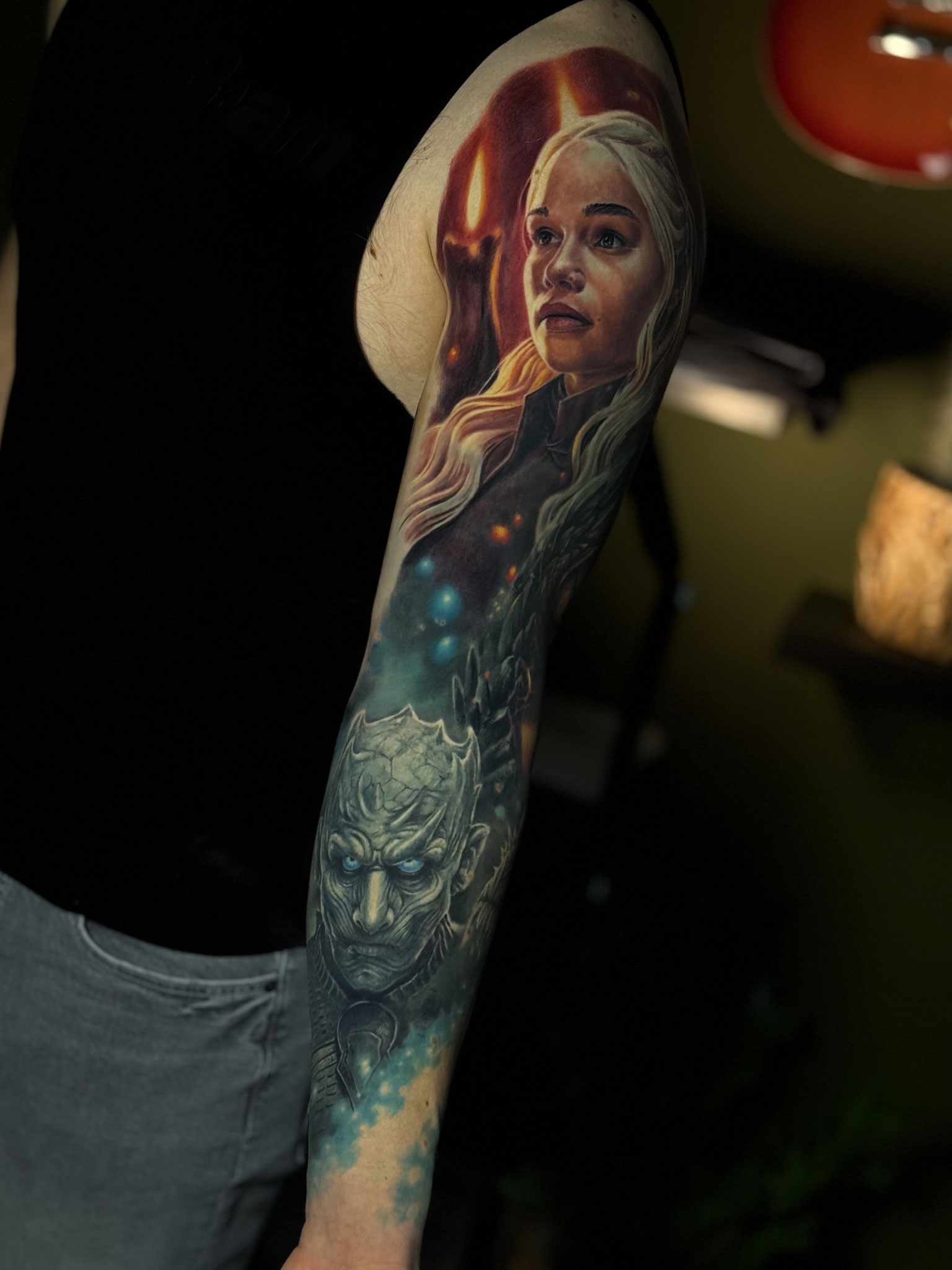
Certified Artist 2026
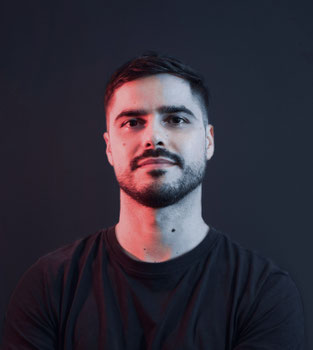
József Hornyák
Architectural Realism in Colour & Black & Grey
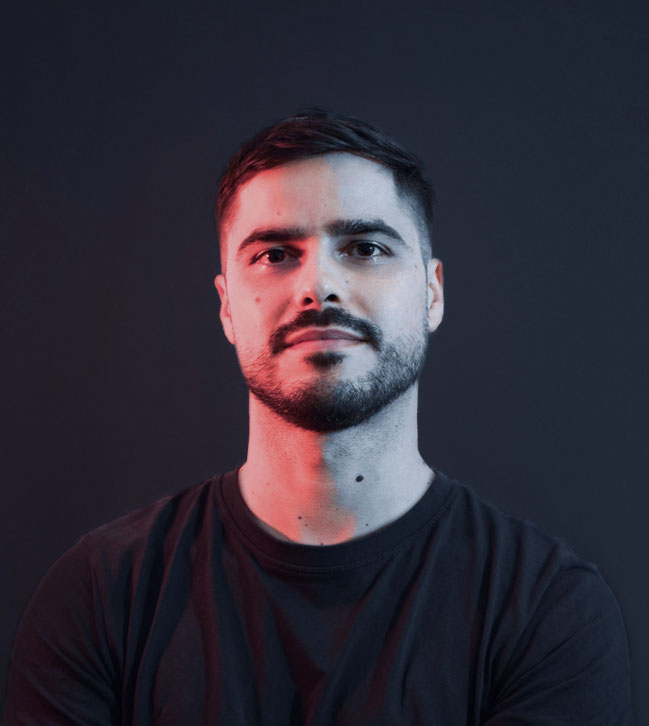
Interview
How did you first get into tattooing, and what drew you specifically to realism as your main style?
I come from a small village in Eastern Slovakia, where at the time—when I was 17—very few people were tattooing, even in the surrounding larger cities. It was difficult to truly get close to the world of tattooing.
One day, a friend of mine went to get a tattoo, and I accompanied him. That experience changed everything. I had already been drawing a lot at that time, so I showed my drawings to the tattoo artist. He encouraged me to try this field myself, saying he thought I could be good at it. He taught me the basics, and I took the plunge.
I have always been attracted to realism—I was already drawing portraits at the age of 14—so I naturally began developing in this direction within tattooing, even though over the years I experimented with many other styles as well.
With 12 years of experience, which moments or projects have had the biggest impact on your artistic development?
My artistic development began in childhood. My father was a painter, so I started drawing and painting at a young age. The desire to create has always been present throughout my life. Later, it became clear that I wanted to continue my studies at an art school.
A particularly decisive period was when I studied design at MOME, the Moholy-Nagy University of Art and Design in Budapest (HU). The knowledge I acquired there—drawing, painting, pattern design, and the conscious construction of design processes—is something I still apply in tattooing today.
When I realized that I did not want to work in the design field but instead wanted to focus entirely on tattooing, I started working at Westend Tattoo Studio in Budapest. There, I encountered a wide range of client needs and styles, which gave me invaluable experience and ultimately confirmed that realism is the direction in which I can truly fulfill myself.
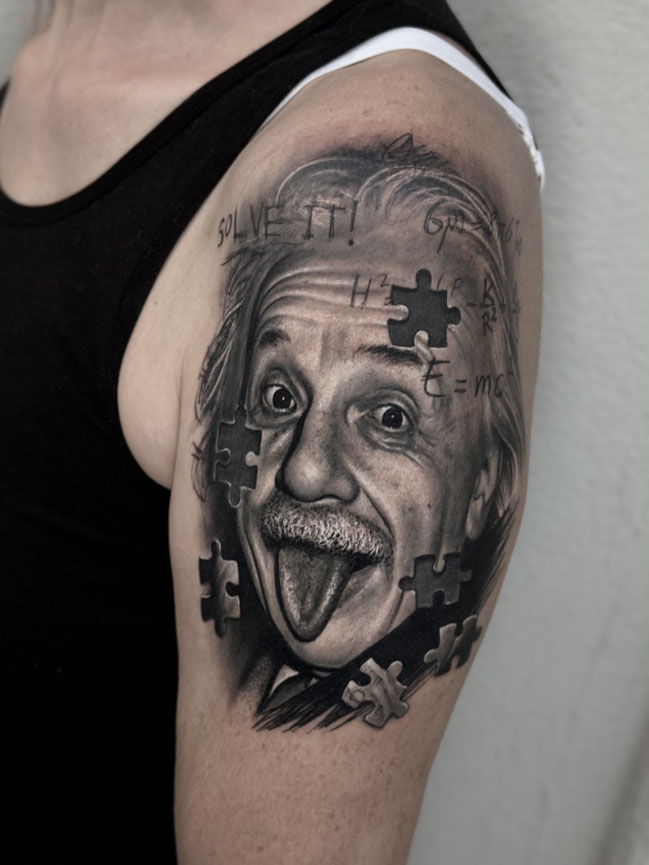
How would you describe your artistic identity today, balancing colour realism and black & grey realism?
Today, my artistic identity is largely defined by a conscious search for balance between color realism and black & grey realism. Recently, I have been increasingly drawn to color realism, as working with color truly inspires me—the contrasts, mood creation, and the endless variations of color combinations.
At the same time, it is essential for me that every tattoo is a joint project with the guest. Their ideas and personal connection to the subject are always central. If someone specifically wants black & grey realism, we focus on that, as this style has its own clean, timeless beauty and unique atmosphere, which I deeply appreciate as well.
That said, I currently really enjoy using color to create atmosphere and depth, so I often try to open my guests up to colorful realistic solutions. I never want to force this direction, as there are certain themes that work best in monochrome, but rather to show how color can enhance the emotional and visual impact of a tattoo in the right context.
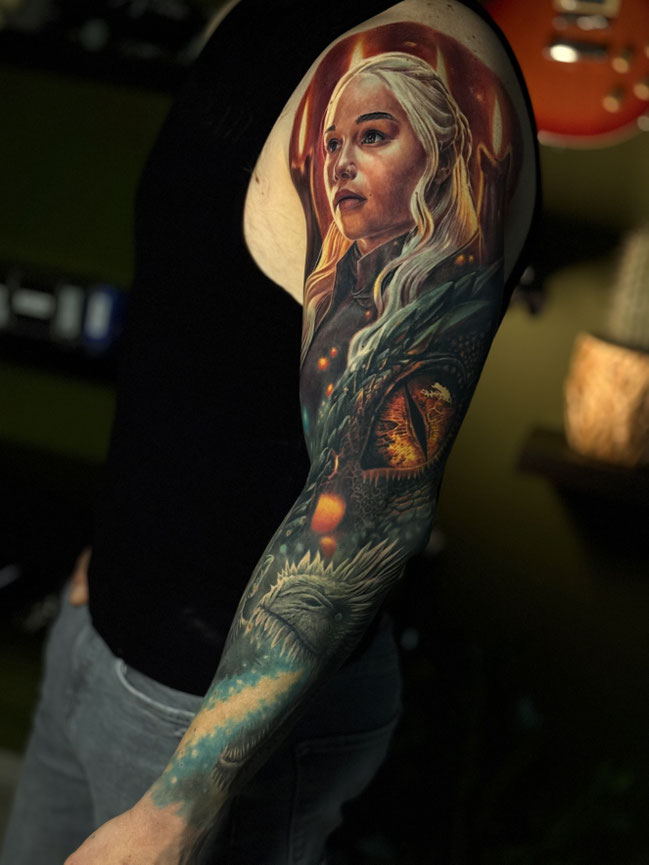
What do you enjoy most about working in realism, and what challenges keep you motivated?
What I enjoy most is the design process, where the client’s vision meets my own style and artistic solutions. This usually requires several attempts: starting from a basic idea, I work toward a composition that is exciting for both the client and myself. When we reach the point where we both can’t wait to start tattooing, that is one of the best feelings in the entire process.
I also really enjoy the technical execution of realistic tattoos, especially building up colors layer by layer to achieve the most lifelike effect. Creating light, shadows, subtle transitions, and fine details presents exciting challenges for me.
What keeps me motivated is the constant desire to improve. There have been periods when I felt my development had stalled, and I had to consciously change something and find new ways or opportunities to grow. I also believe it is important to follow the work of other tattoo artists. There are so many incredibly talented people in this field, and it is always inspiring to see how rapidly the profession and overall quality continue to evolve.
Can you describe your creative process when designing a custom realistic tattoo, from the initial idea to the final piece?
After the basic idea is established and we determine the placement of the tattoo on the body, I usually begin designing based on a photo taken of the specific body part. This allows me to consider the body’s shape and proportions early on and ensure that the design fits naturally with the surface.
I begin by outlining the placement of the main motifs, then gradually build the composition with additional elements and background details. Throughout the process, I focus on unifying the overall effect, refining tones and colors to achieve a balanced final result.
When the final design comes together and both the guest and I feel that it truly belongs to us, that is when the actual tattooing process can begin.

How do you adapt realistic designs to the body’s flow and long-term aging of the tattoo?
The lifelike quality of realistic tattoos depends on details, tonal values, and spatial representation, which are challenging to achieve on a surface that is not completely flat. For this reason, precise stencil placement, correct proportions, and consideration of the body’s natural flow lines are among the most decisive parts of the process.
I consciously use colors that, based on my experience, will remain beautiful in the long term. I can now see my own work from 8–10 years ago, which gives me valuable insight into how colors behave over time.
I also actively seek opportunities to learn from more experienced tattoo artists by attending seminars and watching online lectures, where a great deal of useful knowledge can be gained in a relatively short time.
What technical aspects are most important to you to achieve depth, contrast, and longevity in your work?
One of the most important technical elements is the correct use of black, as it is the darkest and most durable “color” in relation to skin tone. Finding the right balance is crucial—using neither too much nor too little.
I also place great emphasis on the balanced use of cool and warm complementary colors, as this interplay creates real depth and contrast within the tattoo.

How do you approach communication and trust with clients, especially on large or emotionally meaningful projects?
For me, communication is built on honesty and attentiveness. With larger or emotionally significant projects, it is especially important that the client feels they are in good hands and truly understood.
I take the time to talk things through, ask questions, and give a realistic picture of what is technically and aesthetically achievable. Trust usually develops when the client sees that I am not simply “eager to tattoo,” but that we are genuinely thinking together about the best possible end result.
How do you see the evolution of realism tattooing in today’s tattoo scene?
Realistic tattooing has seen enormous technical progress in recent years. The overall standard is much higher today thanks to improved machines, inks, and the rapid sharing of information.
At the same time, I believe that individual vision and long-term thinking are becoming increasingly important—not just creating tattoos that look good when fresh. I think the future belongs to artists who can combine strong technique with meaningful content and a personal style, and this is something I am consciously working toward.

What artistic goals or projects would you like to focus on in the coming years?
Last year, I opened my own studio in Budapest with the goal of creating a guest-centered environment where the focus is on providing a positive experience, while also allowing me to work in a space that feels comfortable and inspiring. One of my main goals is to continue developing this studio further.
In the coming years, I would like to focus more consciously on large-scale, complex realistic projects. Continuous learning is also very important to me. Additionally, I would like to become more present on the international scene so that my work can reach a wider audience and hopefully attract more guests who truly resonate with my style and vision. I believe this will allow me to create work that supports my long-term professional growth and artistic journey.
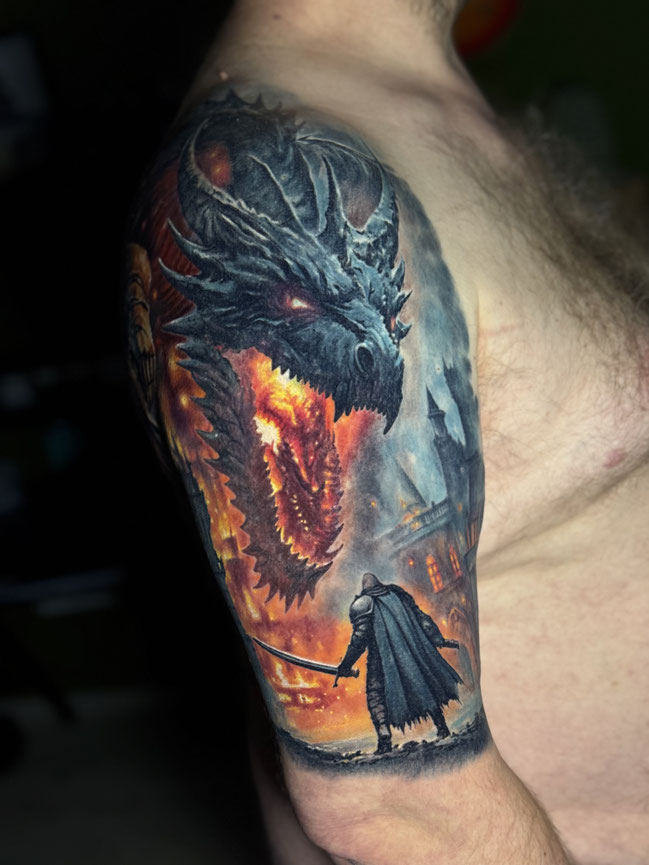
With a foundation in fine arts and design, his work balances structure, precision, and emotional depth.
We recommend him for his disciplined contrast, refined colour harmony, and long-term vision in realistic tattooing.
A conscious realist building impactful, large-scale compositions that stand the test of time.
Information
-
Realistic Colour • Realistic Black & Grey
12 years of experience
Budapest, Hungary
East End Tattoo
Vidámvásár utca 35, 1164 Budapest
Instagram: @jozsef_hornyak_tattoos
Website: https://eastendtattoo.hu