Certified Artist 2026
Kevin McCauley
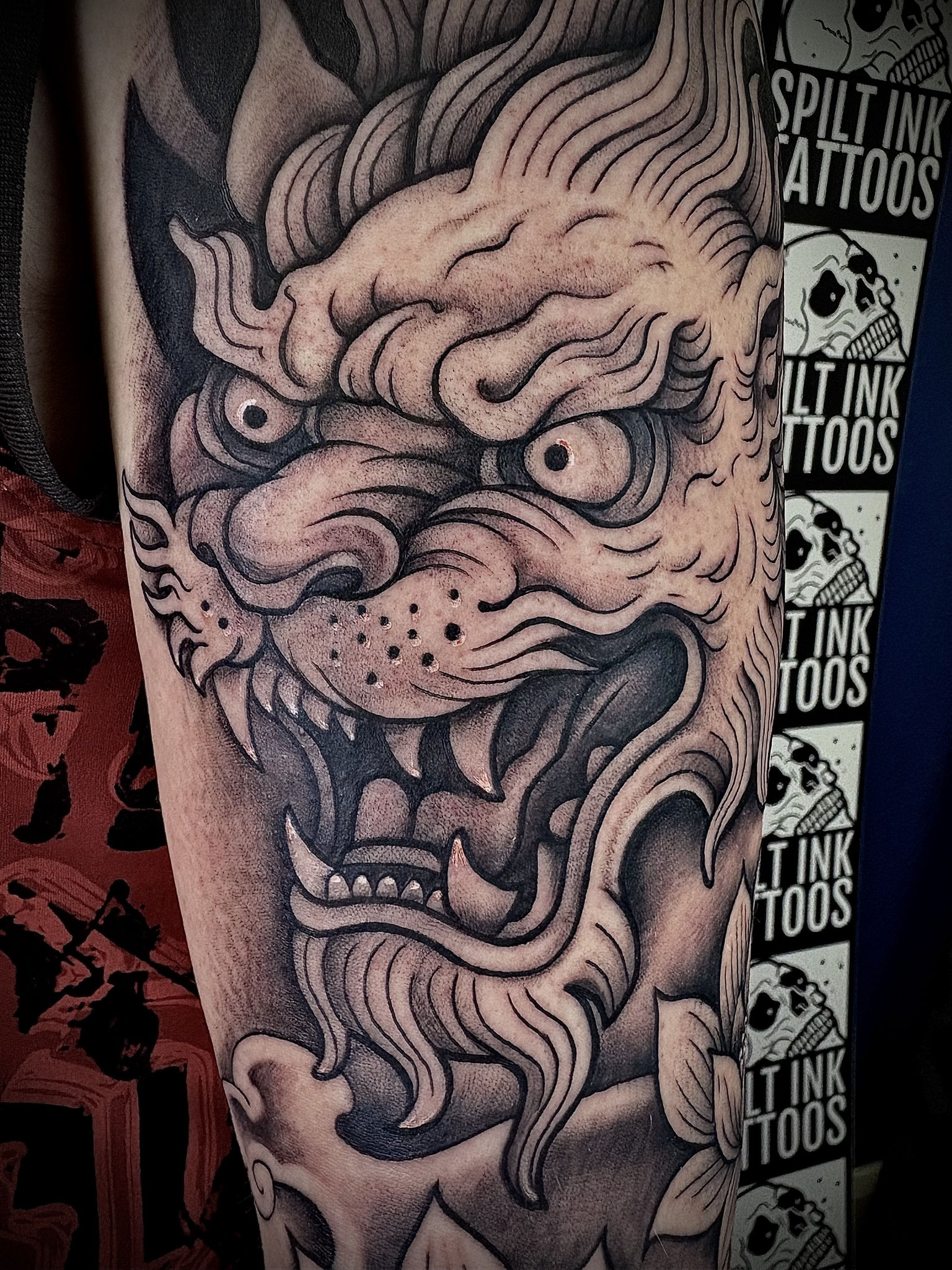
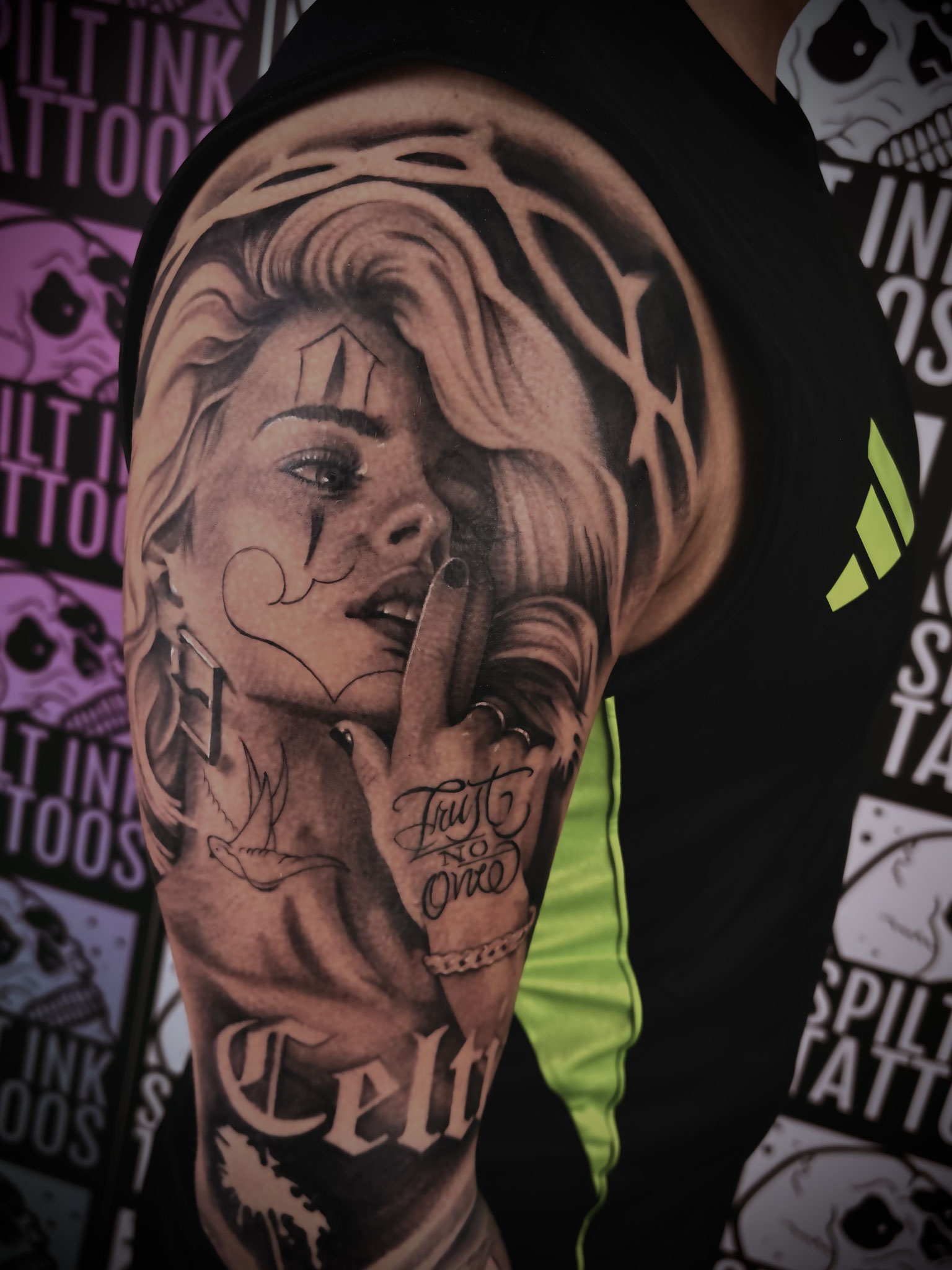
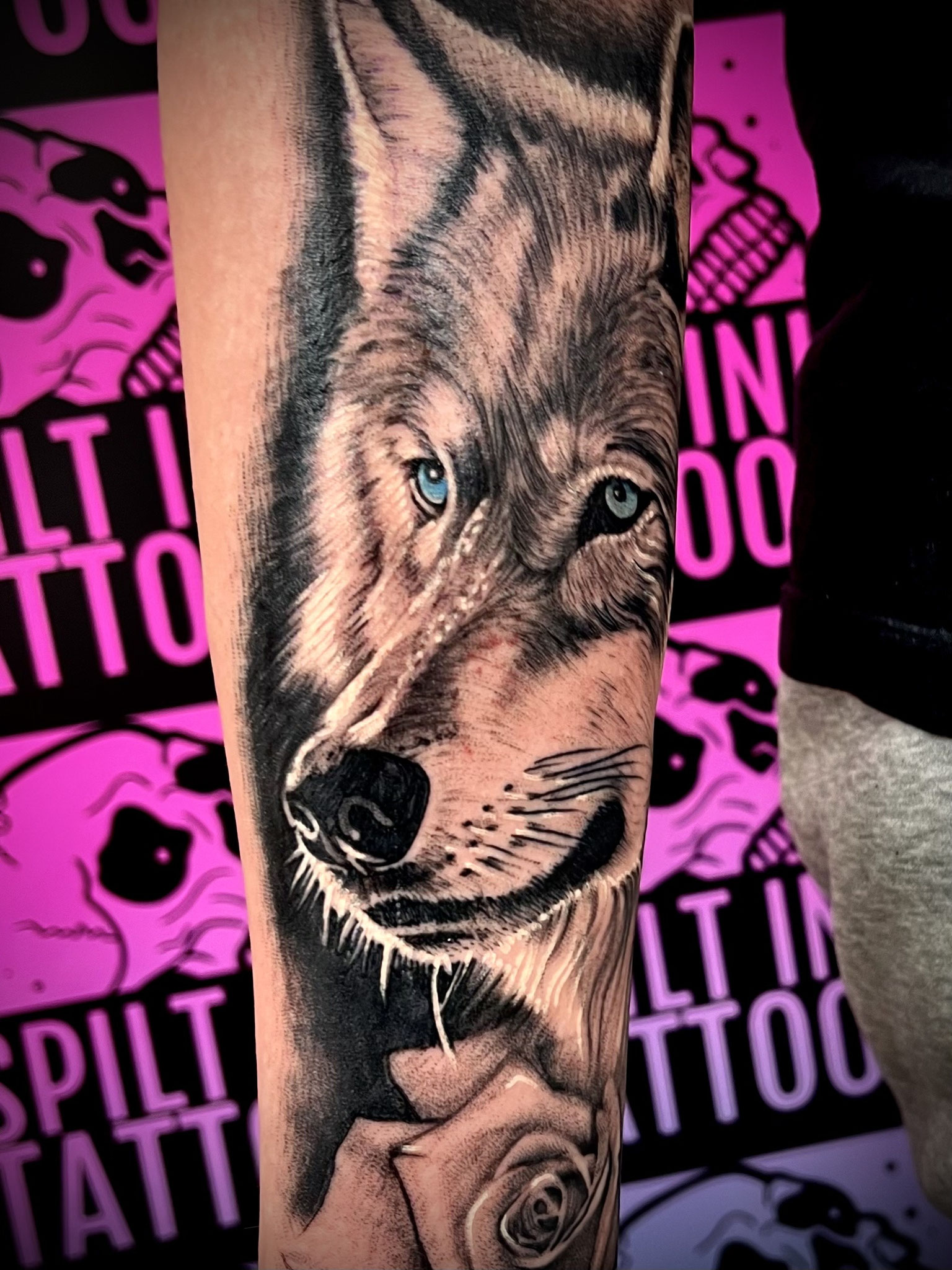
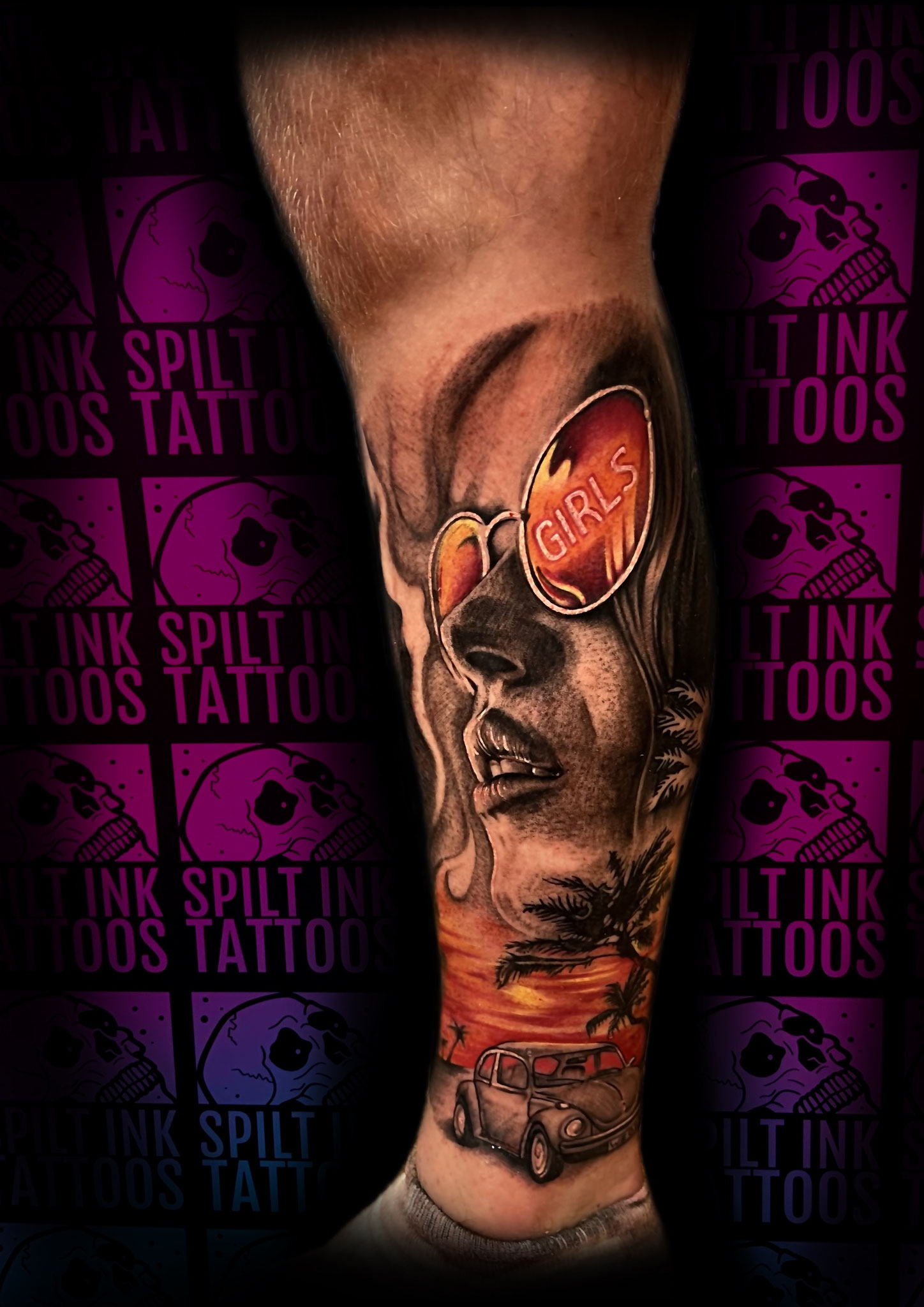
Deliberate Black & Grey Realism

Interview
How did you first get into tattooing, and what led you to pursue it professionally?
I first got hooked as a teenager after stumbling across The Exotic Art of Skin Decoration by Michelle Delio. There was a line in it that stuck with me:
“Tattoo artists, without exception, are cool. Men want to be like them, and women want to be with them.”
At the time, I was a nerdy, awkward kid at an all-boys Catholic school, so that sounded like a solid life plan.
Still, it took me until my late 30s to actually try tattooing seriously. When I met my wife, she believed in me long before I believed in myself — and that made all the difference.
Over your eight years of experience, what has shaped you the most as an artist?
Most of it came from getting things wrong.
I’m self-taught, so there was no mentor watching over me. Every technical mistake or design that didn’t translate well onto skin became a lesson paid for in time, stress, and humility.
Teaching myself meant taking full responsibility. If something didn’t work, it was on me to figure out why. That pressure shaped not just my style, but my work ethic. I didn’t grow because I got everything right — I grew because I learned how to recover when I didn’t.

You work across different styles but focus mainly on black and grey realism — how would you describe your artistic identity today?
I like to say I work in many styles, but my bank account definitely prefers black and grey realism.
I genuinely love it, but it’s also true that clients who want large, detailed black and grey pieces tend to have the patience and budget to match. Somewhere along the way, my identity became about creating serious, dramatic tattoos for people willing to sit for hours and trust the process.
So while I’m flexible in theory, I’m fluent in realism, contrast, and clients who say, “Make it big,” and, “I trust you.” Black and grey suits my brain, my hands, and my business — so we’re sticking with it.

What draws you to black and grey realism?
Black and grey removes shortcuts. With color, contrast can be achieved simply by placing opposing tones next to each other. In black and grey, all impact must come from deliberate placement of light and dark.
If lighting is off or contrast isn’t intentional, the tattoo will flatten over time. That’s what draws me in — it forces precision, discipline, and restraint.
When it works, it isn’t flashy. It’s controlled, deliberate, and built to last.
Can you describe your creative process from idea to finished piece?
My clients usually get exactly what they want — just not quite how they imagined it.
My role is to take their idea, refine it (sometimes aggressively), and make it function on a moving, aging human body. The more a client trusts the process and lets go, the stronger the final tattoo tends to be.
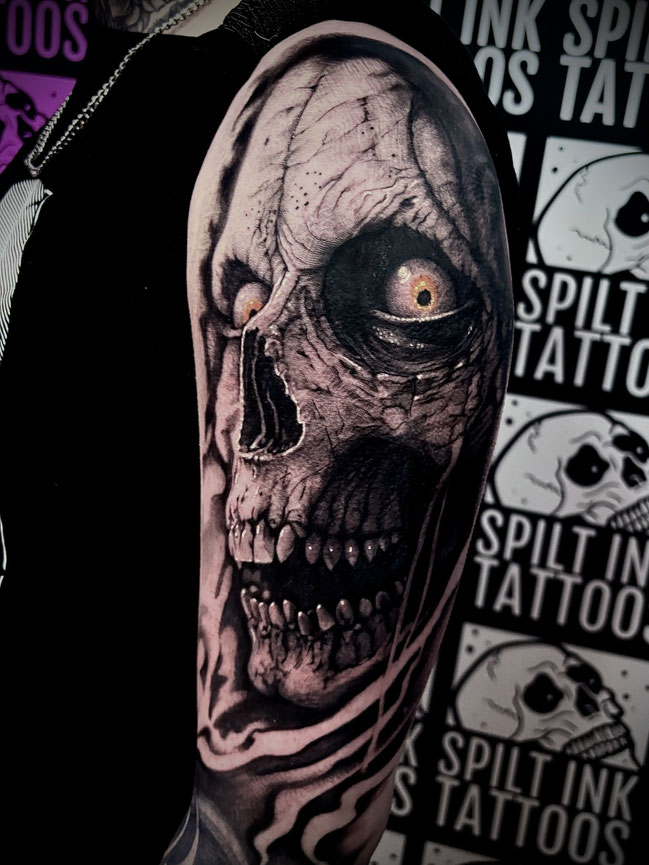
How do you approach composition and flow on the body?
Everything starts with anatomy. Before thinking about realism, I consider how the design moves, wraps, and settles into the body’s structure. If the flow is wrong, no level of detail will save it.
Lighting comes next. I work with a single, clear light source — often imagining the client’s head as the light — which dictates highlights, shadow depth, and clarity.
Realism then becomes an exercise in restraint. The goal isn’t to render everything, but to render the right things.
What technical aspects are most important for longevity and contrast?
Discipline above all. Proper blacks and committed contrast are essential. Without them, tattoos flatten over time.
Controlled saturation, avoiding overworked skin, and knowing when to stop are key fundamentals. Bold decisions and solid technique will always outlast flashy tricks.

How do you approach communication and trust with clients?
I solve this strategically.
I have a go-between named Day, whose job is translating my natural bluntness into something reassuring. I say what needs to be said, Day softens it, and everyone leaves feeling heard.
It’s an efficient system built on honesty, delegation, and excellent emotional damage control.
How do you see the evolution of realism tattooing today?
I don’t spend much time thinking about it. I’m not tracking trends or studying the scene — I’m focused on the next tattoo in front of me.
My priority is creating solid work that ages well, excites me enough to execute properly, and means something to the person wearing it. Everything else is background noise.
What are your artistic goals for the coming years?
I want to refine a signature voice within black and grey realism — work recognizable not only for technical precision, but for mood and intent.
If someone can look at a tattoo and know it’s mine without seeing the name attached, I’ll consider that success.

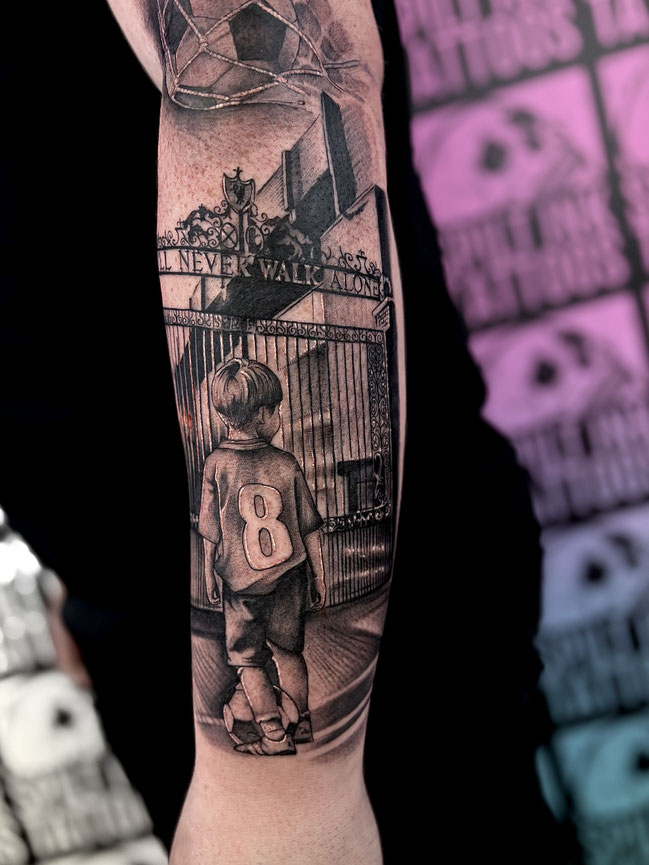
We recommend this artist for his disciplined approach to contrast, lighting, and anatomical flow.
Self-taught resilience and technical precision define his bold, long-lasting black & grey work.
A realist focused on substance over trends, building a recognizable and authored visual voice.
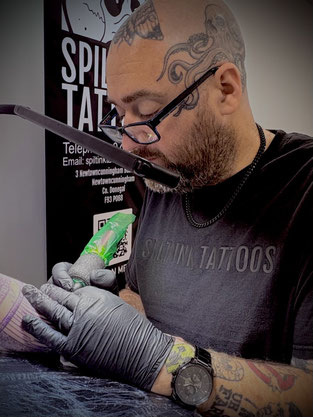
Information
Tattoo styles you work with
All styles with emphasis on black and grey realism
Years of experience: 8
City & Country: Donegal, Ireland
Instagram: @kev_from_spilt_ink | @spiltinktattoos
Spilt Ink Tattoos
Unit 3, Newtowncunningham Business Park, Co. Donegal, Ireland , F93 V660