Certified Artist 2026
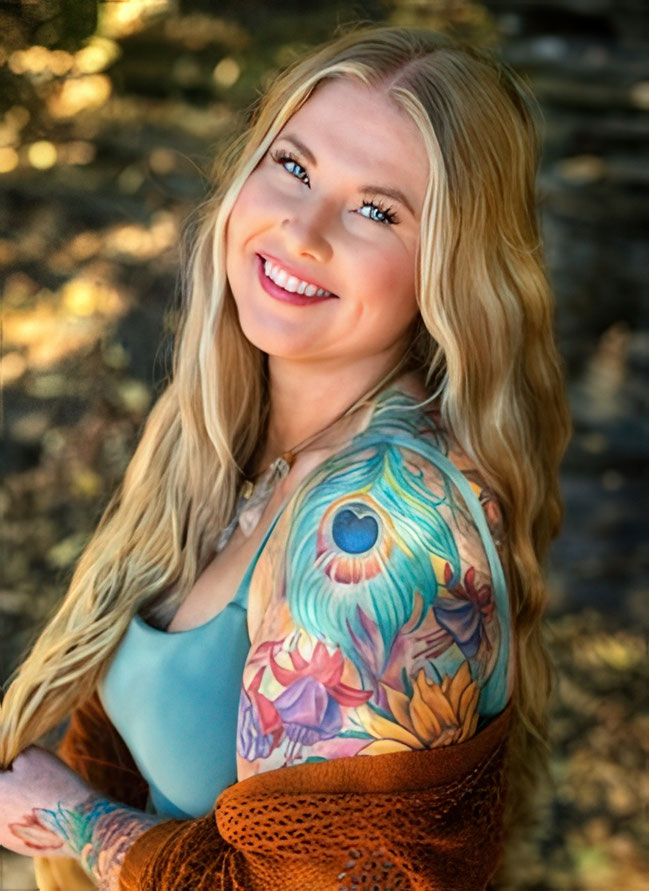
Megan Wood
Painterly Color Realism Defined by Precision and Emotional Depth
Interview
How did you first get into tattooing, and what led you to develop a more artistic and painterly approach to realism?
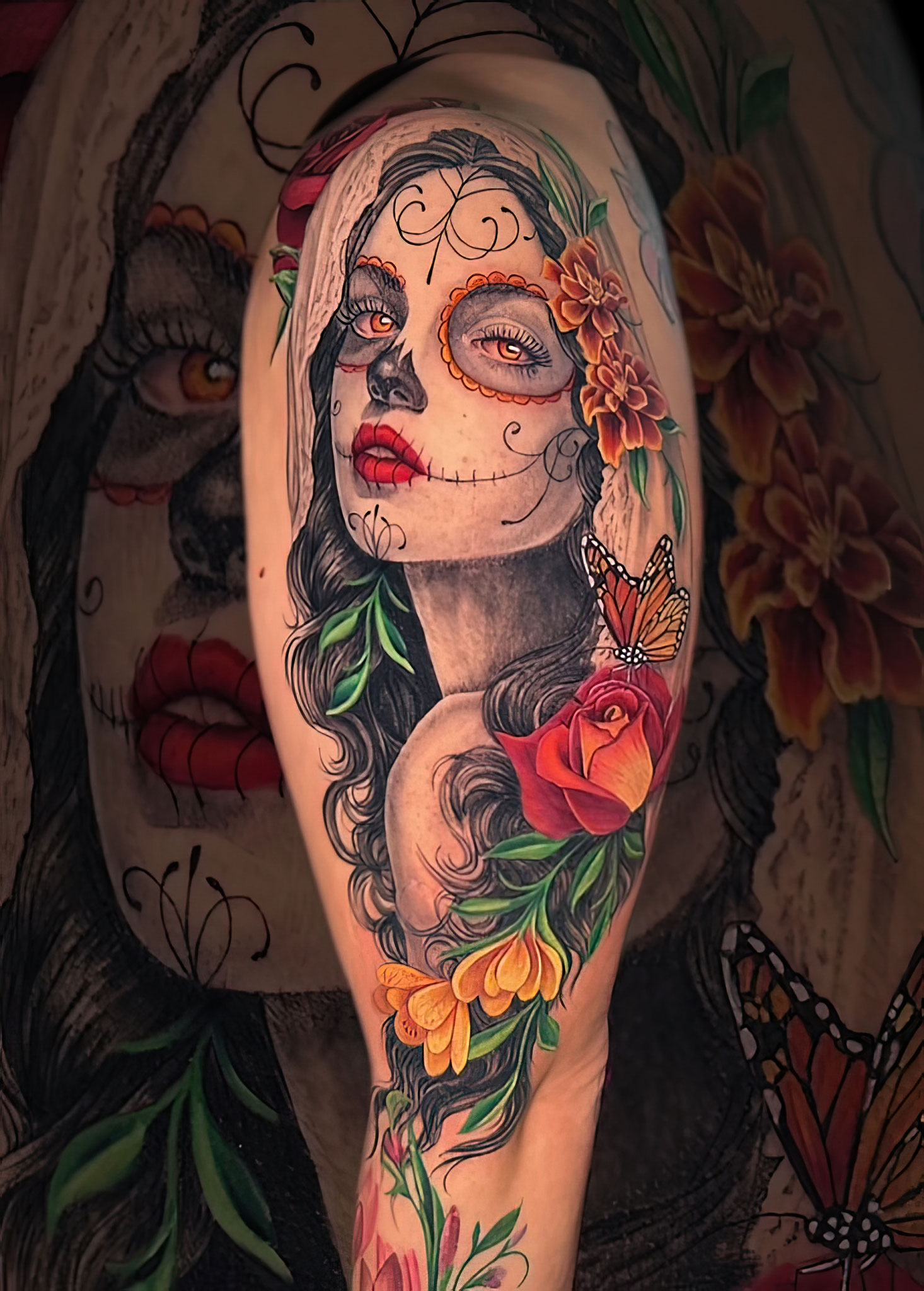
I got into tattooing because I’ve always had an undeniable need to create. Making art feels deeply connected to my purpose, and tattooing became a way to channel that creative drive into a living, breathing medium. I’ve been immersed in art for as long as I can remember — through formal art school training and years of continuous practice — and tattooing allowed me to transform that foundation into a lifelong career.
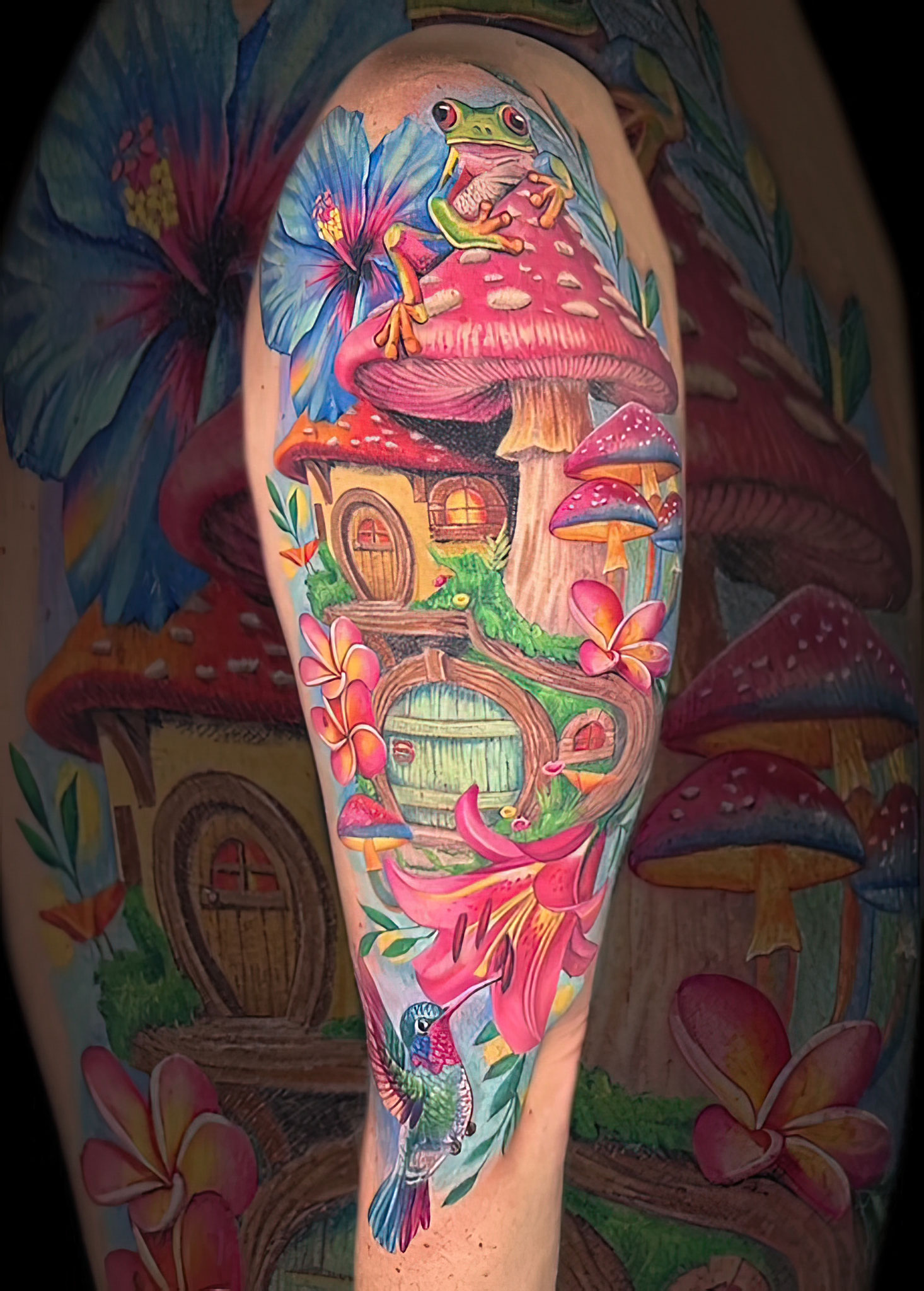
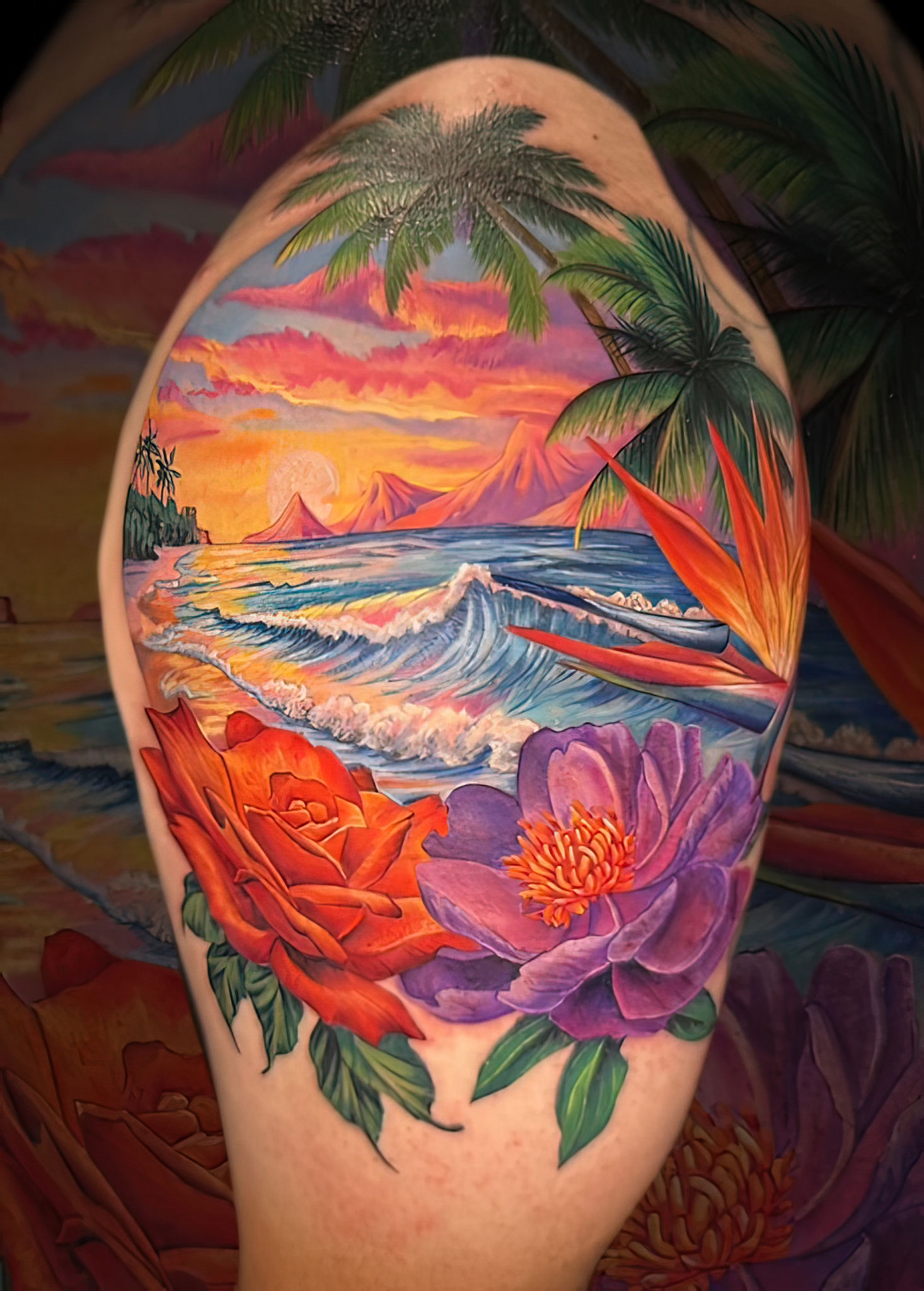
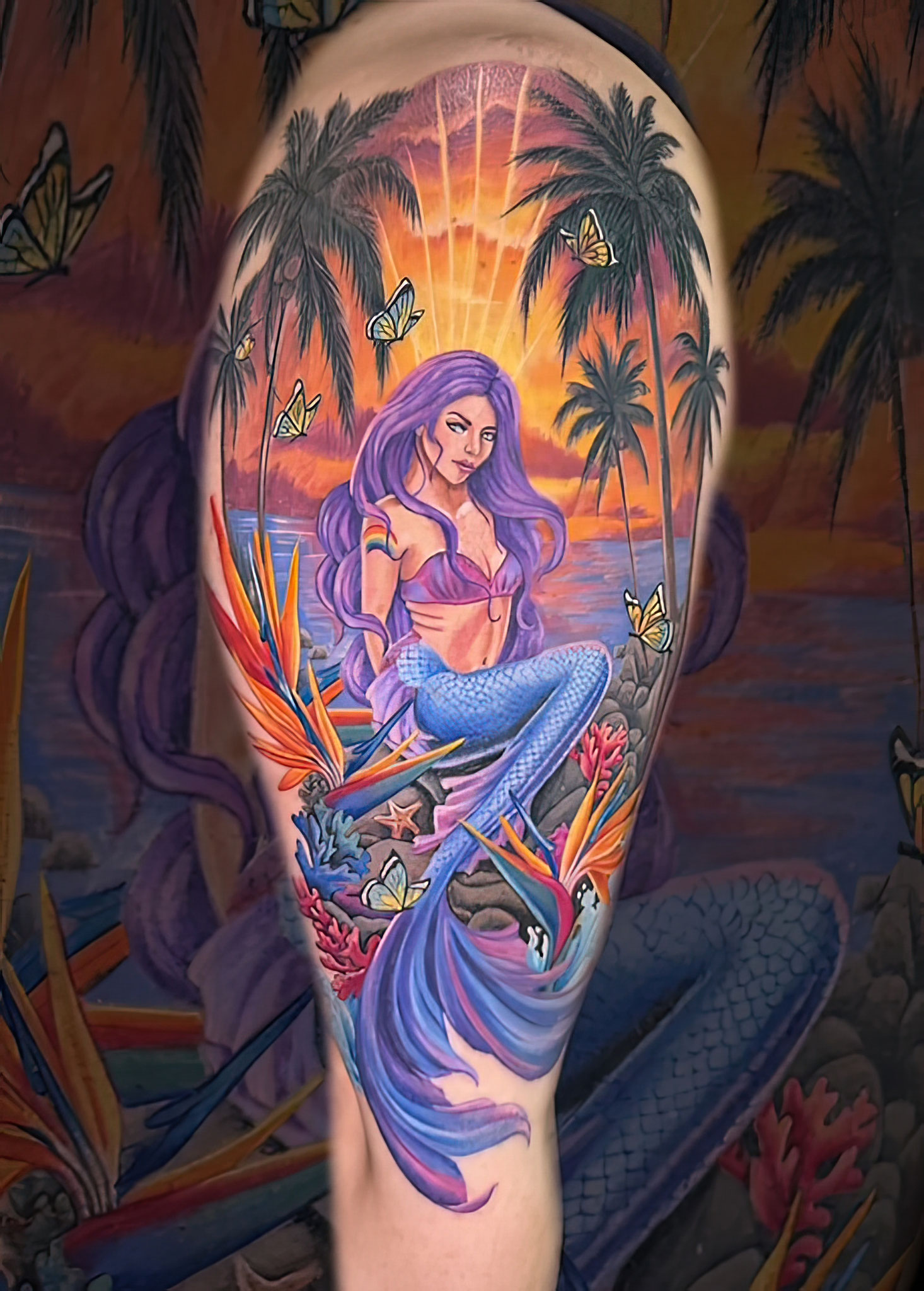
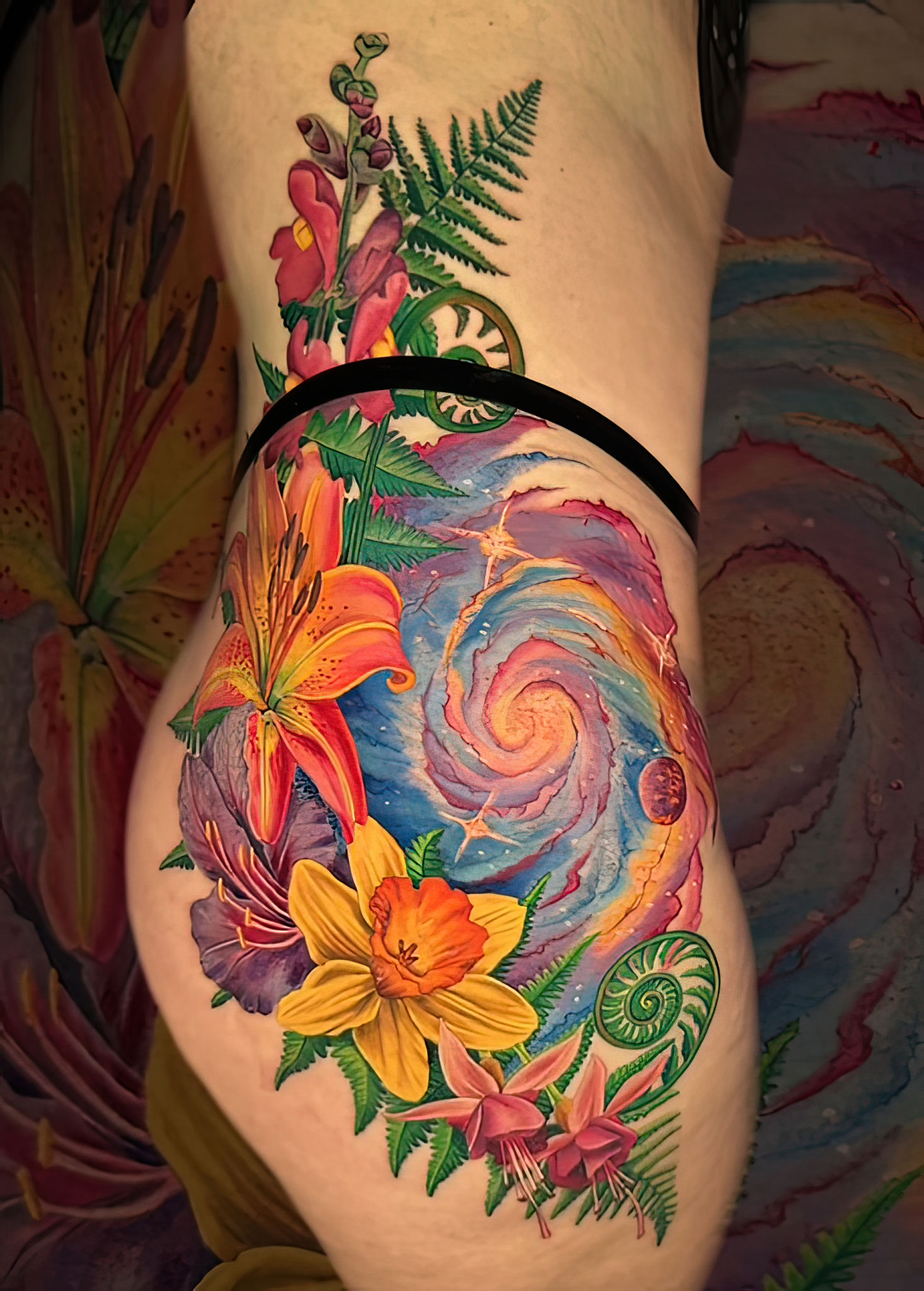
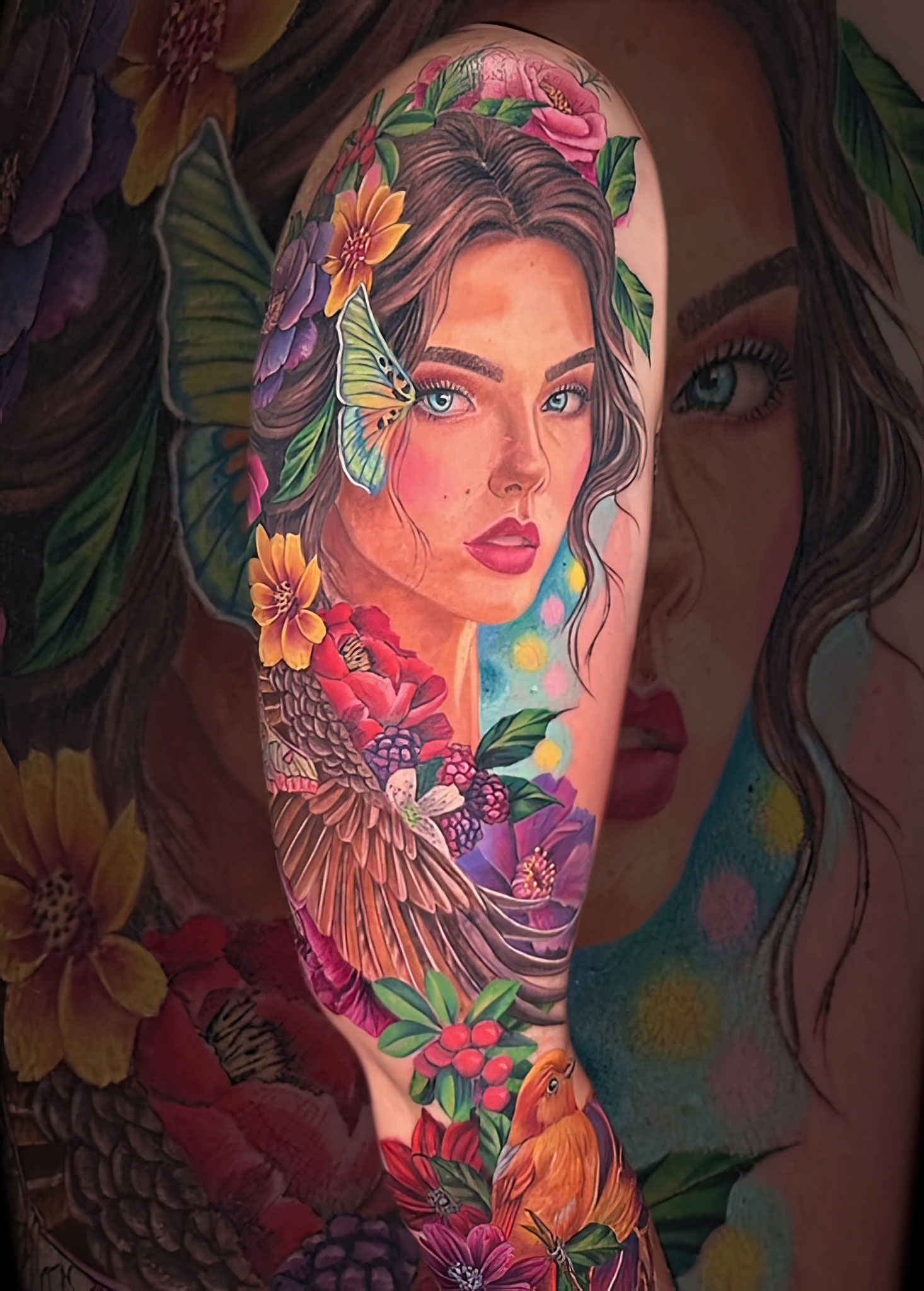
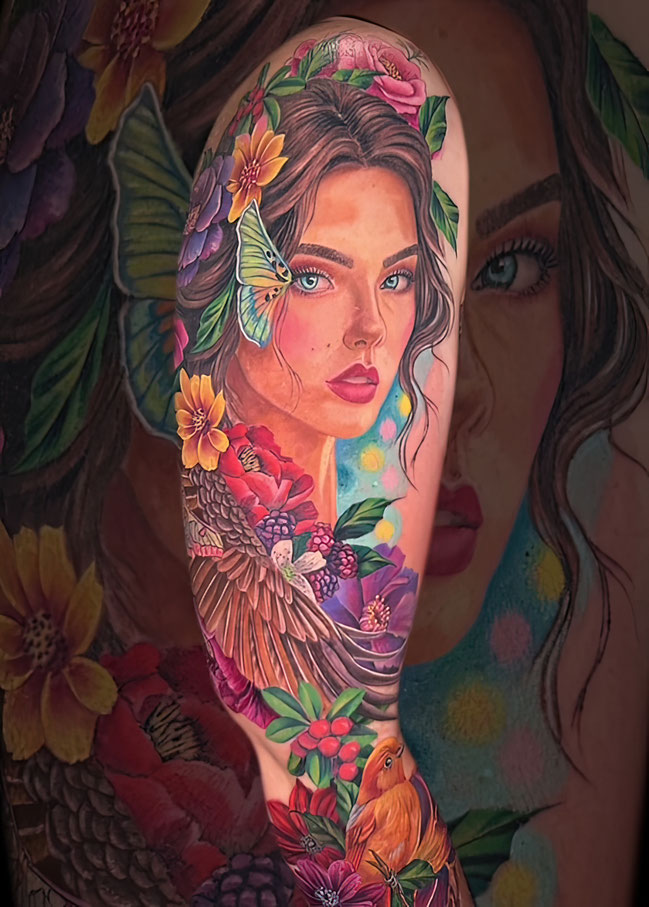
My painterly approach stems directly from that background. I treat the tattoo machine much like a paintbrush, applying traditional painting principles — contrast, depth, composition, and color theory — through ink. While realism forms the base of my work, I often accentuate or subtly exaggerate certain elements to give the tattoo a painted quality. Eyes, for example, are always a focal point for me. Whether human or animal, they hold emotion and presence. Enhancing them helps the piece feel truly alive on the skin.
With 15 years of experience, which moments or projects have most influenced your evolution as an artist?
One of the most significant influences on my growth has actually been technology. It may not sound romantic, but it’s honest. Transitioning from purely hand-drawn designs to digital composition changed everything. Designing digitally allows me to combine multiple reference images, harmonize them into a cohesive concept, and make real-time adjustments with the client before the tattoo begins.
Beyond technology, my evolution is driven by an internal standard. When I design, I visualize how the piece will exist on the body and ask myself whether I would be proud to stand behind it. That question is my professional benchmark. It’s not about ego — it’s about integrity. I’m not competing with other artists; I’m competing with myself, constantly raising the standard.
How would you describe your artistic identity today?
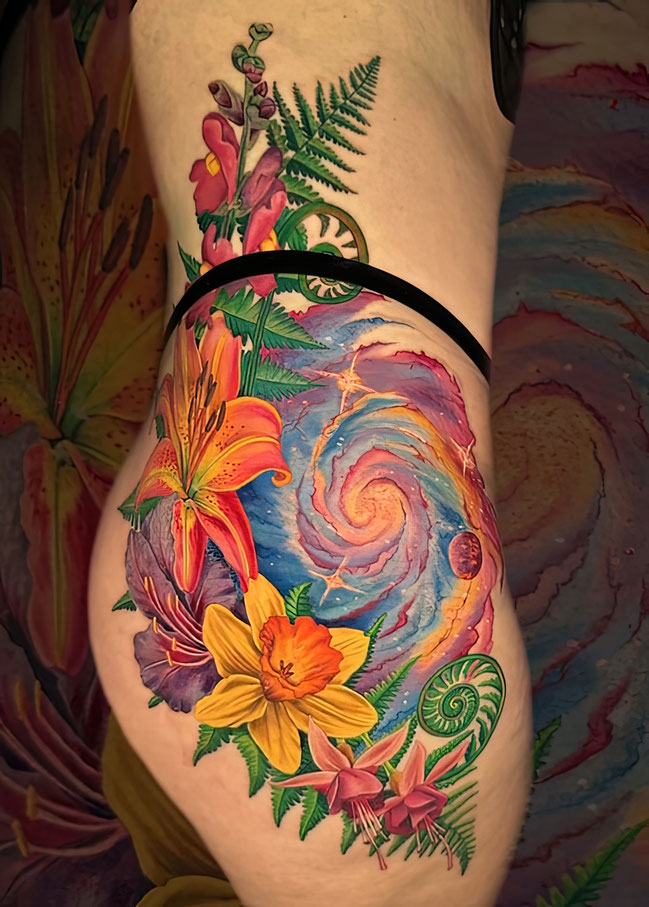
My artistic identity centers on creating tattoos that resemble paintings on skin. Clients often tell me people stop and ask if the tattoo is real because they’ve never seen work that looks quite like it. That reaction matters to me because it confirms that the piece stands apart visually while remaining intentional and refined.
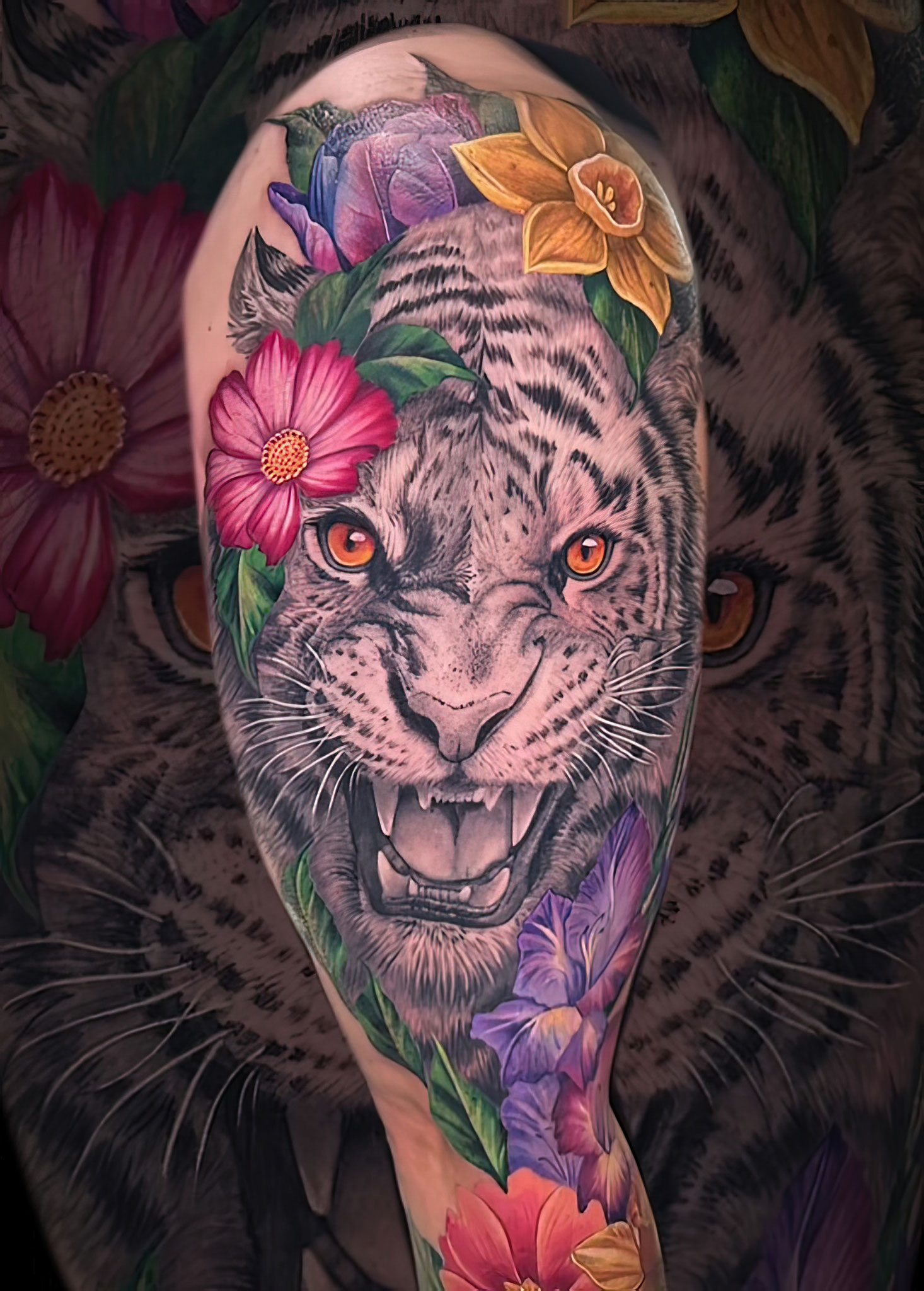
I aim to balance technical realism with expressive choices — bold color, intentional contrast, and thoughtful exaggeration — to create tattoos that feel both lifelike and artistic. Delivering that sense of visual impact and emotional presence in every color piece defines my work today.
What do you enjoy most about color realism compared to black & grey realism?
I genuinely enjoy both styles for different reasons. Black and grey realism allows for strong progress within a session and has a timeless elegance.
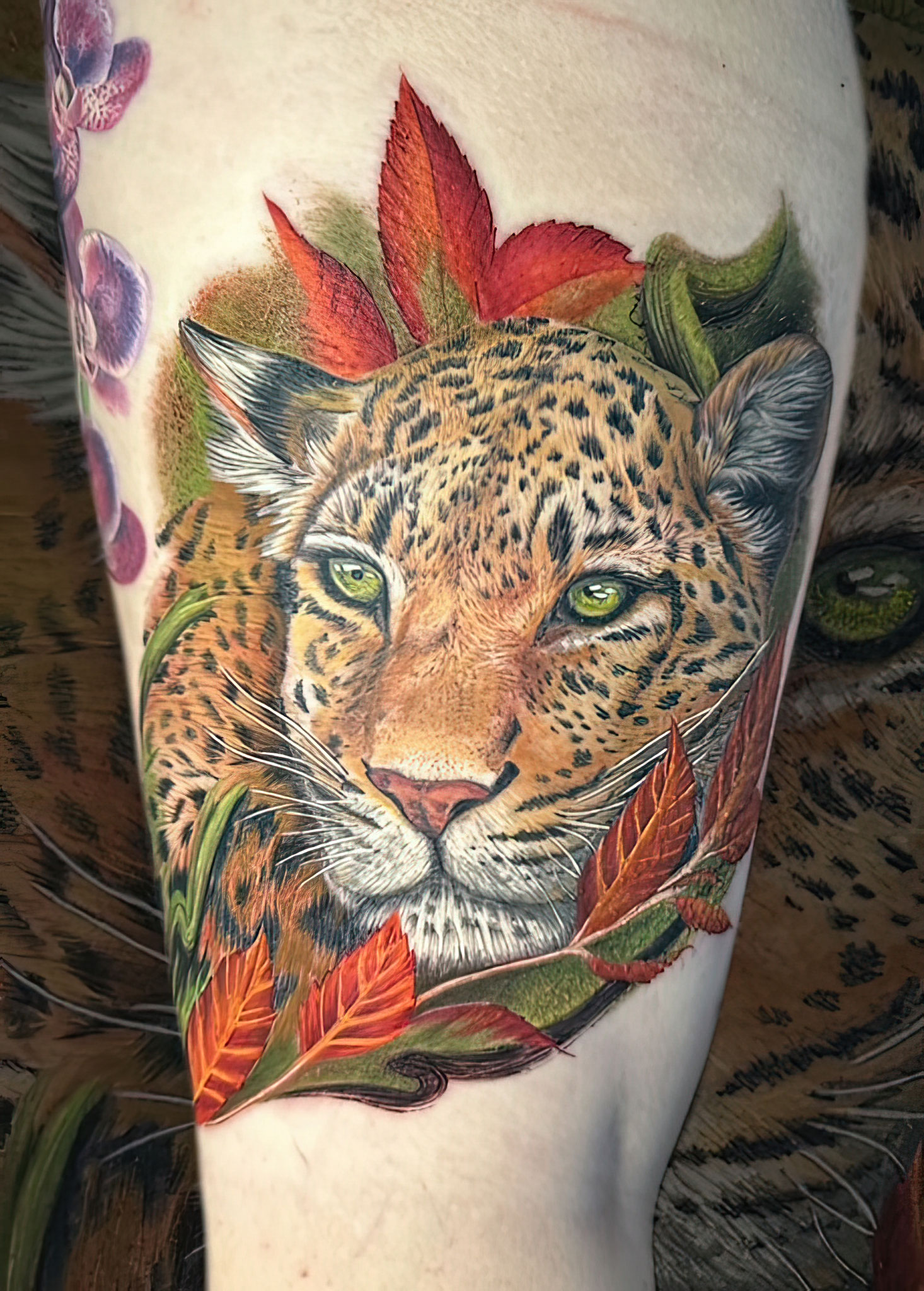
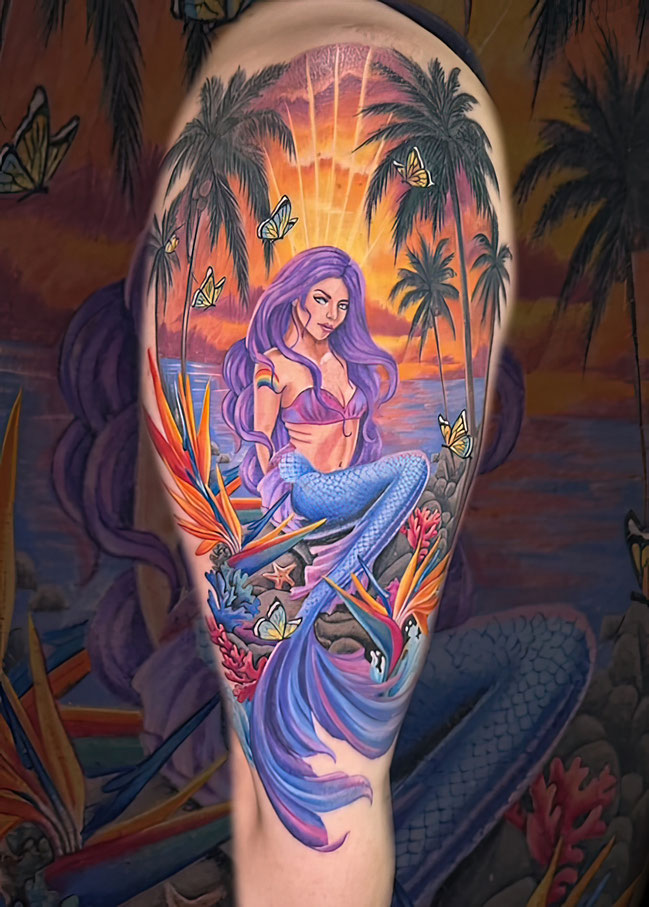
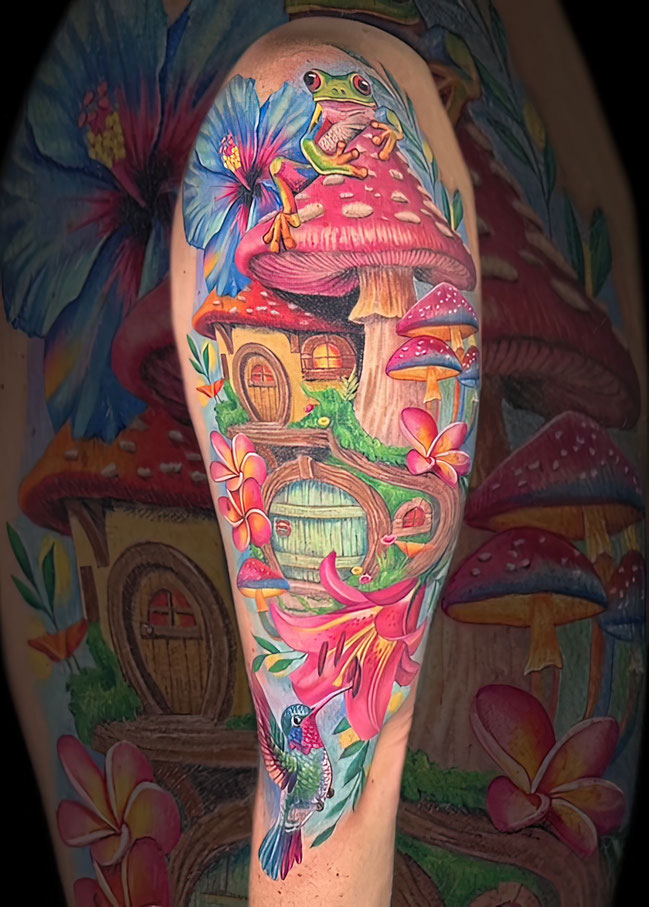
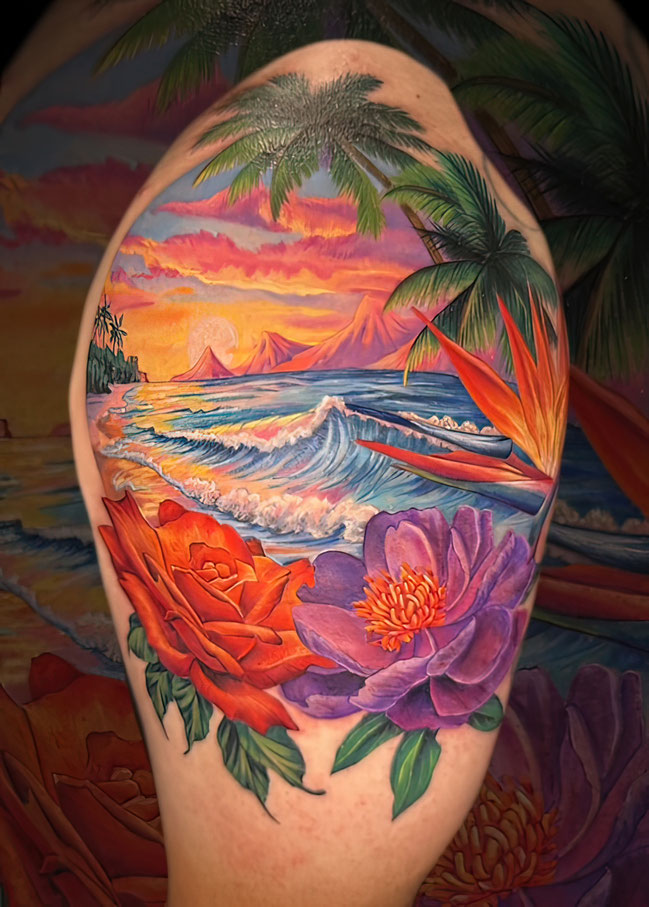
However, color realism is where my true passion lies. It is technically and artistically demanding, and that complexity keeps me engaged. I love constructing harmonious palettes — whether expansive or intentionally restrained — and ensuring that saturation, vibrancy, and balance remain consistent throughout the piece.
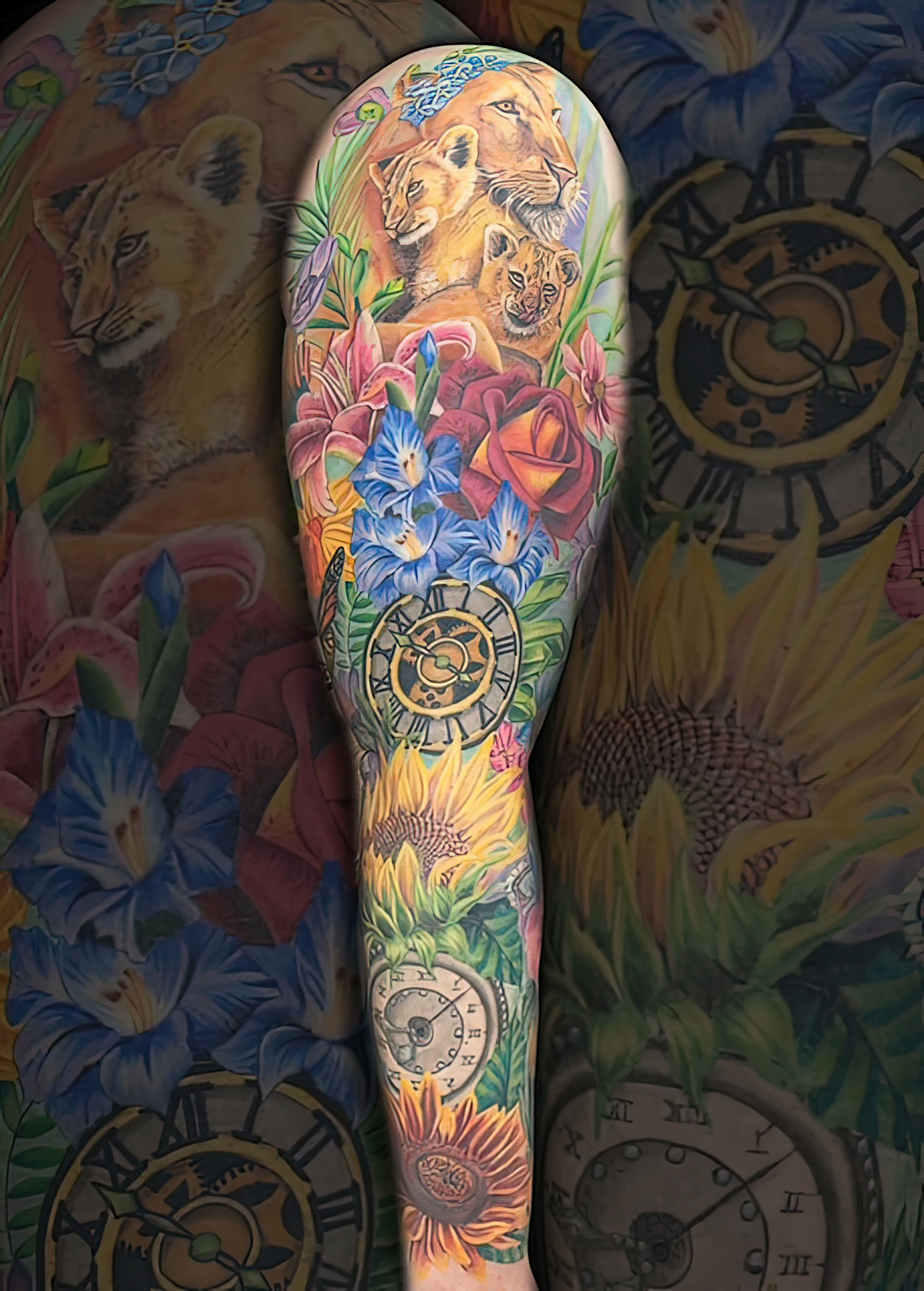
I often work with 30 to 40 colors in a single tattoo, continuously blending and adjusting. While I respect artists who mix exclusively from limited palettes, I also appreciate the power of occasionally using a pure color directly from the bottle and integrating it carefully into surrounding tones. That interplay keeps color realism dynamic and exciting for me.
Can you describe your creative process?
My process always begins with the body. Placement, size, and anatomy are my starting points because a tattoo must fit the body it lives on. Like clothing, a design can be beautiful but feel wrong if it doesn’t align with natural structure.
I study muscle flow and anatomical landmarks to guide movement within the composition. On the upper arm, for example, the taper toward the elbow and the shapes of the deltoid, bicep, and tricep create organic lines that inform direction and balance.
From there, I sketch digitally in Procreate, starting with loose structural lines and refining the layout gradually. Once the design is finalized, the tattooing process often feels intuitive. I refine the stencil, finalize color decisions, adjust placement naturally, and allow instinct to guide execution.
How do you approach composition and color harmony for longevity?
Longevity starts with respecting anatomy and selecting a palette suited to the client’s skin tone. Some colors age beautifully across all skin types; others require thoughtful placement.
Ink quality is equally important. I use Intenze Ink because I’ve consistently observed its long-term vibrancy and stability. Strong contrast is essential — even with natural fading over time, contrast preserves clarity.
I’m also mindful of detail levels. Micro-details can be visually stunning, and I do use them, but I balance them with bold areas, soft transitions, and open space. Over-reliance on tiny details can compromise aging, so composition must consider both immediate impact and long-term integrity.
What technical aspects are most important for depth and longevity?
Proper saturation is foundational. Without it, even the strongest design won’t age well. Fully saturated tones maintain integrity over time, even when soft and subtle.
I also focus on balancing softness with detail. Smooth gradients create breathing space, while detailed elements add dimension. That interplay enhances realism and ensures visual longevity.
How do you build trust with clients?
Trust often begins before clients enter the studio. Through my website and social platforms, I communicate my philosophy and approach to storytelling through tattoos.
By the time clients come in for consultation, they already understand my vision. I listen carefully to their ideas and then elevate them with professional insight. When clients say, “It’s better than I imagined,” I know we’ve achieved that balance.

How do you see realism evolving?
Trends come and go, but artistic realism is timeless. Clients recognize the discipline, patience, and mastery required to execute it well.
As tools and materials evolve, realism’s potential will only expand. I believe it will continue to grow and be celebrated for decades.
What are your goals moving forward?
I want to push my work further into a painterly direction — exploring visible brushstroke textures and more expressive backgrounds.
I’m also intrigued by blending realism with subtle surrealism, incorporating techniques such as double exposure and layered compositions. I see my future work moving toward a more art-forward, imaginative realism.
-
Why We Recommend:
We recommend this artist for his disciplined painterly realism, exceptional color control, and refined compositional structure.
His work merges fine art training with long-term skin integrity, balancing saturation, depth, and anatomical flow.
A mature color realist building emotionally powerful, art-driven tattoos designed to age with dignity and impact.
Information
Tattoo styles you work with Color realism, Artistic realism, Black and gray realism, Color and black and gray combinationsArtistic/painterly style
Years of experience tattooing 15
City & Country
Dublin, California, USA
Instagram: @rosenoirstudio
Website: RoseNoirStudio.com
Full studio address: Rose Noir Tattoo Studio , 7311 Village Parkway, Dublin, CA 94568