Certified Artist 2026
Tanagra
Graphic Precision & Velvety Dotwork

Interview
How did you first discover tattooing, and what made you choose it as your professional path?
I started tattooing in 2014. Before that, tattoos were simply a passion I wore on my skin. I got my first tattoo at 16, but I never imagined this career was within my reach. Later, I reconnected with a friend, Lilylmt, who had started working in the tattoo industry, and she invited me to join her on this adventure.
After 11 years of experience, what moments or experiences have influenced you the most as an artist?
After 10 years in the profession, I experienced a drop in energy and motivation — a period of self-doubt during which I was rarely proud of myself and no longer felt like I was improving.
I enrolled in a seminar with Thomas Vincent, an artist I deeply admire, and it changed everything. I rediscovered my passion and the joy of learning again.
How would you describe your tattoo style in your own words, especially the balance between realism and ornamental work?
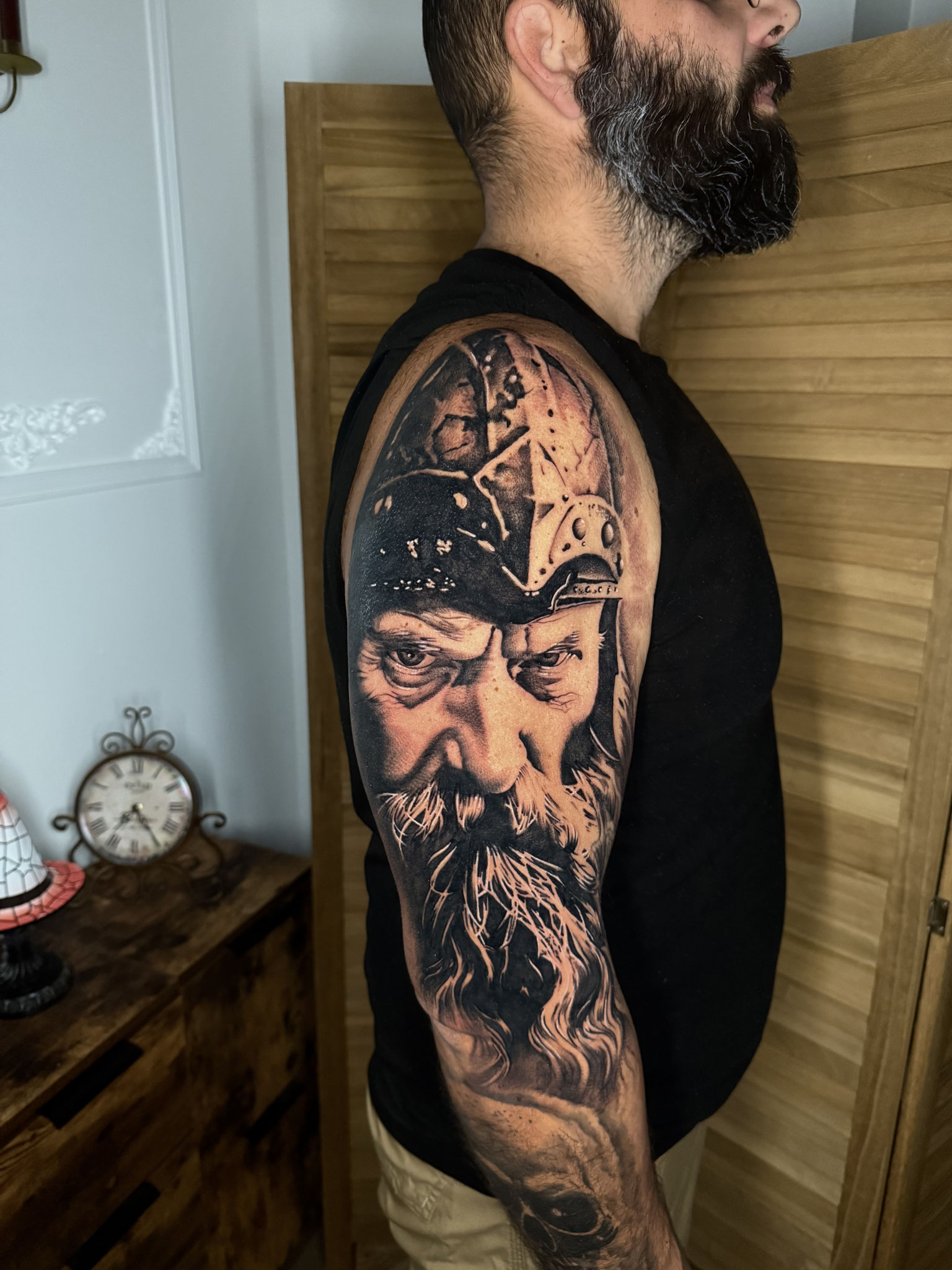
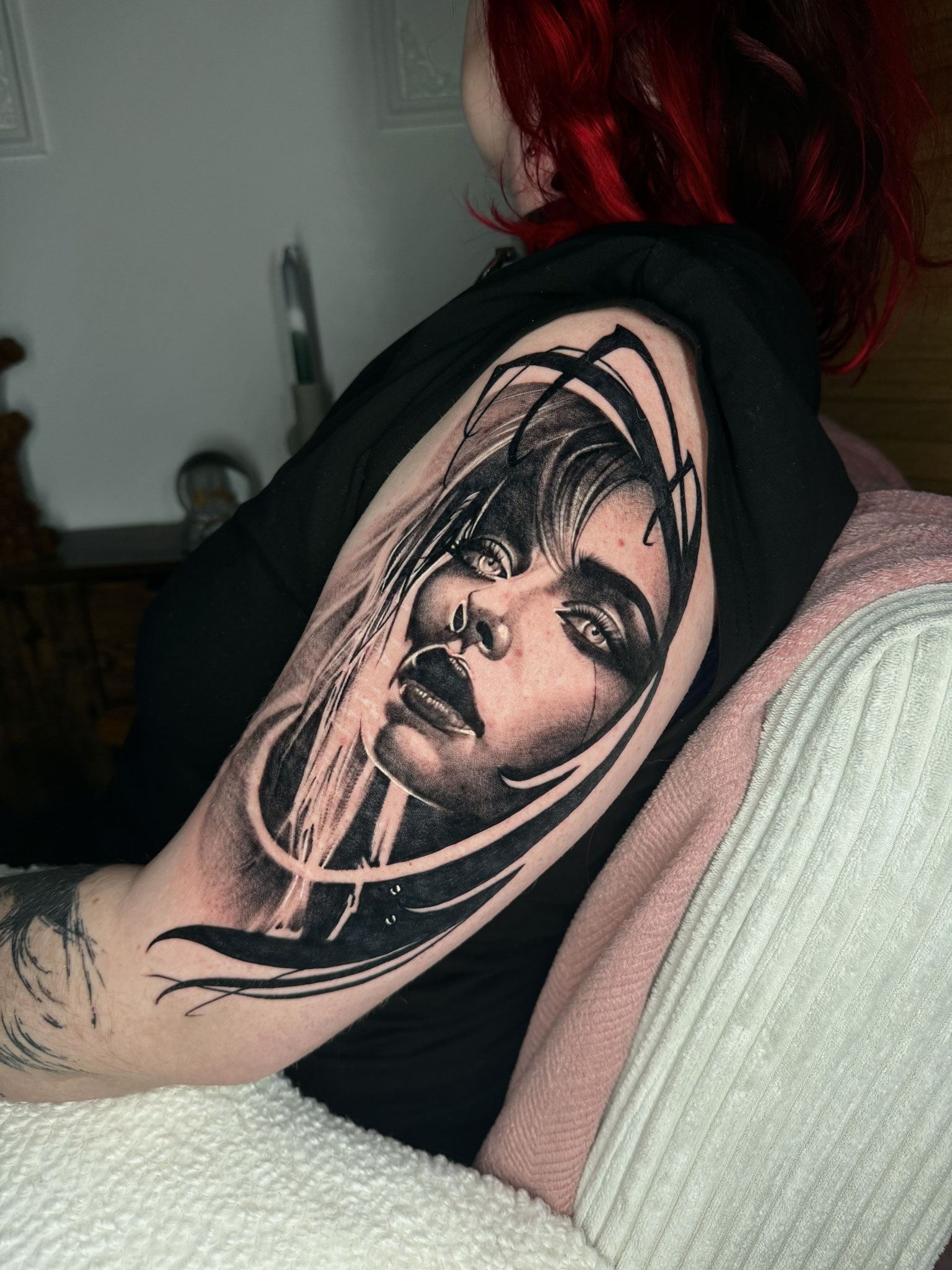
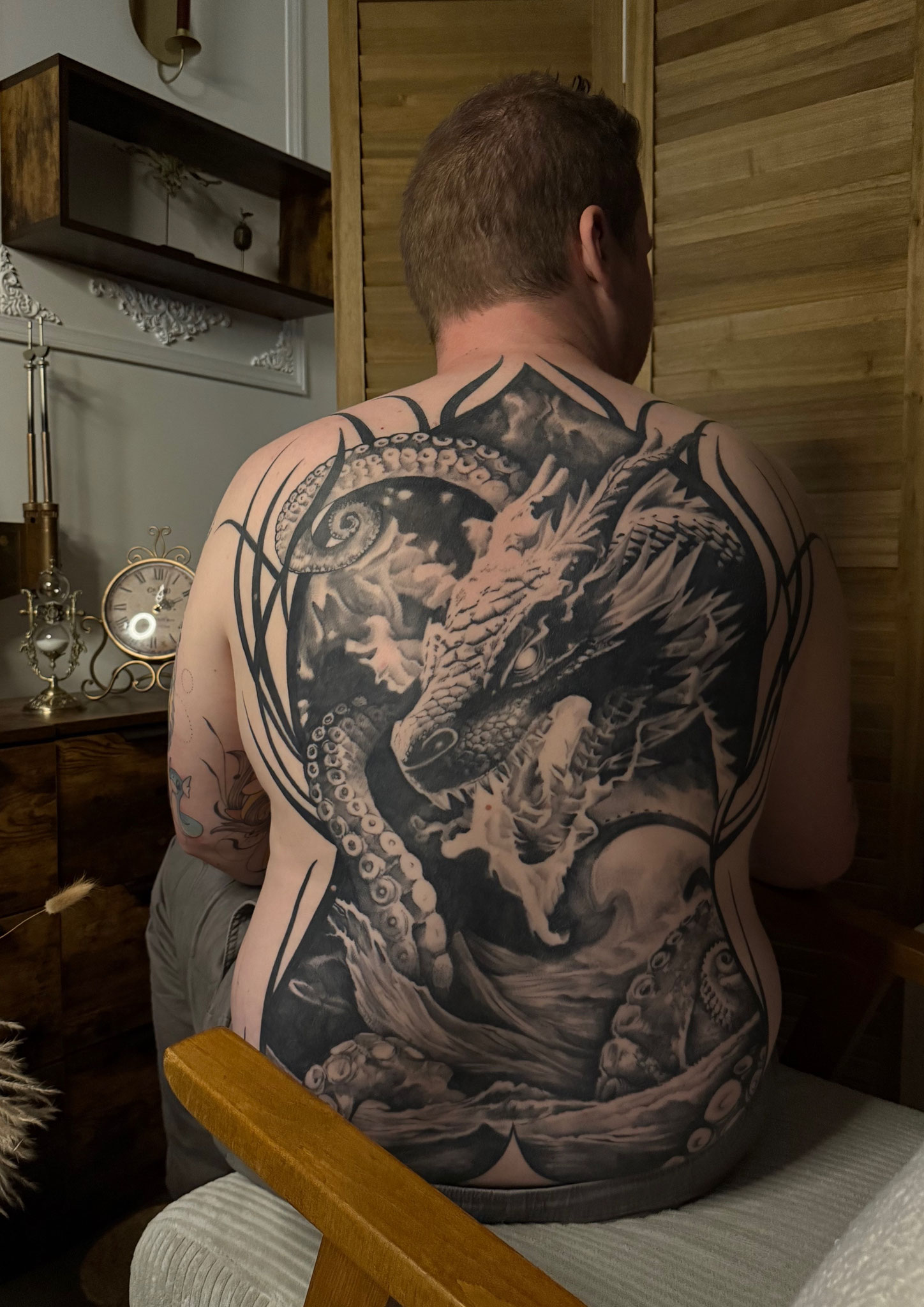
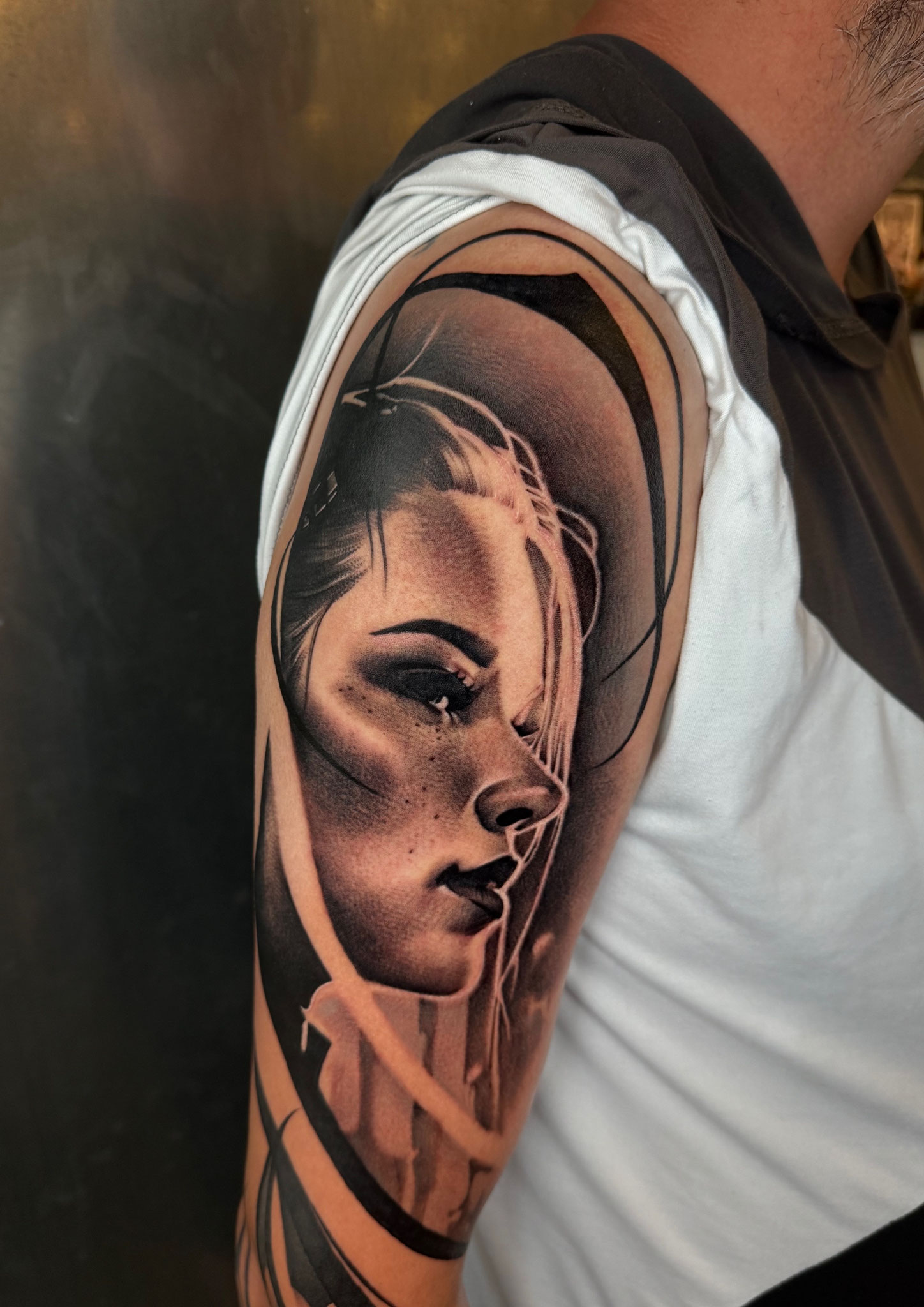
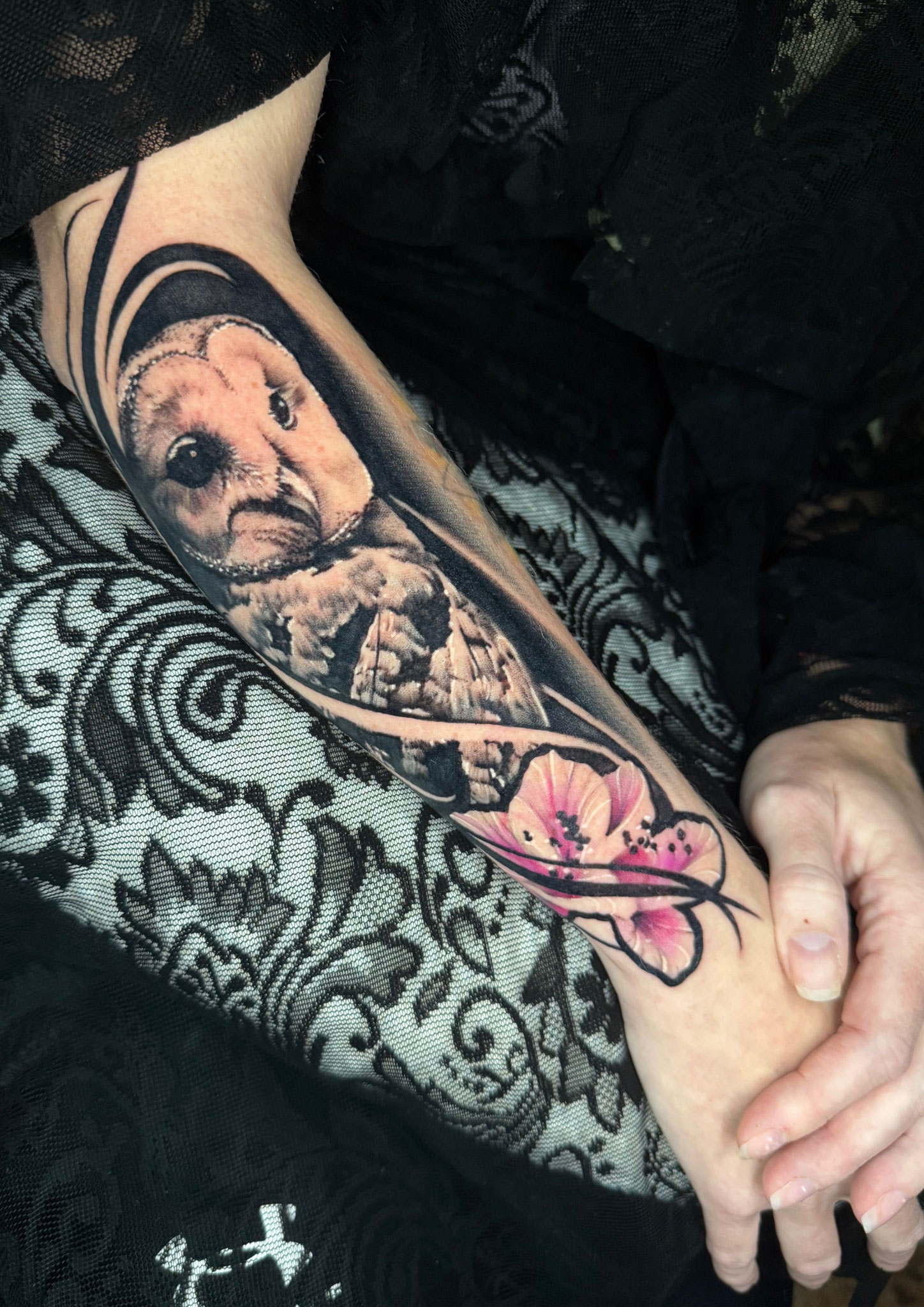
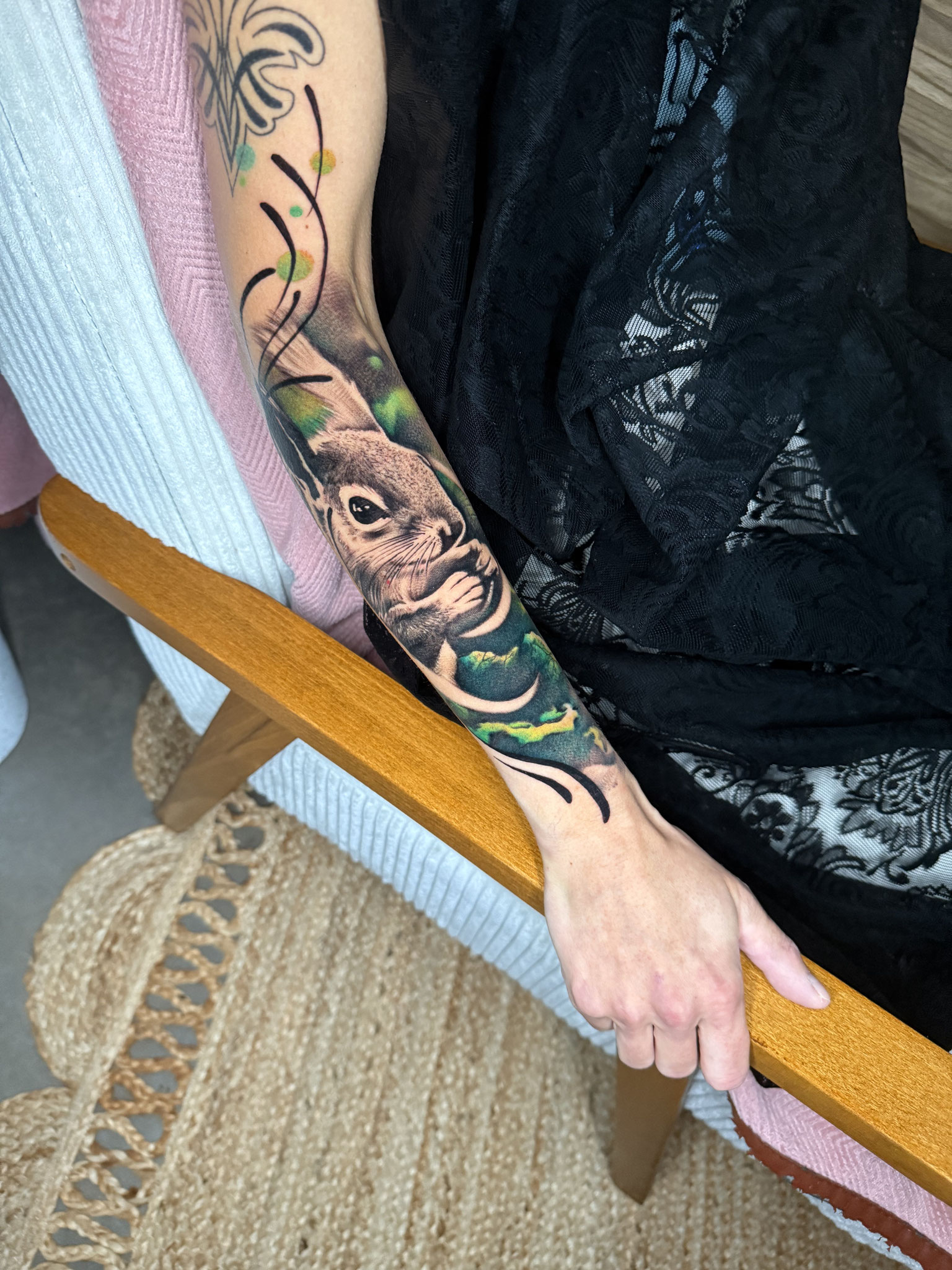
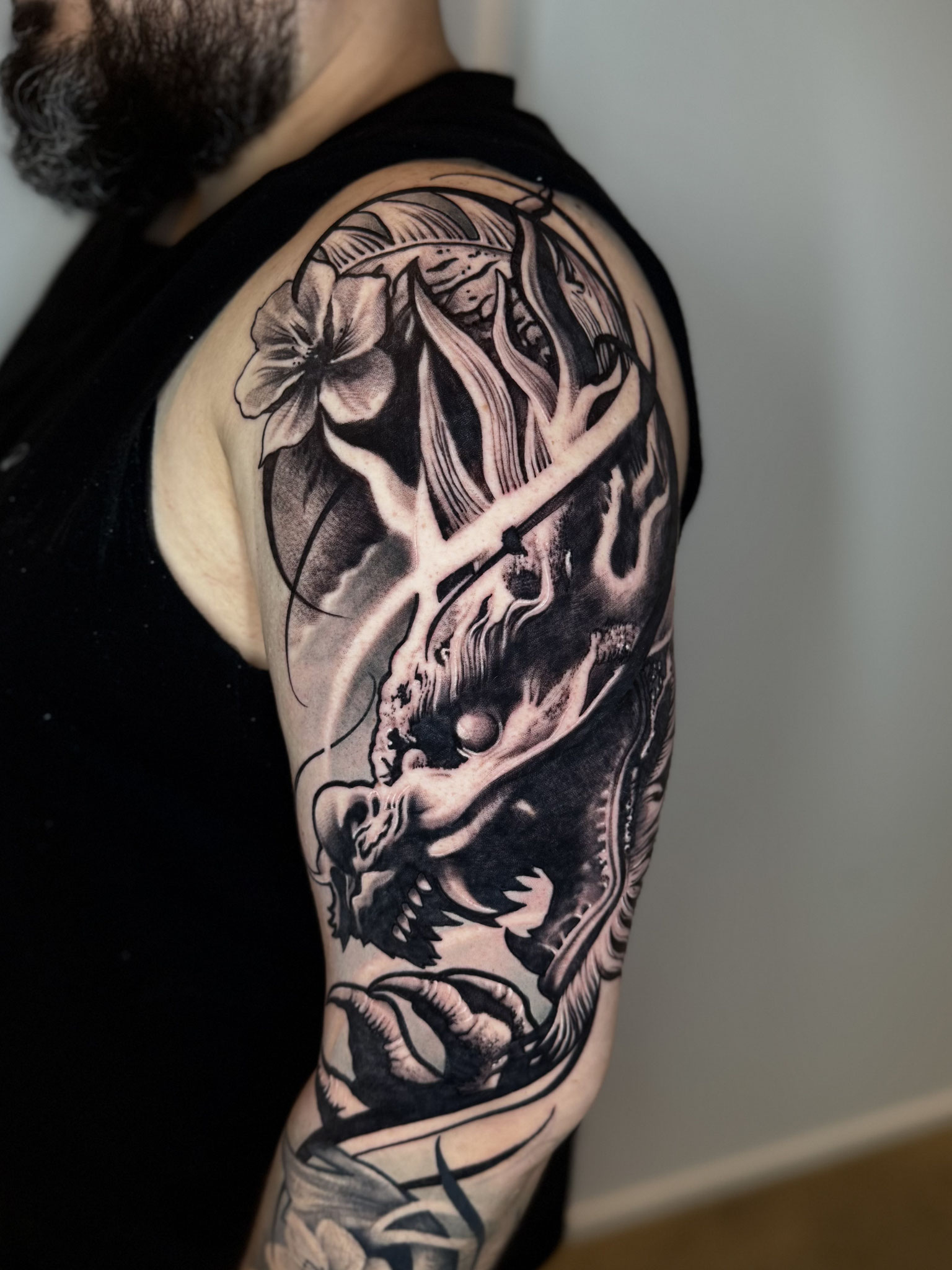
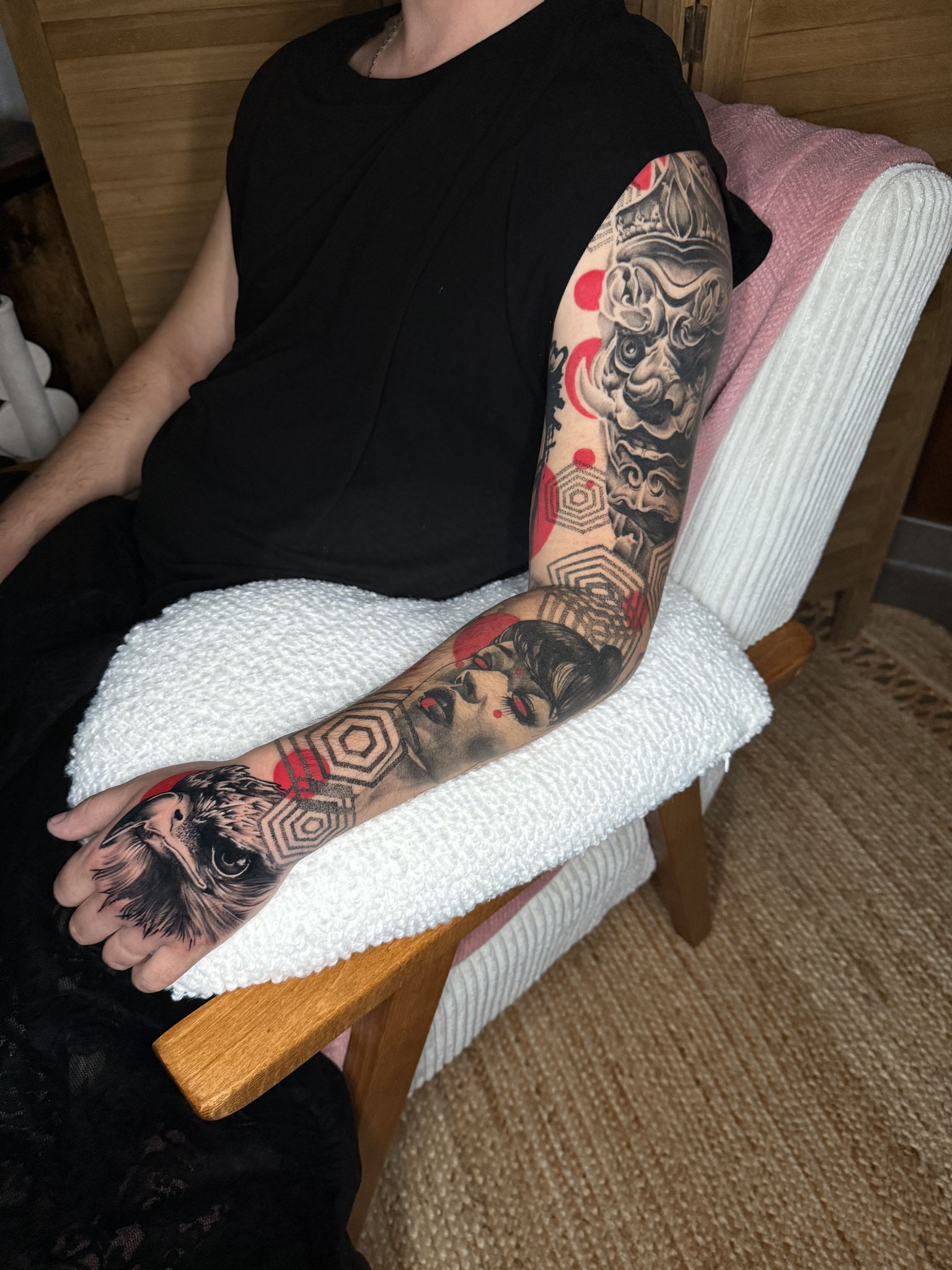
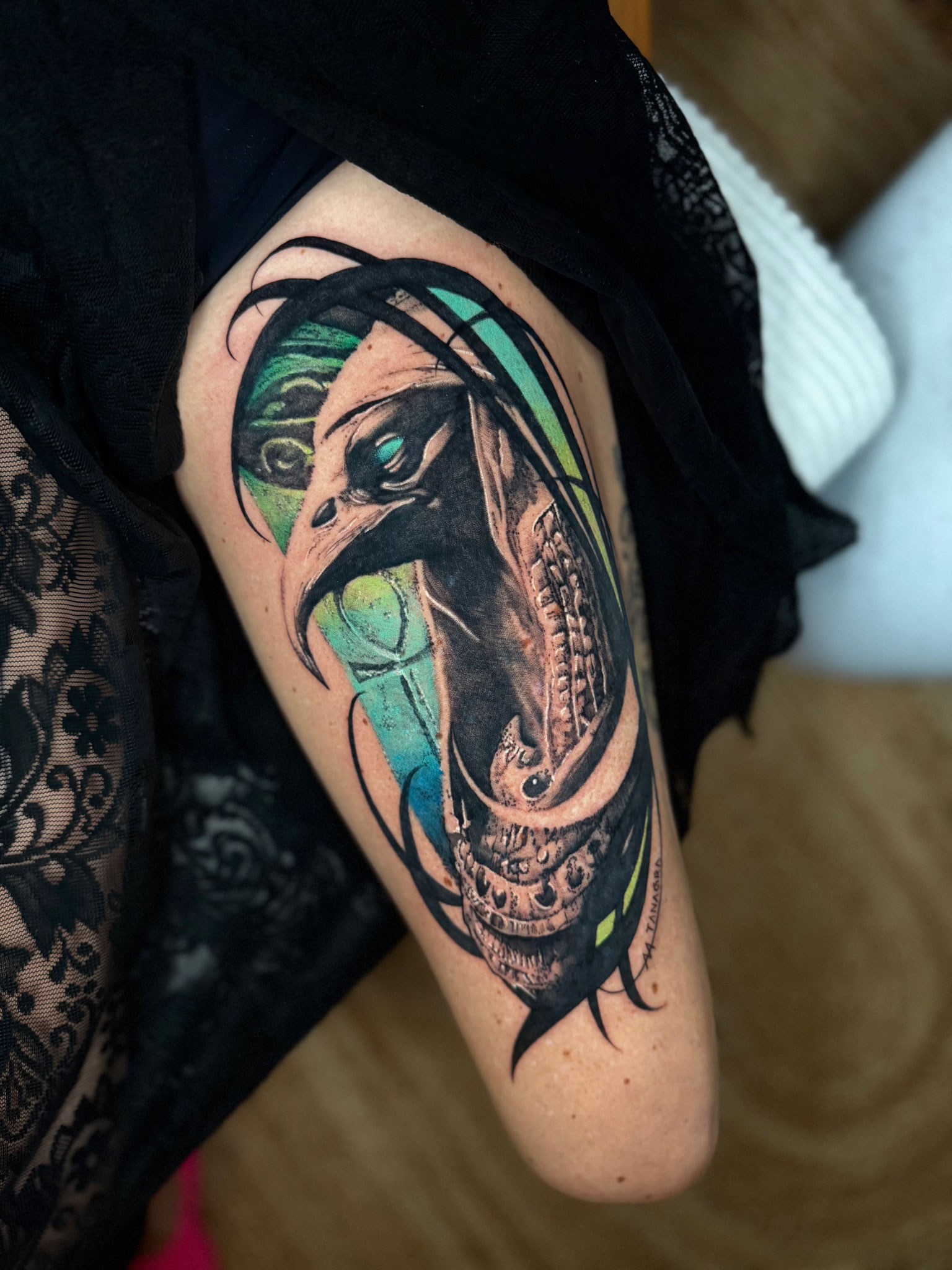
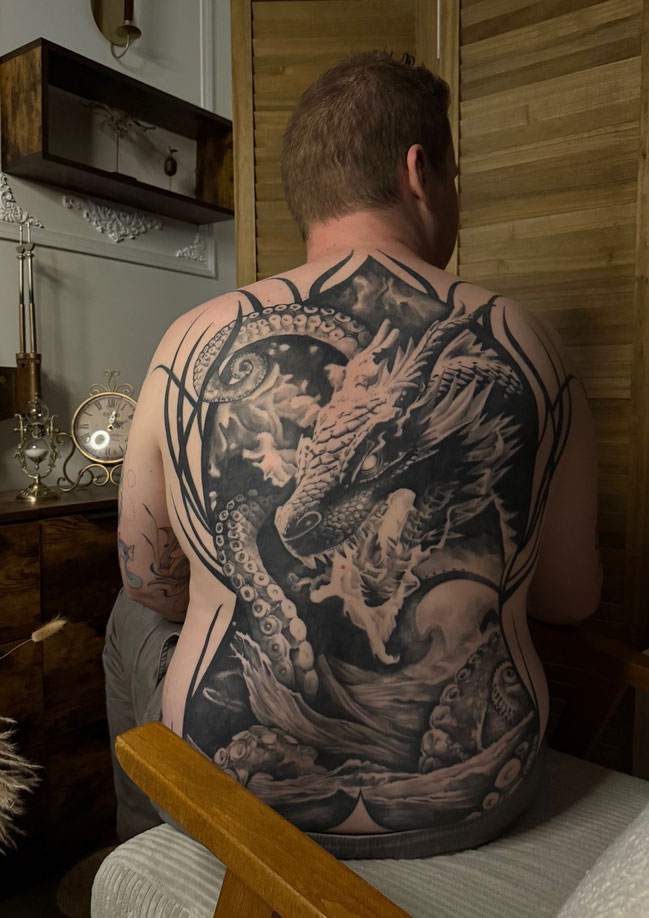
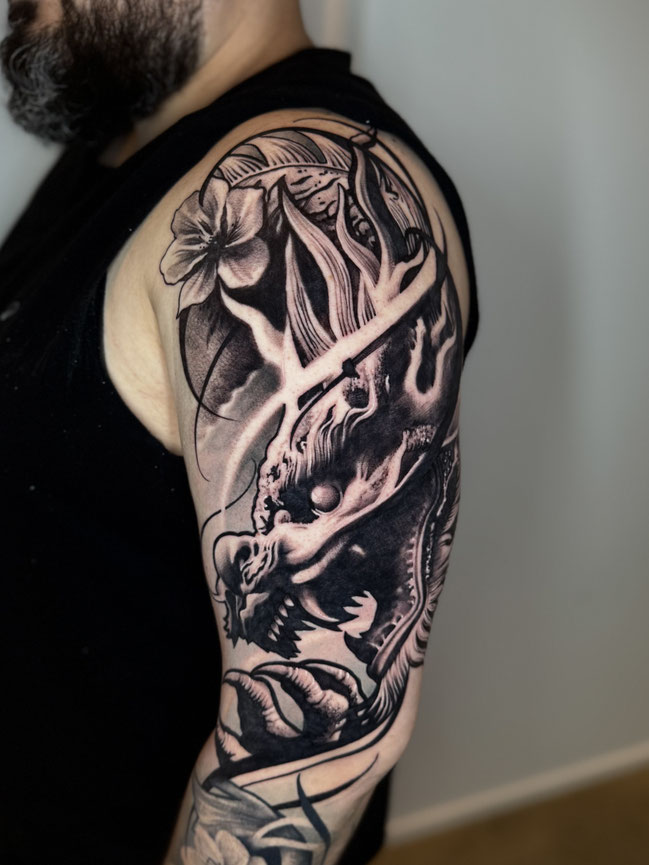
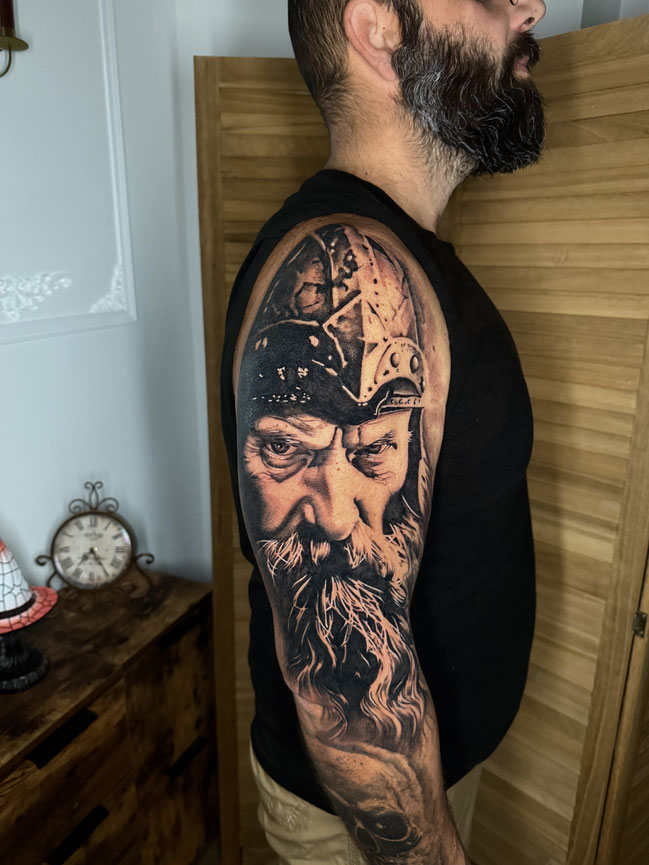
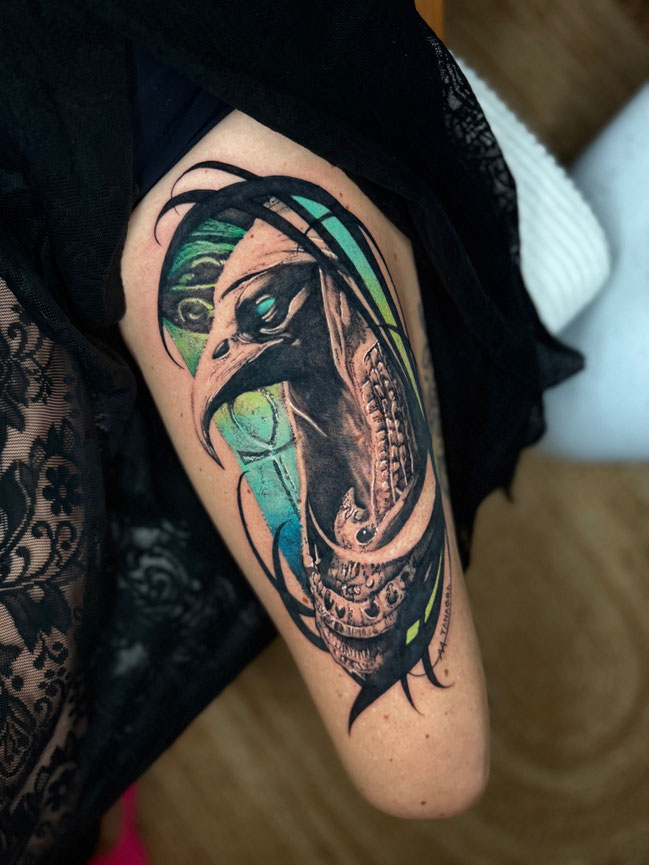
My tattoo style is a blend of realism and ornamental work. I like my pieces to feel airy and clean, following the natural curves of the body. I prefer this approach to classic realism that completely fills an area without respecting the body’s contours.
The ornamental elements I add bring lightness to a style that can often feel heavy or dark.
What attracts you to these two styles, and how do they complement each other in your artistic expression?
Realism and ornamental work are two completely different styles, with distinct materials and processes. In realism, I don’t use liners. Incorporating ornamentation into my pieces allows me to maintain my ability to draw beautiful, precise lines and remain versatile.
I appreciate the rigor and technical precision required by realism, as well as the finesse and subtlety of ornamental design.
Can you describe your creative process when working on a custom tattoo, from the initial idea to the final piece?
When creating custom tattoos, I try to give my clients as much freedom as possible. I usually prefer focusing on one main element per tattoo to create a strong focal point — often around the eyes — making the piece large enough to allow detail and ensure it ages well.
I often add the ornamental elements on the day of the tattoo to perfectly complement the client’s body.
How do you adapt realism and ornamental compositions to the natural flow of the body?
I always send a design to the client before their appointment, but I let them know it may be slightly modified on the day. I plan an overall shape that fits the requested area, but the design must be refined to suit each individual’s anatomy.
That’s why I often create the stencil for the realistic part and then add the ornamental elements freehand directly onto the skin with a marker.
What technical aspects are most important to you to ensure quality, longevity, and consistency in your tattoos?
For me, the most important principle is not trying to include too much in a single tattoo. The less visual information there is, the more legible the tattoo becomes.
It’s also essential not to be afraid of working on a larger scale to ensure the tattoo ages well and maintains its detail over time.
How do you approach the relationship with your clients, especially working in a private shop environment?
I book only one client per day to guarantee privacy and tranquility. I work alone, without a reception area, so each client knows they won’t be interrupted.
I adapt to their needs during the session. My aim is to create a cocoon-like environment, completely focused on the individual so they feel comfortable and cared for.
How do you see the tattoo scene evolving today, particularly within realism and ornamental tattooing?
Like any evolution, there are positive and negative aspects. Rather than focusing on the minority of untalented tattooers who generate buzz on social media, I prefer to pay attention to emerging talents who bring something incredible to the table — alongside highly inspiring artists such as Julia Pagneux and the remarkable evolution of Délia Brody.

What are your artistic goals or projects for the coming years?
This year, I have eight conventions planned, including two guest spots. I am also working on two collaborative tattoo projects with Arno.b and Flo.cake.
Beyond tattooing, I recently met a designer who creates plant-based candles, and I will be painting ten pieces for a capsule collection.

We recommend this artist for her refined balance between realism and ornamental precision, creating light yet impactful
compositions.
Her disciplined approach to scale, negative space, and anatomical flow ensures clarity and longevity.
A thoughtful artist building elegant, body-conscious realism with a distinctive ornamental signature.
Information
. 11 years
. Besançon France
. Instagram: @tanagralmt
. Shop LMT Besançon (private shop)