Certified Artist 2026
Yas Grit Ur Teeth
Surreal Black & Grey with Architectural Edge

Interview
How did you discover your passion for tattooing, and what inspired you to make it your career?
When I was young, my mum had a collection of tattoo magazines that I used to pore over, memorizing them page by page. I was completely and utterly enthralled with the idea that we could change our bodies to create the image we wanted to present to the world. Since then, that deep-rooted love has only grown, and tattooing is what I live and breathe.
It was always a career that I didn’t think was sustainable for me — an unachievable goal, if you will — but after tattooing part-time as a self-taught stick-and-poke artist, I decided to throw myself in at the deep end and go for it. And I’m so glad I did.

How would you define your tattooing style, and what makes it unique?
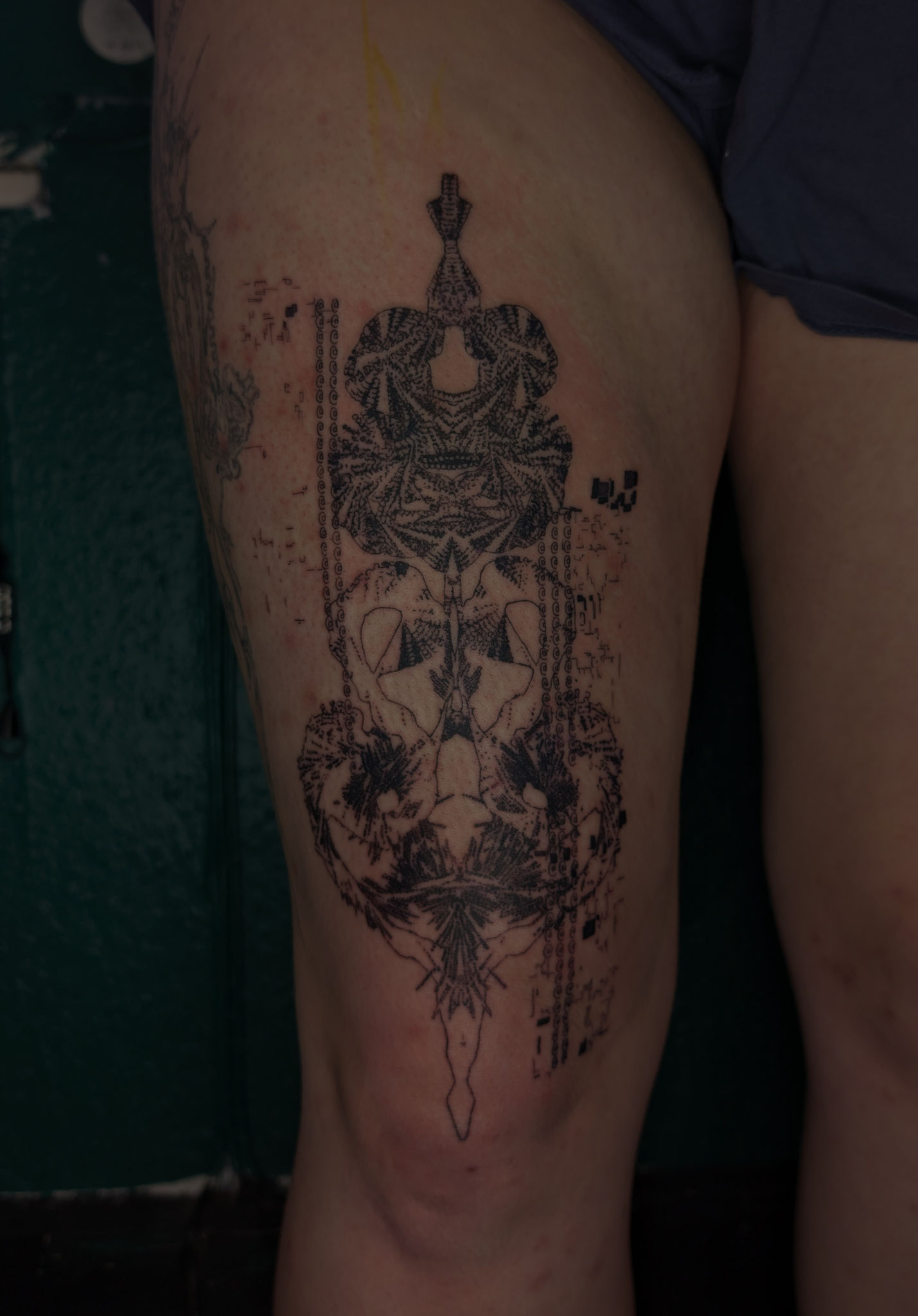
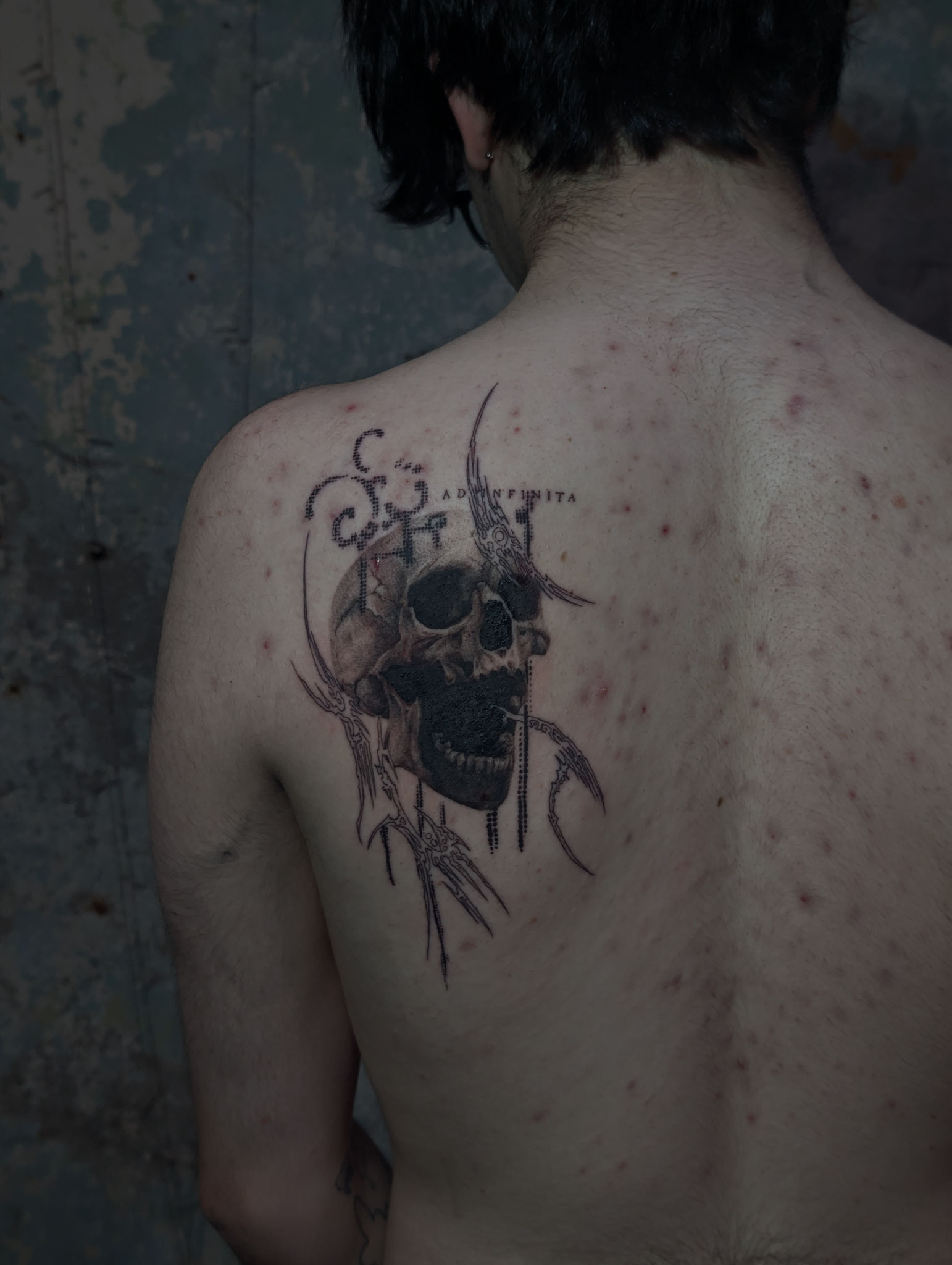
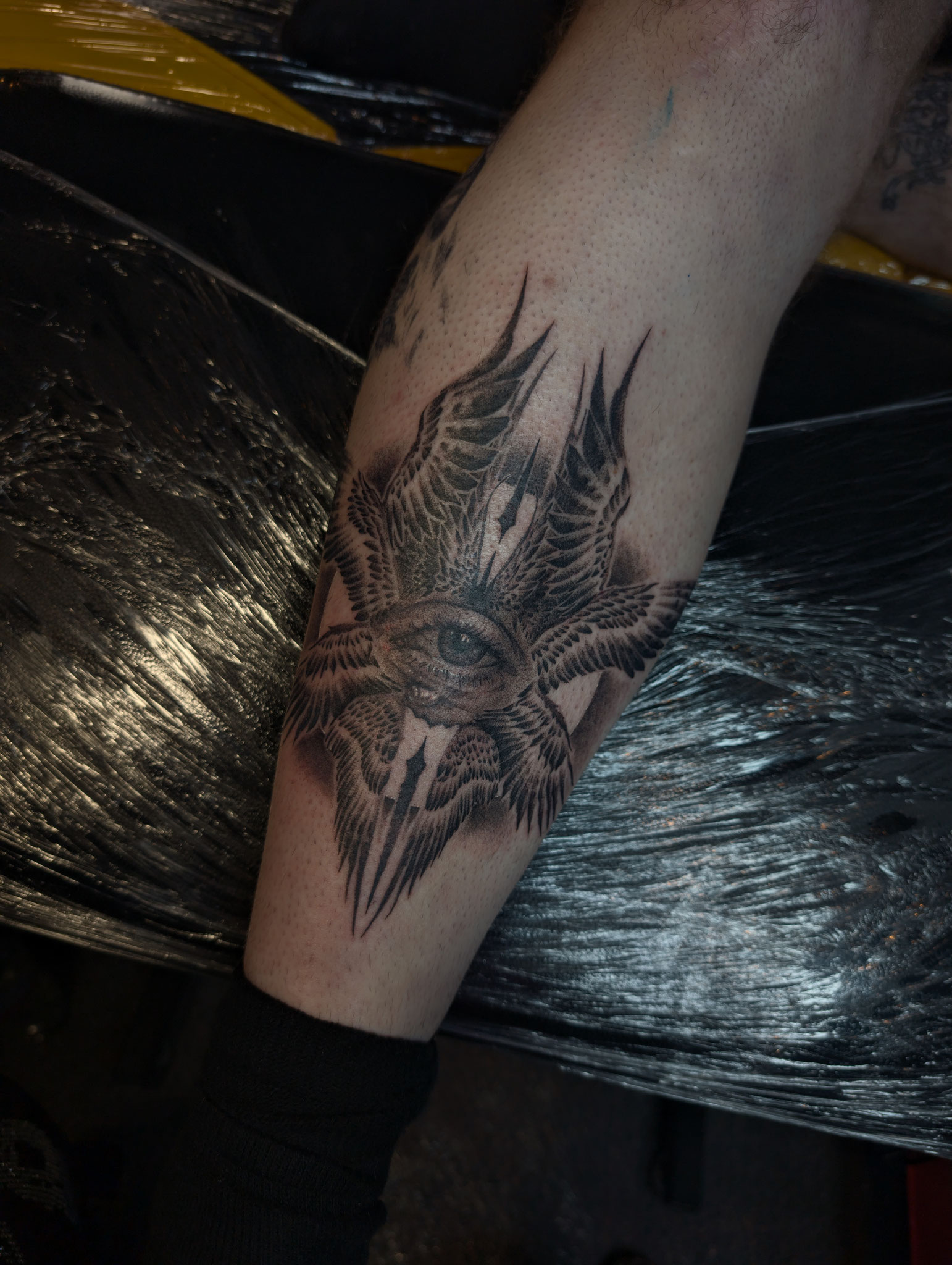
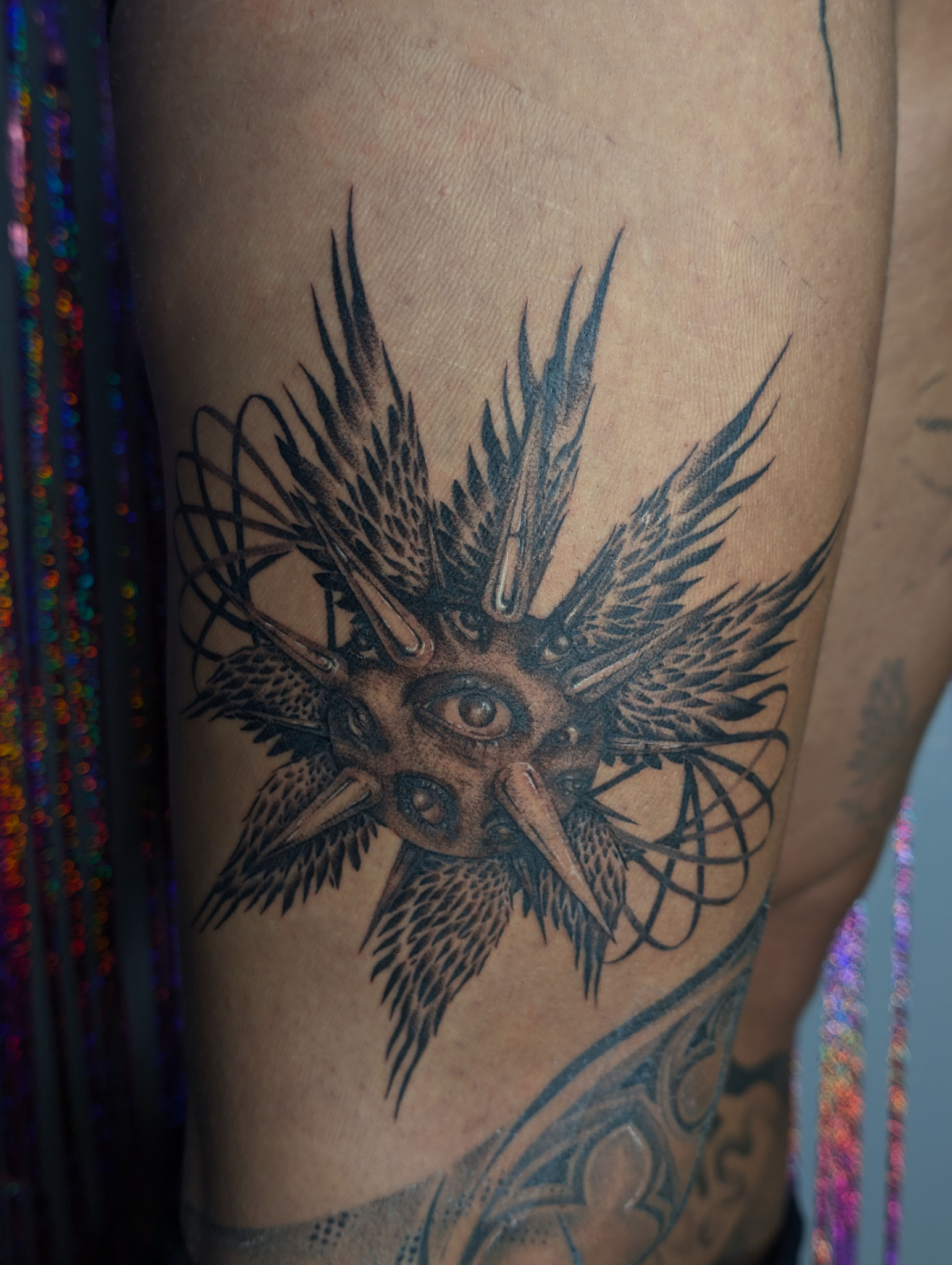
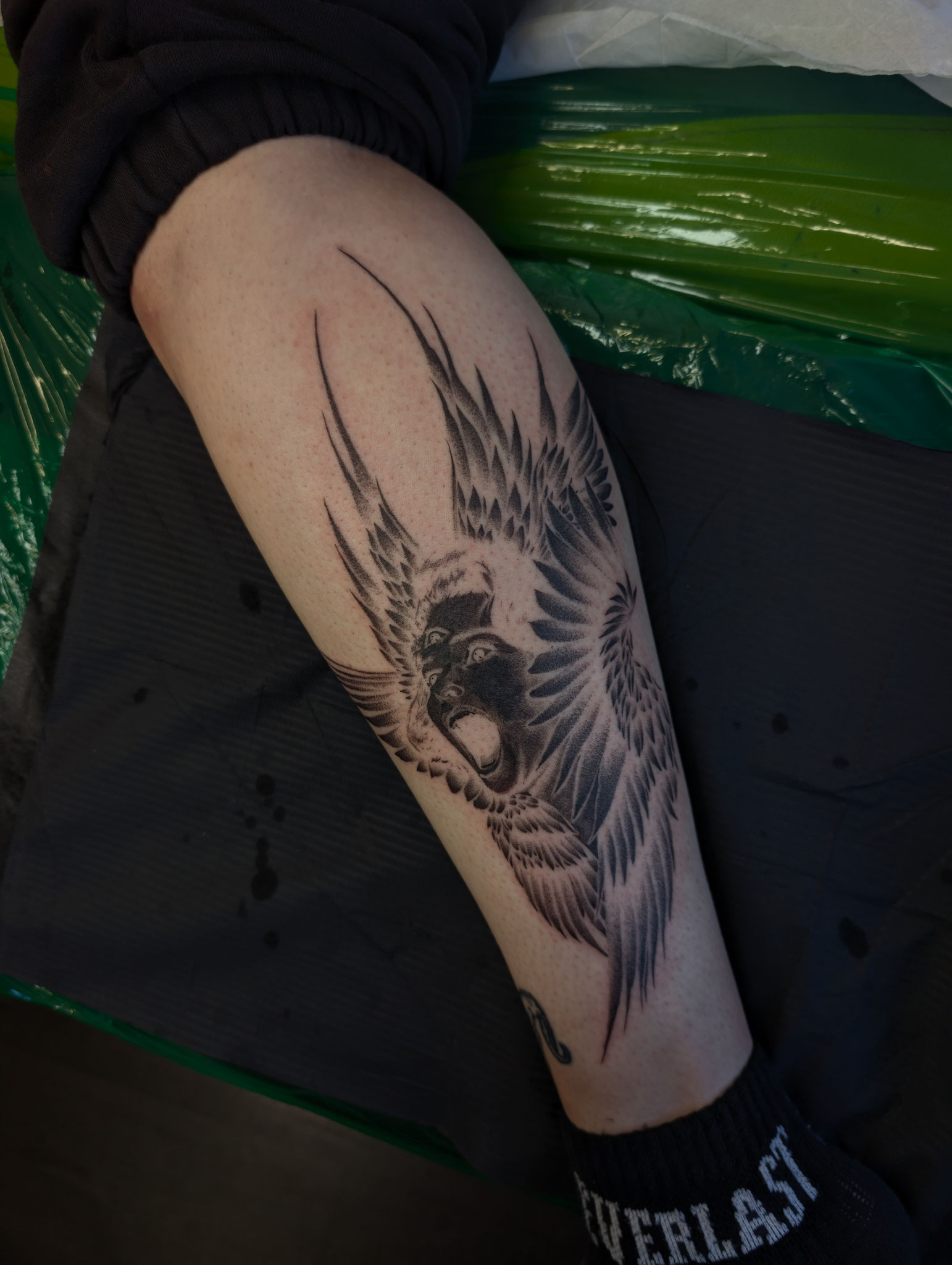
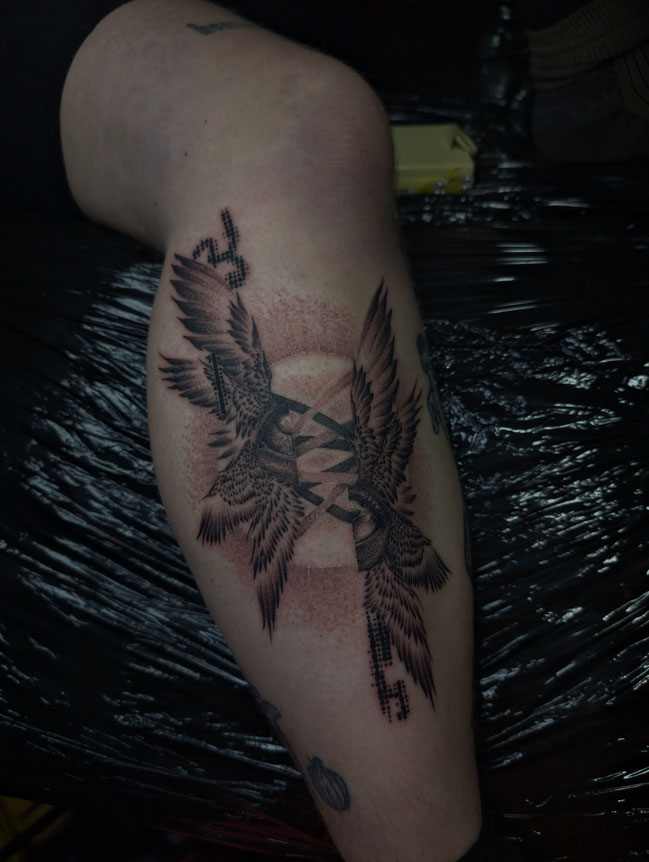
I primarily work in black and grey, pulling influence from all sorts of places — but fine line realism and dotwork/stippling have really shaped my style as it is today.
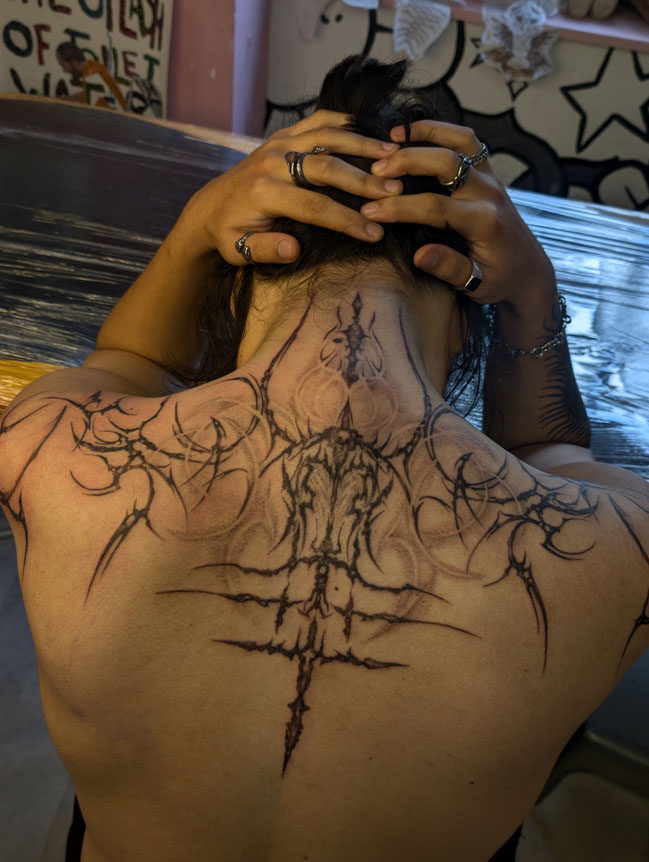
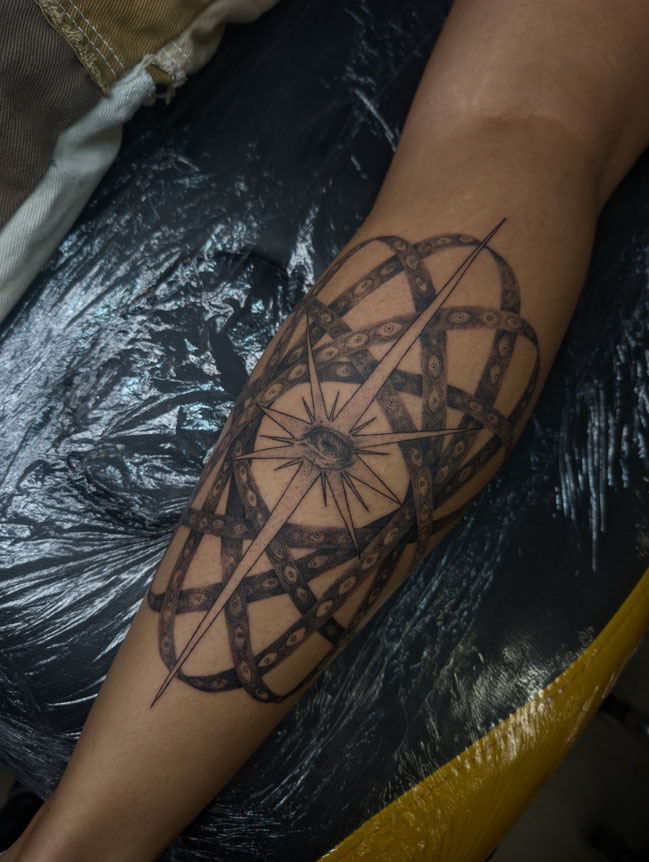
My aim with every tattoo I design is for someone to step back and say, “I have never seen anything like that before.” I’d describe my work as leaning toward surrealism, cyber, and bio-organic aesthetics — but I’ll work in any style that someone throws my way. I’ll never back down from a challenge.
Which artists or styles have influenced your work the most?
An old friend, the late Al Williams, really encouraged me when I started out, and I feel very lucky to have known him when I did. He is very much the reason I am tattooing today.
Outside of tattooing, I am heavily inspired by surrealist artists such as Odilon Redon, Dalí, and Giger. I am also massively inspired by architecture, especially Gothic and Renaissance styles, which connect to my formal training in technical drawing.
What’s the most meaningful or challenging tattoo you’ve ever done, and why?
That’s a tough question to answer. Every tattoo is meaningful in its own way, and I treat every tattoo with as much care as the last.
However, I have an ongoing scar-adornment project where I offer limited free appointments to help people reclaim their connection with their bodies, where there may be physical or emotional trauma. Those appointments are particularly special, and it feels like such a privilege to help someone move into a new chapter of their story.
How do you handle the emotional connection between a client and their tattoo?
As I said, I treat each and every tattoo I do with the same level of care. From a silly tattoo of a goose to a memorial portrait — I am changing someone’s body forever, and a level of respect and intention should go into that regardless of the meaning behind it.

What is your process for designing a custom tattoo for a client?
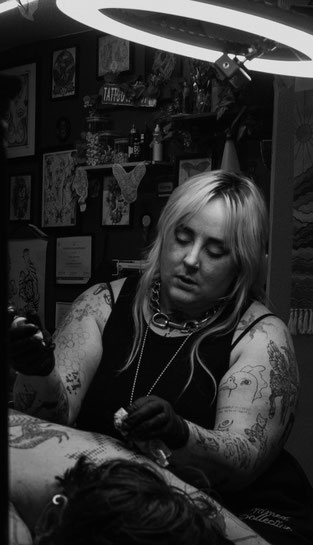
I like to start with a consultation, which can be done online for smaller projects, but larger or more complex projects are always better in person.
I encourage my clients to bring me as many inspiration images as possible — and these don’t even have to be photos of tattoos. I’ve had pictures of tiles, tree bark, curtains sent to me, and one person even made me a PowerPoint presentation (we love that).
I let the ideas simmer for a while and usually draw the final piece the day before the appointment. We’ll have a short consultation on the morning of the session, which gives me the chance to make any final changes before we begin. Where possible, I love to add freehand elements into the piece to create extra flow on the body. It adds something unique and makes the tattoo feel even more special.
What’s your take on how the art of tattooing has evolved in recent years?
As someone who is self-taught, I love seeing the new wave of tattoo artists emerging. There’s a fresh energy in the industry, with so many people approaching tattooing in new and exciting ways.
The overall standard of work has improved massively, even in the last few years alone. I don’t know what they’re feeding apprentices these days — but keep going. We should always be pushing to make tattoos better, cleaner, more exciting, and totally unexpected.
What advice would you give to someone considering their first tattoo?
Research, research, research.
Don’t just go to the first person who accepts your appointment. If the vibes are off, leave. Trust your instincts. Don’t be afraid to ask for changes — and have the BIGGEST breakfast ever before your appointment.
What tools or techniques do you prefer to use, and how have your methods evolved over time?
My most-used techniques are stipple shading and whip shading. I love the different textures and soft gradients that can be built with just a single needle. On the other end of the spectrum, I also love working with a big, juicy mag for black packing.
It’s a far cry from my stick-and-poke days 10 years ago. I couldn’t say what the future will bring — the more I push out of my comfort zone, the more my work evolves, along with the techniques I favor.
I favor my Bishop Power Wands — the Liner and the Packer — but I also have a really responsive Dan Selfmade stippling coil that I love for larger projects. I also couldn’t live without my Process Butter by Checkmate and the cart system by Whitfield’s.
What are your goals or future projects as a tattoo artist?
My goal is to keep doing what I love, keep pushing boundaries, and keep my work unexpected. I’m incredibly grateful to all of my clients for keeping that dream alive.

We recommend this artist for her bold fusion of fine line realism, stippled textures, and bio-organic surrealism.
Her disciplined contrast, dynamic freehand flow, and commitment to originality create striking, body-conscious compositions.
A fearless and evolving black & grey artist pushing texture, structure, and storytelling beyond convention.
Information
Styles you do tattooing: Black and Grey, Blackwork, Cyber, Realism, Trash, Inverted
Years you have been tattooing: 10
City, Country: Truro, UK
Instagram: @grit_ur_teeth
TikTok @grit_ur_teeth